
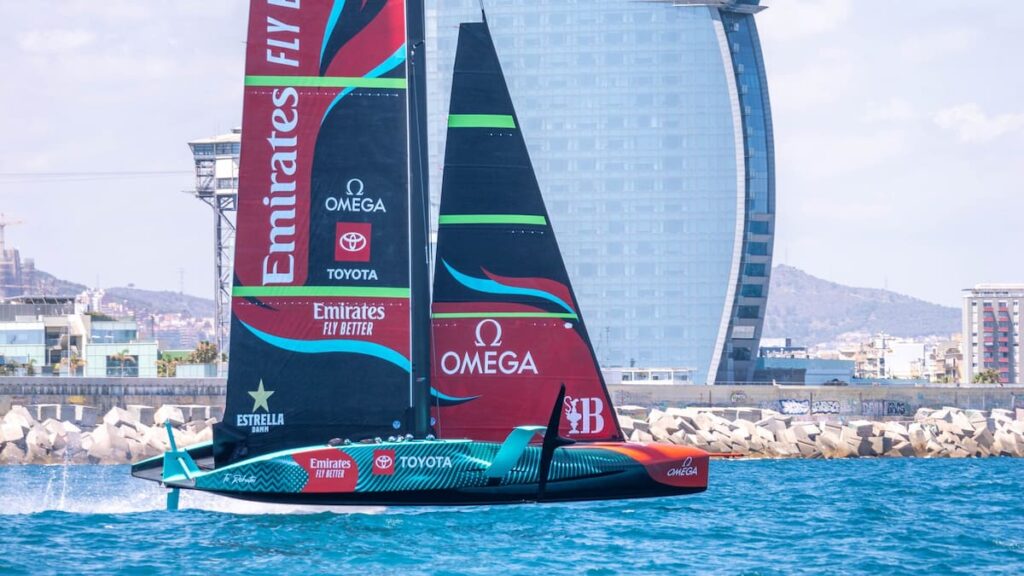
“It’s an interesting thing for spectators to see the differences in the hull, but despite them looking quite different, we’ve done a lot of analysis on all of our competitors through the last Cup and we reckon between the best and the worst of the hulls probably equates to only something like four or five seconds per race,” Team New Zealand designer Dan Bernasconi told the Herald late last year.
While minor modifications can be made to allow for the new systems and crew sizes, for the casual observer, there will likely be just one major change that is noticeable to the untrained eye when the vessel is put on show this week.
What will be made clear, however, is exactly how – and where – the sailing crew will operate on the boat.
With the cyclors being replaced by batteries for this cycle, the number of sailors on board drops from eight to five, with an additional spot for a guest racer.
It has been well established that splitting roles into port and starboard teams is the most efficient and effective way of sailing the AC75s, abolishing the need for sailors to cross over to the other side through tacks and gybes – first utilised by Italians Luna Rossa in Auckland in 2021.
The layout of the cockpits might also provide an indication as to the exact role of the fifth sailor on board. Previously, there were two helms and two flight controllers who doubled as sail trimmers. That stays the same, with an additional sailor added into the mix. It is expected that fifth sailor will likely serve in something of a tactician role, helping to pick shifts and determine the best way around the course. However, teams might opt to use this role differently in how they work with, or help, manning other roles as well.
But outside of a new paint job, the cockpit layout is expected to be the only thing the casual fan will be able to get excited about.
Most of the changes in this version of the AC75 are either internal, in the sails or in the foils which – historically – have never been fully honed and in Cup racing spec until the regatta itself.
Bernasconi said they believed there were bigger gains to be made in the foils and the sails, which is why those elements were left open for development in the new cycle.
“The difference between what we think are the best and the worst foils in the fleet is more like 40 seconds per race,” he said.
“So the hulls do make a difference, but there’s much bigger gains to be had in the foils which, to the casual observer, they all probably look pretty similar, but there’s so much performance that you can wring out of the foils in terms of the exact section shape and how the foils perform under load, and details around cavitation and ventilation, that’s really where it’s more worthwhile putting your effort.”
Christopher Reive joined the Herald sports team in 2017, bringing the same versatility to his coverage as he does to his sports viewing habits.