
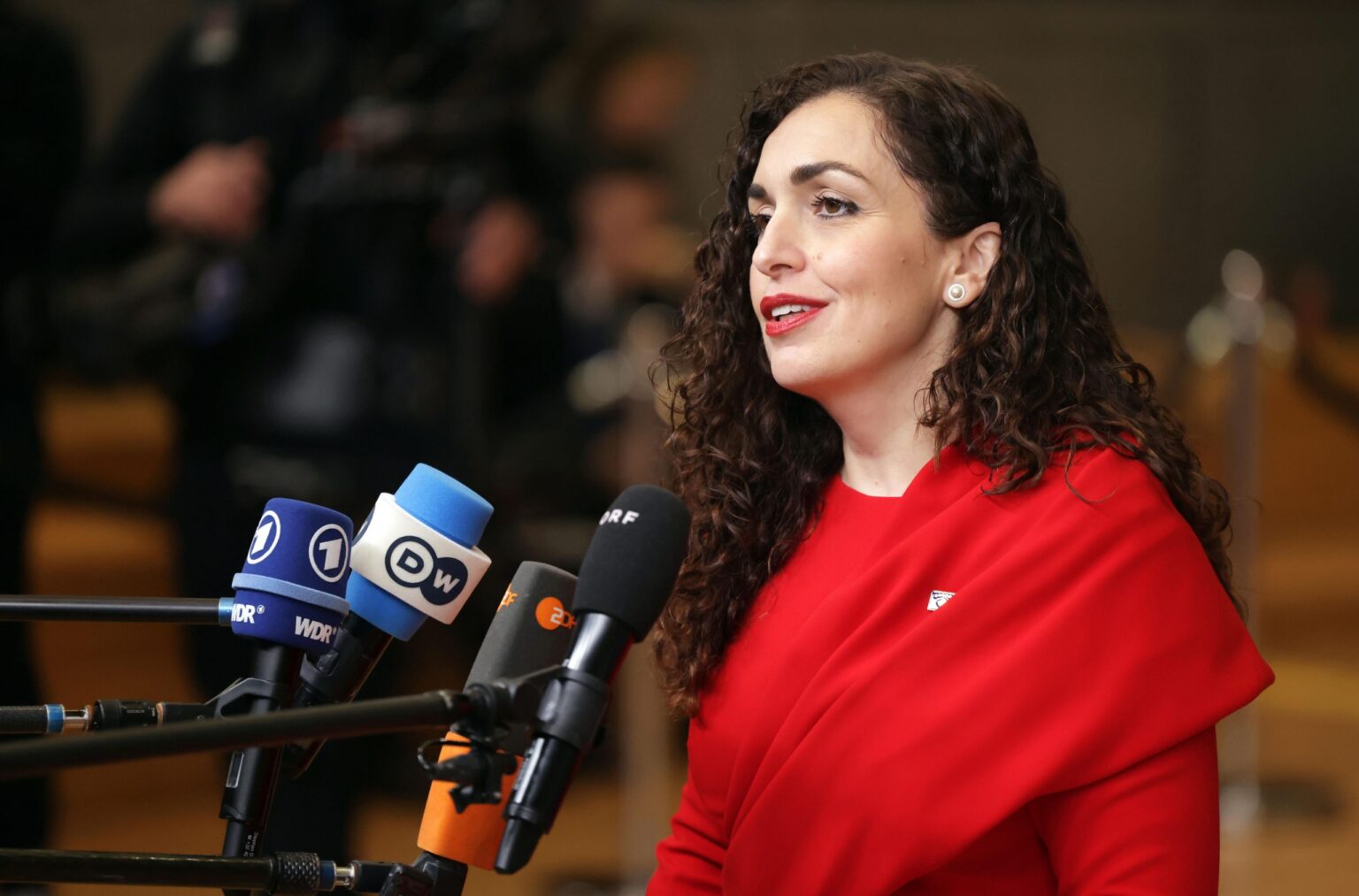
Kosovo is heading into snap parliamentary elections following President Vjosa Osmani’s decision on Friday to dissolve the Assembly. The move came after lawmakers failed to elect a new president by the constitutional deadline, plunging the country into yet another political crisis amid ongoing instability in the Balkans.
In a press conference on Friday, Osmani described the failure as the result of deliberate political choices rather than unavoidable circumstances. She emphasized that political forces had prioritized partisan interests over institutional responsibility, making the dissolution not a discretionary act but a mandatory constitutional step.
The crisis stemmed from Article 86 of Kosovo’s Constitution, which requires the new president to be elected no later than 30 days before the incumbent’s term ends. Osmani’s mandate expires on April 4, making March 5 the final deadline, according to the Presidency. Osmani rejected alternative interpretations allowing the process to continue within 60 days of initiation, insisting that constitutional provisions must be read holistically – the 30-day rule serving as the absolute cutoff.
The deadlock reached its peak during an extraordinary session on Thursday evening, just hours before the midnight deadline. Only 66 lawmakers from the governing coalition attended, falling short of the quorum needed. Presidential elections require 80 votes in the first two rounds and 61 in the third, rendering the process impossible without broader participation. Opposition parties boycotted the session, and even the governing Lëvizja Vetëvendosje (LVV) majority proved insufficient.
The ruling party’s nominees – Glauk Konjufca (Foreign Minister) and Fatmire Kollçaku-Mullhaxha – never advanced to a vote. This outcome underscored the limits of the government’s numerical strength in the 120-seat Assembly when minimal cross-party consensus is absent. A prior session had also stalled, during which Osmani had proposed constitutional amendments for direct popular election of the president, but these were not addressed.
Osmani clarified that the proposed direct-election reform would not resolve the current impasse: even if approved immediately, it would apply only to processes starting at least six months before a president’s term ends. The amendments target future cycles, not the present crisis.
Following the dissolution, Osmani announced she would promptly consult party leaders to set a date for early elections, as required by law. She urged a swift vote to minimize further instability in a country already facing frequent electoral cycles – this would mark the third parliamentary election in just over a year.
The episode exposes deeper flaws in Kosovo’s political system: the parliamentary election of the president, intended as a stabilizing mechanism, repeatedly becomes a flashpoint for polarization and confrontation. Rather than fostering compromise, it highlights the challenges of building consensus in a fragmented landscape.
These early elections will do more than reshape parliamentary power – they will test whether Kosovo can convert institutional deadlock into renewed legitimacy or risk perpetuating cycles of uncertainty. At stake is not just the next government’s composition, but the system’s ability to deliver stability when political divisions push it to the brink.
The original article in Greek by EUalive’s partner IBNA can be found here.
Caption: President of Kosovo Vjosa Osmani arrives for the EU-Western Balkans Summit in Brussels, Belgium, 17 December 2025. EU and the Western Balkans leaders meet in Brussels to reaffirm their commitment to strengthening regional cooperation and partnerships. EPA/OLIVIER MATTHYS
Updated: March 7, 2026 – 09:10