
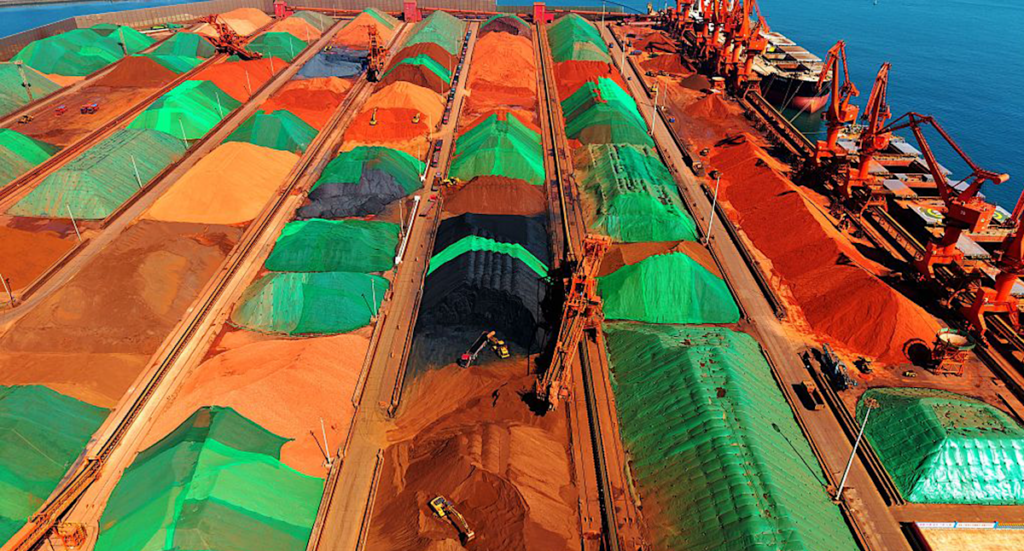
Machinery transporting imported iron ore at the Qingdao Port Ore Terminal in the Yellow Sea on Saturday, March 7. (Source: Getty) · CFOTO/Future Publishing via Gett
There are growing fears about China’s strong-arm tactics in a crucial commodities market for Australia’s bottom line. With the world’s attention on Iran and oil markets, China’s stockpiling of iron ore has hit a record high.
The country’s tactics, as it tries to squeeze better prices out of a major Australian exporter, could be another challenge for Treasurer Jim Chalmers ahead of the May budget. Iron ore is worth billions of dollars to state and federal governments in tax receipts and royalties each year.
So swings in the price of the commodity and the level of demand – which overwhelmingly comes from China – can have big consequences for government revenue.
According to Bloomberg data, China’s stockpiling of the steel-making material has climbed to a record high of 163.3 million tonnes. That is reportedly about 15 per cent more than at the same time last year.
RELATED
In late February, the price hit a recent low as it fell below US$97 a tonne, representing a 12 per cent decline from highs.
Estimates from Treasury show a $10 move in the iron-ore price can impact tax receipts by about $400 to $500 million, while GDP would take a roughly $5 billion hit from a $10 price decline.
“The fall in prices reflects growing oversupply fears as China’s iron ore port stockpiles have lifted,” Commonwealth Bank commodities analyst Vivek Dhar wrote at the price nadir on February 24.
“The stockpile level likely overstates the extent of oversupply pressure facing the iron ore market given reports that restricted BHP products are accumulating at China’s ports.
“Markets are keenly watching to see if the uptrend in stockpiles will continue,” Dhar added.
Stockpiles are indeed still accumulating, and last week the state-owned China Mineral Resources Group Co (CMRG) which coordinates buying called in trading firms and urged them to stop purchasing new shipments from BHP after it discovered some traders had breached earlier restrictions, Bloomberg reported on Friday.
Chinese authorities have been trying to tighten the screws on Aussie iron ore giant BHP in a pricing dispute since September last year. According to the latest report, it intends to bolster its enforcement on such curbs.
China is demanding the Australian mining giant sells its iron ore at a cheaper price related to an index that is more generous for buyers, and settle some transactions in Chinese yuan.
