

- In early March 2026, Northrop Grumman gained attention as geopolitical tensions escalated with U.S. and Israeli strikes on Iranian nuclear and military sites, while the company continued to advance long-term defense programs such as the B-21 Raider, Sentinel ICBM, and the Deep Space Advanced Radar Capability.
- At the same time, evolving U.S. rules on Chinese-origin rare earths and new domestic processing capacity are reshaping supply chains that underpin Northrop Grumman’s future platforms and cost structure.
- We’ll now examine how heightened geopolitical conflict and rare earth supply-chain shifts could influence Northrop Grumman’s longer-term investment narrative.
We’ve uncovered the 16 dividend fortresses yielding 5%+ that don’t just survive market storms, but thrive in them.
Northrop Grumman Investment Narrative Recap
To own Northrop Grumman today, you need to believe in sustained demand for complex U.S. defense platforms like B 21, Sentinel, and space systems, backed by long contracts and budget support. The latest spike in geopolitical tension and the 2027 ban on Chinese-origin rare earth magnets reinforce that near term attention is on execution and cost control, while the biggest risk remains program and budget decisions around those flagship U.S. nuclear modernization efforts.
The Pentagon’s move to prohibit Chinese-origin rare earth magnets, alongside new North American processing milestones, is directly relevant because it touches the input costs and supply certainty behind Northrop’s future aircraft, missile, and space programs. While this supply chain shift may not change the core long term thesis yet, it could shape margins and competitiveness around key catalysts such as the ramp of B 21, Sentinel, and deep space radar production.
Yet investors should also be aware of how concentrated exposure to a few very large U.S. programs could…
Read the full narrative on Northrop Grumman (it’s free!)
Northrop Grumman’s narrative projects $47.5 billion revenue and $4.4 billion earnings by 2028. This requires 5.5% yearly revenue growth and about a $0.5 billion earnings increase from $3.9 billion today.
Uncover how Northrop Grumman’s forecasts yield a $724.39 fair value, a 4% downside to its current price.
Exploring Other Perspectives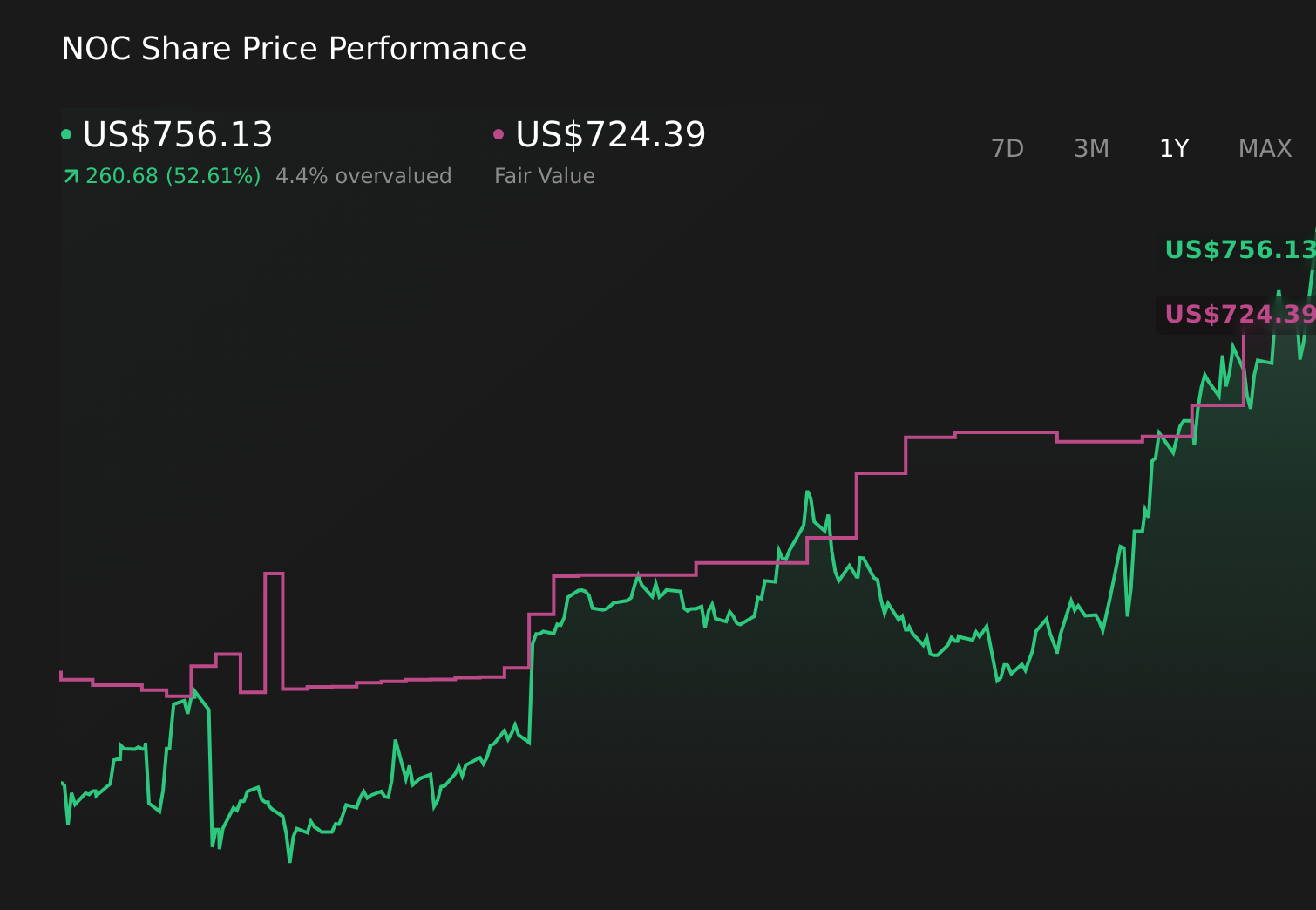 NOC 1-Year Stock Price Chart
Three Simply Wall St Community fair value estimates span roughly US$515 to US$724 per share, reminding you that individual views can differ sharply. Set against this, Northrop’s dependence on B 21 and Sentinel program outcomes could have outsized effects on future earnings stability, so it is worth weighing several contrasting scenarios before deciding how the stock fits your portfolio.
Explore 3 other fair value estimates on Northrop Grumman – why the stock might be worth 32% less than the current price!
Decide For Yourself
Disagree with existing narratives? Extraordinary investment returns rarely come from following the herd, so go with your instincts.
No Opportunity In Northrop Grumman?
The market won’t wait. These fast-moving stocks are hot now. Grab the list before they run:
This article by Simply Wall St is general in nature. We provide commentary based on historical data
and analyst forecasts only using an unbiased methodology and our articles are not intended to be financial advice. It does not constitute a recommendation to buy or sell any stock, and does not take account of your objectives, or your
financial situation. We aim to bring you long-term focused analysis driven by fundamental data.
Note that our analysis may not factor in the latest price-sensitive company announcements or qualitative material.
Simply Wall St has no position in any stocks mentioned.
Discover if Northrop Grumman might be undervalued or overvalued with our detailed analysis, featuring fair value estimates, potential risks, dividends, insider trades, and its financial condition.
Have feedback on this article? Concerned about the content? Get in touch with us directly. Alternatively, email editorial-team@simplywallst.com