
![[World Focus] Slovenia, Base Camp for Greater European Strategy - Seoul Economic Daily 오피니언 News from South Korea](https://www.byteseu.com/wp-content/uploads/2026/03/1773036383_87_image "Slovenia Emerges as Korea's Strategic Base Camp for European Expansion")
[World Focus] Slovenia, Base Camp for Greater European Strategy
Last July, the Korean flag was finally raised in Ljubljana, Slovenia’s capital. Thirty-three years after Korea and Slovenia established diplomatic relations in 1992, a Korean embassy opened in the heart of the city. With this, both nations have established diplomatic footholds in each other’s capitals, marking a new turning point in bilateral relations.
Some may wonder whether Slovenia is significant enough to warrant an embassy. However, examining economic and diplomatic flows on a map reveals why this country is an indispensable base camp for Korea’s European strategy.
Slovenia, as a European Union member state, occupies a strategic position connecting Central and Southeastern Europe. The Port of Koper holds particular significance for Korea. It serves as one of the main gateways for Hyundai Motor, Kia, Samsung, and LG products entering deep into the European continent. Korean containers crossing the Adriatic Sea use Koper as their shortest route and starting point for distribution into Europe’s heartland. From here, cargo moves swiftly by road and rail to Hungary, Czech Republic, Slovakia, and Poland, where Korean factories are concentrated. Korean logistics companies handle a substantial share of Koper’s cargo volume, demonstrating that both nations are already inseparable economic partners.
The connection between the two countries extends beyond economics. Korea and Slovenia served together as non-permanent members of the UN Security Council in 2024-2025, coordinating closely on difficult international issues. Since last July, Korea has officially joined the EU’s largest research and innovation program, Horizon Europe, as an associate member. The partnership between Slovenia’s strong basic science capabilities and Korea’s applied technology prowess could potentially form a new axis of “technology alliance” within Europe. Cooperation in biotechnology and advanced technology also holds significant potential to reshape Europe’s future innovation landscape.
The physical distance of 8,500 kilometers between the two nations has already been substantially bridged through cultural power. The Korean Studies Department at the University of Ljubljana, established in 2015, maintains high competition rates for admission. The King Sejong Institute, supported by the Korean government, is thriving with local participation extending beyond K-pop and Korean cuisine to learning the Korean language and culture. The Korean embassy will serve as a strong institutional foundation supporting this cultural connection. Furthermore, it will be a reliable safeguard ready to assist Korean residents building their lives in Slovenia and Korean tourists in times of emergency.
The opening of the Slovenian embassy in Seoul in 2022 and the Korean embassy in Ljubljana in 2025 represents more than an increase in diplomatic missions—it signifies the construction of a solid bridge connecting both nations. This marks a turning point for bilateral relations spanning diplomacy, economy, science, and culture to develop into more strategic cooperation.
Korea and Slovenia are small but strong nations that preserved their national identity and unique culture while achieving democratization and remarkable economic development amid great powers. We look forward to the future that Slovenia in Europe and Korea in Asia will build together, hoping it will endure unchanging like the eternal snows of the Alps.
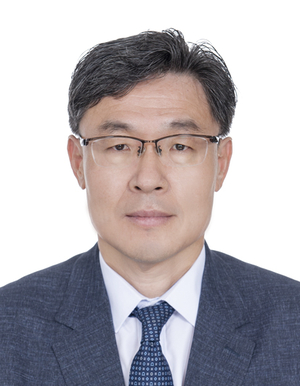
*This column was written by Bae Il-young, Ambassador of the Republic of Korea to Slovenia.