
Published on
March 9, 2026
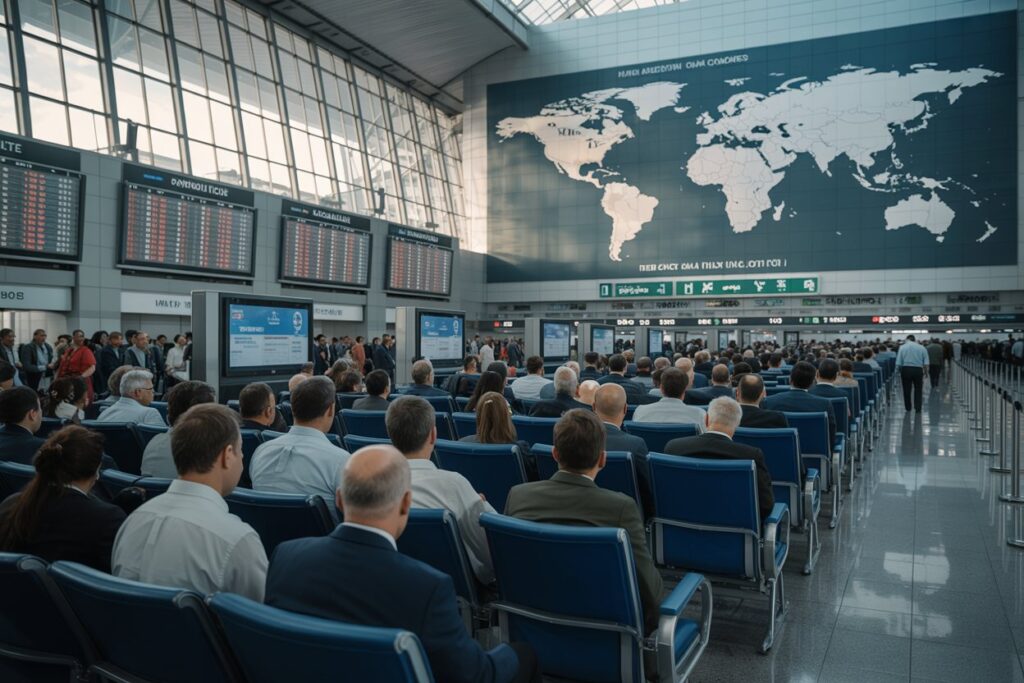
Image generated with Ai
Global destinations are no longer just defined by their natural beauty or cultural landmarks; they are increasingly shaped by the complex, often volatile, world of international relations. In 2026, the travel industry stands as one of the most significant, yet frequently misunderstood, tools of statecraft. While travelers often view their vacations through the lens of relaxation or discovery, government decisions—driven by diplomatic alliances, security concerns, and trade negotiations—are the true architects of where, when, and how we move across the planet.
The Mechanism of Modern Tourism Diplomacy
At the heart of the intersection between politics and travel lies the concept of “soft power.” Nations frequently use tourism to cultivate a favorable international image, projecting stability and openness to attract foreign visitors. Conversely, the “stick” of political influence is wielded through travel advisories, visa requirements, and air corridor restrictions. These interventions are rarely accidental. When a government issues a heightened travel warning for a specific nation, it often reflects broader diplomatic friction rather than purely on-the-ground safety data.
Real-World Impacts on Global Routes
The modern traveler has felt the tangible results of these geopolitical power plays. The Middle East, for example, has seen massive economic shifts as ongoing regional conflicts have led to closed airspace and severe travel warnings. These political tensions have compelled major international carriers to reroute long-haul flights, significantly increasing travel times and costs for passengers. The economic fallout, estimated in the tens of billions of dollars, highlights how quickly tourism revenue can vanish when diplomatic stability is compromised.
A further example of this dynamic is observed in the persistent friction between major world powers and smaller nations. In years past, the United States utilized travel bans and stringent trade sanctions as a means to apply pressure on the government of Cuba. Such measures go beyond restricting leisure; they disrupt the entire infrastructure of hospitality, from supply chains for luxury hotels to the operational viability of regional airlines.
Advertisement
Advertisement
The “Carrot” Approach: Visa Waivers and Partnerships
Politics also acts as a bridge for growth. When two nations seek to solidify an alliance, one of the most effective and visible gestures is the easing of travel barriers. The implementation of visa-free travel or the negotiation of bilateral air service agreements serves as a powerful diplomatic signal, intended to foster economic interdependence and public trust.
International organizations and tourism bodies now actively work with governments to highlight that a robust, integrated tourism industry serves as a deterrent to conflict. The rationale is simple: when economies become deeply intertwined through shared tourism sectors, the cost of political aggression becomes too high for either side to bear.
Advertisement
Advertisement
The following table summarizes the primary mechanisms used by states to manipulate tourism as a political instrument:
Why this distinction matters
Governments essentially view international travel as a transnational trade activity. When they provide a “carrot”—such as simplifying e-visa processes—it is often a signal of intent to deepen political and economic integration. Conversely, the “stick” is a potent, non-military weapon that can destabilize a rival’s hospitality industry and reduce their foreign currency reserves without the need for traditional sanctions or armed intervention.
Advertisement
Advertisement
The Middle East Hub Crisis and Its Global Ripple Effect
The recent conflict has led to the systemic shutdown of critical airspace over Iran, Iraq, and Kuwait. These regions historically serve as the “aerial bridge” for long-haul travel between Europe and the Asia-Pacific. The immediate consequence has been a “structural shock” to aviation connectivity, impacting major hubs like Dubai, Doha, and Abu Dhabi.
How Operations Are Changing:
- Forced Diversions: Airlines are no longer able to utilize the most efficient flight paths. They are instead being pushed into overcrowded corridors over Saudi Arabia or longer, more expensive northern routes via China.
- Economic Strain: The resulting operational inefficiency has significantly increased the “cost per seat” metric. Carriers are facing higher fuel consumption, longer flight times, and increased insurance premiums, which are inevitably being passed on to the consumer in the form of higher ticket prices.
- Shift in Passenger Sentiment: Long-haul travelers are displaying increased caution. Many are shifting their preferences toward domestic or short-haul destinations that are perceived as more stable, leading to a temporary decline in demand for long-haul vacations to regions potentially impacted by the conflict’s uncertainty.
Regional Winners and Losers
The disruption is creating a fragmented landscape where specific destinations are experiencing widely different outcomes based on their perceived safety and reliance on Gulf connectivity.
The “Safety Certainty” Factor
Industry leaders noted at the recent ITB Berlin 2026 conference that the 2026 traveler is no longer prioritizing simple escapism. Instead, there is a clear demand for “safety certainty.” Destinations that can provide transparent, real-time data regarding their safety status and offer flexible booking options are currently outperforming those that remain caught in the “geopolitical fog” of the current conflict.
The situation remains fluid. While major powers are signaling their influence through these airspace and travel restrictions, the tourism industry is responding by pivoting toward direct-service carriers and alternative hubs—like Istanbul—to maintain connectivity.
The “War Exclusion” Reality
The most critical takeaway for travelers is that standard travel insurance policies almost universally exclude “acts of war,” whether declared or undeclared, as well as government-mandated airspace closures.
Insurance contracts are designed to cover “named perils”—specific, unpredictable risks like illness, accidental injury, or standard mechanical delays. Because large-scale geopolitical conflicts are viewed as “systemic risks” that are too unpredictable and costly to price, they are carved out of standard coverage.
What You Need to Know in 2026
- The “Known Event” Rule: Once a conflict or airspace closure is widely reported, it is classified as a “known event” by insurers. If you purchase insurance after an event has become public knowledge, you will generally not be covered for any disruptions related to that specific conflict.
- Secondary Disruptions: While the cause (the conflict) may be excluded, the secondary effects sometimes remain covered. For instance, if you are stranded, your policy might still cover essential expenses like meals or hotels under “travel delay” benefits, provided you meet the minimum waiting period and the delay isn’t directly attributed to an excluded act of war.
- Medical Coverage: Emergency medical care for an unrelated illness or accident is typically still covered, even if you are in a volatile region. However, injuries or illnesses directly resulting from the conflict are almost always excluded.
- The Power of CFAR/IFAR: “Cancel For Any Reason” (CFAR) or “Interruption For Any Reason” (IFAR) add-ons are currently the only mainstream tools that provide flexibility for travelers worried about geopolitical uncertainty. These must be purchased shortly after your initial trip deposit to be effective.
Navigating the Landscape
Because airlines are typically obliged by national regulations to offer refunds or rebooking for cancellations, insurers expect policyholders to exhaust these “primary” options first. Travel insurance is designed to supplement, not duplicate, these recoveries.
Crucial Advice: If you are planning travel in 2026, do not assume your policy covers geopolitical instability. Carefully review your Product Disclosure Statement (PDS) for the “General Exclusions” section, and if you are traveling to a region with heightened tensions, look for specific “war-risk” riders or specialized high-risk travel insurance products.
Navigating the Future of Travel
The 2026 landscape is defined by this delicate balance. As the world moves away from a strictly rules-based international order, major powers are increasingly using tourism to signal their influence. For the traveler, this means that destination choice is rarely neutral. A trip to a popular hub may be facilitated by friendly diplomatic relations, while restricted access to certain regions often mirrors a decline in political dialogue.
Ultimately, the travel industry has moved from the periphery of international relations to its center. It is a sector that reflects the shifting alliances and ideological clashes of our time. As travelers, understanding these currents allows for a more informed experience, acknowledging that the freedom to cross borders is as much a political achievement as it is a leisure opportunity.
