
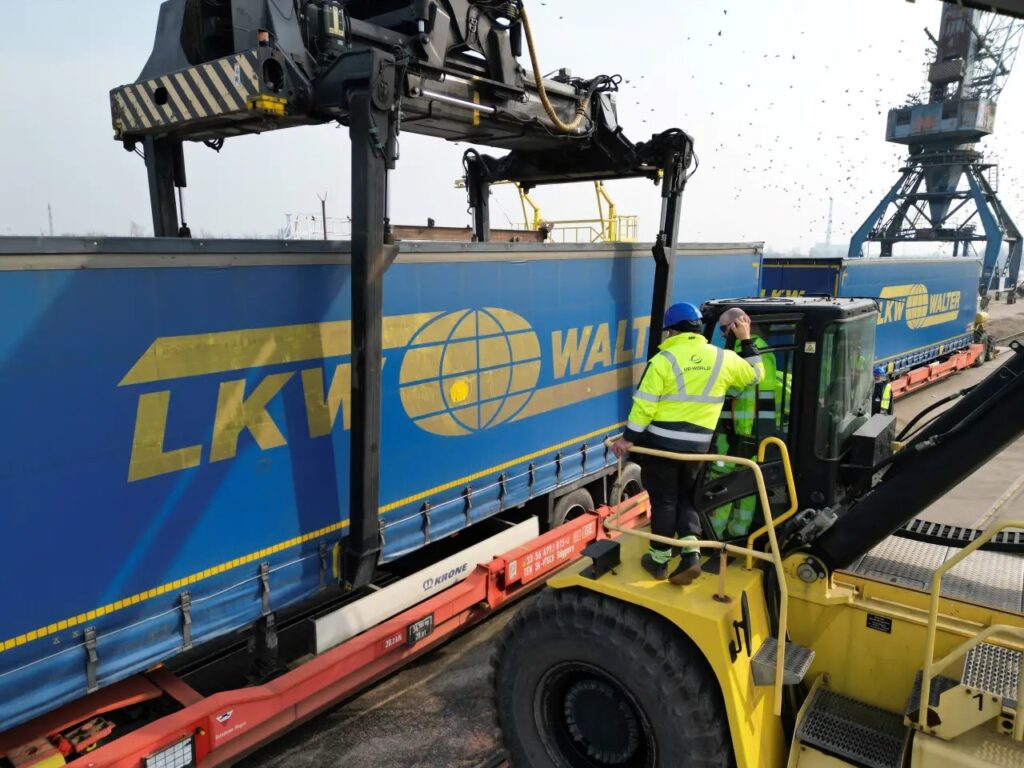
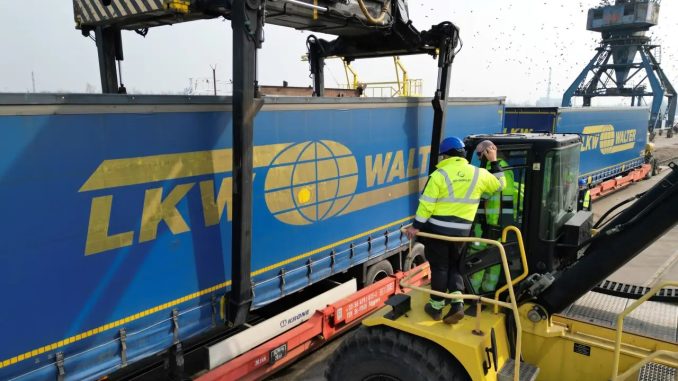
 The terminal operated by DP World in Novi Sad has started operating a new intermodal rail service connecting Serbia to the Herne logistics hub in western Germany, in the Rhine-Ruhr industrial region.
The new connection, operated by Austrian transport company LKW Walter, offers three weekly departures and enables shorter transit times than long-distance road transport. According to the operator, the use of intermodal transport can reduce CO₂ emissions by up to 80% compared to road transport alone.
The terminal in Novi Sad thus becomes the first platform in Serbia to offer a regular intermodal rail connection to Western Europe.
Serbia, more connected to European logistics chains
Company representatives believe that the new service contributes to Serbia’s stronger integration into European supply chains.
“By connecting Novi Sad to the Rhine-Ruhr region through a scheduled intermodal service, we are strengthening Serbia’s integration into European supply chains and reinforcing its role as a strategic gateway for trade in Southeast Europe. This service will provide our customers with a faster and more predictable route from Serbia to Western Europe, reducing dependence on cross-border road transport, improving schedule reliability, and reducing emissions,” said Gokhan Yurteken, General Manager of DP World Novi Sad.
The Rhine-Ruhr region is one of Europe’s most important logistics and industrial hubs, and the direct rail connection can facilitate the transport of goods between Southeast Europe and Western European markets.
Increasing pressure on road transport
The launch of the service comes at a time when long-distance road transport between Serbia and the European Union is facing increasing challenges.
Logistics operators have to deal with unpredictable transit times, as well as new European rules for road transport, including the Entry/Exit System (EES) and stricter requirements for driver mobility, such as limiting the number of days they can spend in the EU.
“As regulatory requirements for road transport evolve in the European Union, customers are looking for solutions that offer more speed, predictability, and less administrative complexity. Intermodal rail transport offers all these advantages, while also delivering measurable carbon savings,” said Vladica Ćulafić, Chief Commercial Officer of DP World Novi Sad.
Intermodal transport for efficiency and reduced emissions
Intermodal transport combines rail and road transport to optimize efficiency and environmental impact. In this model, containers are transported over long distances by train, with trucks only used for the initial and final segments of the route.
This solution significantly reduces fuel consumption, driver dependency, and carbon emissions compared to road transport alone.
By shifting the main segment of transport to rail, the Novi Sad–Herne service offers a faster and more predictable alternative to cross-border road transport, while also reducing the complexity of logistics operations.
Share on: 


