
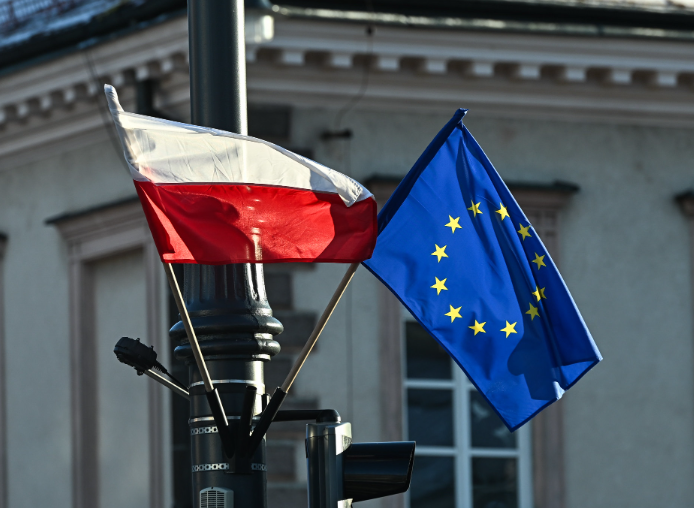
Ukraine’s journey to the European Union began long before it officially announced its application at the height of the 2022 invasion.
The Euromaidan protests of 2014 saw blood spilt on the streets of Kyiv as millions prevented their government’s lurch away from European integration.
Ukrainian president Volodymyr Zelensky’s recent announcement of 2027 as the target for EU membership is no mere aspiration, it is an existential necessity. It should also be considered a key strategic goal for the EU.
Since formal accession negotiations began in June 2024, the conversation has been overly preoccupied with fears of cost, security risks and sectoral disputes.
And while these are legitimate issues, they should not eclipse the fact that enlargement is a strategic modernisation project for Europe. Far from a burden, Ukraine’s membership has enormous potential. What has been missing is a pragmatic, technocratic roadmap that accentuates the positive.
Learn from the Poles
The best-positioned advocate to promote this is Ukraine’s longtime ally, neighbour and sometimes disputant, Poland.
No other EU member has been so intertwined with Ukraine and understands the specific post-Soviet structural hurdles it now faces.
Poland also has firsthand experience dealing with concerns over agricultural competition, labour market strains and migration — they mirror western European doubts over Warsaw’s own accession bid in the early 2000s.
It is natural that some in Poland now share those apprehensions about its neighbour.
Farmers’ protests in recent years, culminating in border blockades and the spilling of Ukrainian grain represent an unfortunate escalation. But these incidents need not halt a process that is in the EU’s entire strategic interest, and so inextricably linked to peace on the continent.
Undoubtedly, the EU is a very different place from that which eventually welcomed Poland in 2004, and crucially, Warsaw was not at war.
But Ukraine has been making swift progress toward fulfilling its membership criteria even as it repels an invasion that threatens the whole of the EU, underscoring its value to the bloc.
If the transition is managed carefully, integrating Ukraine’s resources and demographics can revitalise the EU’s own competitiveness, just as Poland has contributed in the two decades since joining. Accession is a two-way street; and it is time to change the framing of Ukraine solely as a beneficiary and petitioner.
With its experience navigating a comprehensive transition to a democratic economic success story within the EU, Poland will be key in helping to chart a course for Ukraine’s journey.
Germany played a similar role with Poland in the early 2000s, even as it remained one of its strictest and most demanding evaluators. In turn, Ukraine can emulate Poland’s institutional successes, while also avoiding its pitfalls.
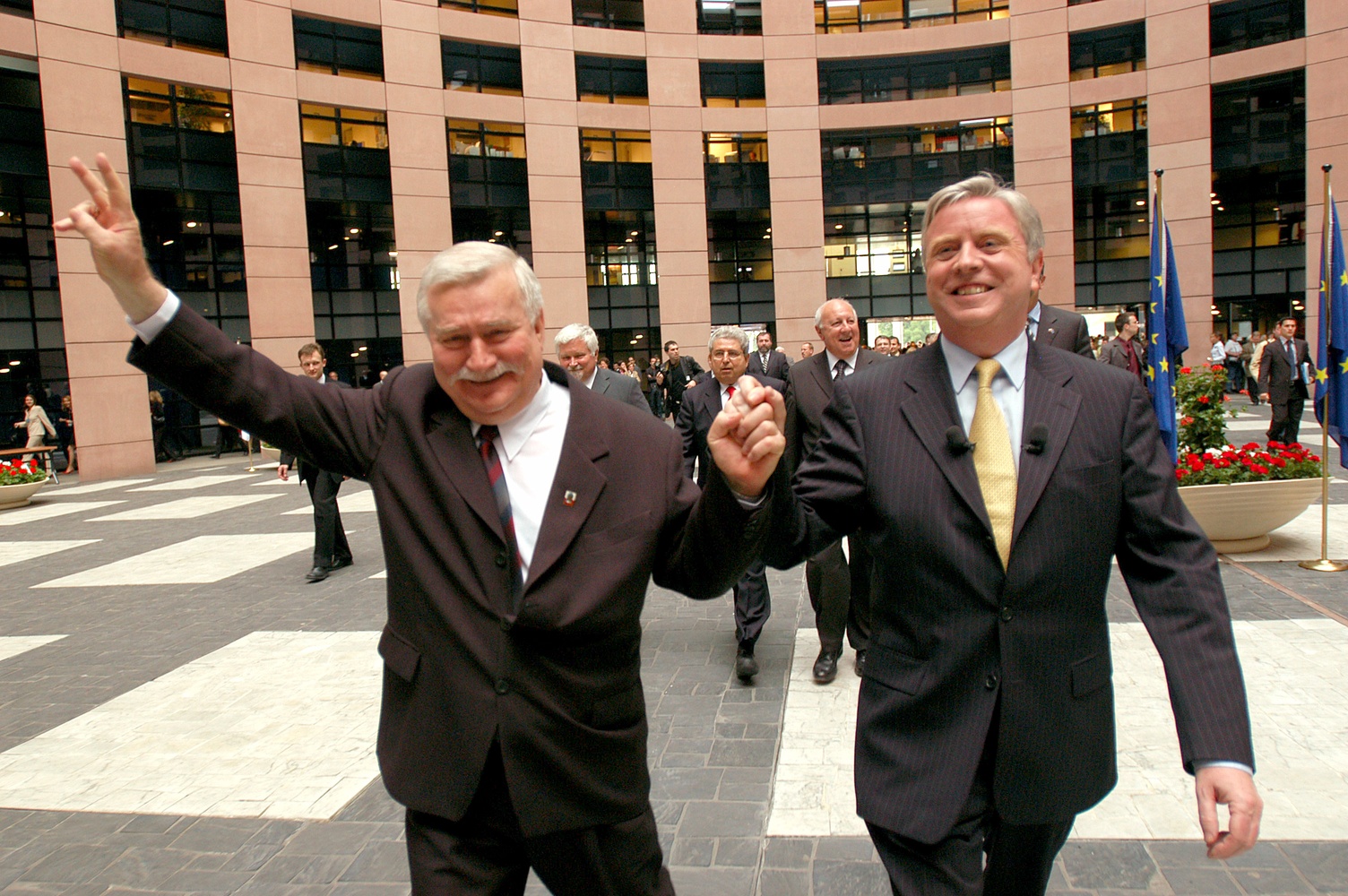 Former president of Poland Lech Walesa (l) and back-then EU parliament president Pat Cox (r) during a ceremony welcoming 10 new member states into the European Union in 2004 (Source: European Parliament)
Payments to farmers deja-vu
The Polish experience is instructive. In the first years of Poland’s negotiations, EU countries dug their heels in over the issue of payments to Polish farmers.
Eventually, at the eleventh hour, a compromise was made for incremental funds to be provided over a number of years alongside concessions from Poland’s own budget.
Ukraine is navigating a far more complex accession pathway than Poland faced, with EU Council consensus required every step of the way, leaving the process vulnerable to political pressure from individual member states, notably Hungary.
Given the exceptional circumstances, policymakers need to deploy innovative solutions to prevent derailing something so manifestly in the bloc’s strategic interest.
Even as Russian strikes menace civilians and target critical infrastructure, Ukraine has completed the screening process of 33 EU negotiation chapters — specific areas where the candidate country must implement laws and standards — in under 18 months.
The European Commission has highlighted specific progress on areas including agriculture, education, health and finance.
Anti-corruption black mark
The July 2025 attempt to restrict the independence of the country’s anti-corruption agencies is a black mark on Ukraine’s record, though it was ultimately prevented thanks to strong resistance by civil society.
There is still work to be done and throughout this process, Poland’s guidance will be key.
This support could include training for Ukraine’s public administration, twinning initiatives between Polish and Ukrainian offices and agencies, and job shadowing opportunities within Polish institutions.
Poland can also advocate for Ukraine’s participation in specific aspects of EU decision-making within the EU Council, under a status equivalent to that of an active observer.
This could apply to areas where Ukraine has already achieved significant alignment, such as common foreign and security policy, the emerging common defence policy, education, culture, and healthcare.
Widening market access has enabled Ukraine to maintain pre-2022 export volumes to the EU, a significant achievement given the breadth of destruction and disruption throughout the country. Similarly, EU exports to Ukraine have grown, further strengthening the EU’s positive trade balance. The war has also prompted a significant inflow of EU investment and financial assistance to Poland, including additional farming subsidies.
Notably, a much larger share of private investment now flows from Ukraine to Poland and Ukrainian businesses have been actively relocating to Poland, establishing branches and subsidiaries as gateways to the broader European market.
Ukraine’s accession will shape Europe’s wider geopolitical role in the evolving global order of the 21st century. Security and defence are areas where Poland and Ukraine are most aligned, creating opportunities for close cooperation in multiple other sectors.
Ukraine does not expect to be waved into the EU without doing the hard yards, but neither will Ukraine capitulate in the face of unreasonable war demands by Russia and wavering support by the US.
It then falls to Kyiv, aided by Warsaw, to ensure watertight compliance and for Brussels to prioritise the security and cohesion of the whole bloc over the narrow interest of its members.