
Airbnb is controversial in large urban centres such as Paris or Nice, but in rural areas or small towns, locals say the platform can be a useful way to attract additional tourist revenue.
Many French towns are imposing extra restrictions on the tourist rental platform, concerned that it is creating shortages for full-time housing and pricing locals out of the market.
But in smaller towns and rural areas, local officials and business owners say the short-term rentals are a useful way to attract visitors and support local economies – especially in places where hotels are scarce.
For example, in the small town of Le Puy-en-Velay, located in the Auvergne region, tourist rentals are booming.
This town of 19,000 inhabitants has a rich heritage, including a cathedral, a historic old centre, and is also a starting point to the Santiago de Compostela pilgrimage trail. According to France Info, the city now attracts three times more visitors than it did five years ago.
Short-term Airbnb rentals have become increasingly more common. Aurélien Ravel, who owns several of these apartments, told the French media that he has no difficulty finding guests throughout the year, “from May to September, the calendars are already about 80 or 85 percent full in terms of reservations”.
Furthermore, a concierge service within the town was created a year ago specifically for these short-term rentals.
The municipality is also pleased with this growth. Last year, tourist tax revenues increased by nearly 3 percent. The economic benefits are significant.
“This influx of people who come to stay one night, two nights, three nights, or more is a real economic boost for the area. Restaurants, bars, shopkeepers – everyone benefits,” said Emmanuel Boyer, director of the Le Puy-en-Velay tourist office.
READ MORE: Just how present is Airbnb throughout France’s towns and rural villages?
Filling gaps where hotels don’t exist
One of the strongest arguments for Airbnbs is that they fill gaps where traditional accommodation is limited.
A study cited by the think tank Institut Terram found Airbnb listings exist in 81 percent of French municipalities, while only 15.6 percent have a hotel.
In villages with fewer than 500 inhabitants, only 5 percent have hotels, but more than two-thirds have at least one Airbnb listing.
Supporters argue that in such cases, platforms like Airbnb are not replacing hotels but instead creating accommodation capacity that would otherwise not exist.
This can be particularly important in rural tourism destinations, where attracting visitors can help support local commerce and services.
Diversify tourism
France is already the most visited tourist destination in the world, but some of the best-known tourist spots, from Paris to the Calanques, are starting to feel the strain.
The government is running a campaigned aimed at spreading the tourist load a little more evenly, pointing out that some 80 percent of the country’s tourist activity is concentrated in just 20 percent of the country.
READ ALSO: France creates ranking for towns based on ‘over tourism’✎
The campaign encourages out-of-season holidays and for people to explore less well known areas – which could involve getting an Airbnb rental.
A partnership between Airbnb and the Tour de France was announced last May for the next three years – partly to promote accommodation and experiences in rural areas along the race route.
The three-year contract will see Airbnb promote rentals along the 3,339-kilometre route, which takes in some of France’s most sparsely populated areas.
Using second-homes
In some parts of France, particularly holiday regions and mountain resorts, short-term rentals have also been seen as a way to make better use of second homes.
Allowing owners to rent them out on short-term platforms can increase occupancy rates and bring more visitors into the local economy, rather than allowing the place to sit empty for months every year.
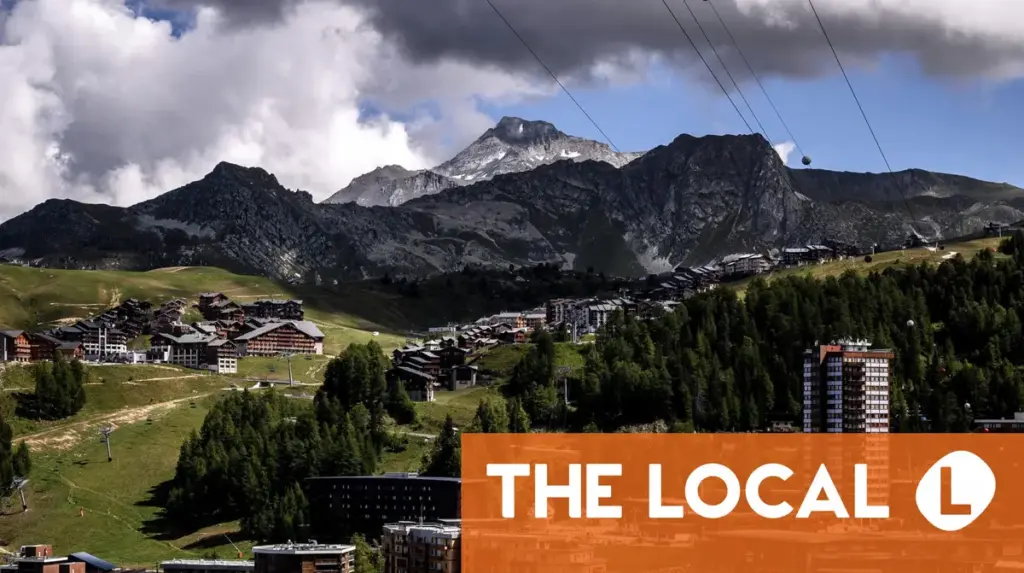
This trend has been particularly visible in parts of the French Alps – in 2019, there were 38,000 Airbnb listings in the French Alps départements of Savoie and Haute-Savoie. By early 2025, that number had climbed to 72,000.
Resorts such as Morzine, La Plagne and Les Arcs each now have more than 2,000 apartments or chalets listed on Airbnb, according to data from Inside Airbnb. In just five years, the supply has more than doubled.
Jean-Luc Boch, mayor of La Plagne located in the Alps, told French media Le Monde that many tourist areas “have long struggled with so-called ‘cold beds’ – apartments that sit empty almost all year.”
Airbnb has helped with this issue, in resorts where second homes can account for up to 80 percent of the housing stock.
“Thanks to the visibility that these platforms offer to foreign visitors, resorts are now filling up much better in January, outside the French holiday periods,” Boch said. Platforms have also made it easier to organise shorter stays, including long weekends.
READ ALSO: ‘Turned our French village into a ghost town’: The verdict on Airbnb in France✎
Tracking overall tourism trends, most Airbnb guests in France are not international tourists but French travellers.
In 2024, during the summer, 65 percent of bookings on the site in France were made by French people.
A very hot topic
Even in places where Airbnb is generally accepted, residents sometimes worry about the long-term impact on housing availability and neighbourhood life.
In Le Puy-en-Velay, some locals say the growing number of lockboxes used for self-check-in has made the trend more visible, and others warn that the balance could change if too many homes were converted into short-term rentals.
Is Airbnb a presence in your French town or village? How do you feel that it impacts local life? Share your views in the comments section below