

The well-attended 11th annual AgriSummit in Salida featured local food, discussion of ecological issues, agritourism and more, with the theme of “Restoring Relations: Rooting Down and Reaching Out.” It included farm tours, informative presentations and films dedicated to resilient agriculture, all sponsored by Guidestone Colorado.
Logo courtesy Guidestone Colorado
The two-day event was an educational opportunity for those unfamiliar with agriculture as a business and cultural underpinning in our state, as well as a resource guide for those working in the most important industry in the country and world.
Besides multiple farm tours and field trip visits, a highlight of the Thursday session was the feature film “To Which We Belong.” It explores the toll taken on the environment by the overuse and depletion of vital soil quality around the world.
Industrial practices include mono crop farming (like corn) and the overuse of chemical fertilizers and herbicides. The film shows how more natural, sustainable, and traditional practices can be utilized to rejuvenate soil quality, preserve water resources, develop better pastures and healthier crops for the benefit of all people.
Friday featured multiple informative sessions and speakers, beginning with a welcome breakfast at the Salida SteamPlant Ballroom. There, Guidestone Executive Director Andrea Earley Coen; Chaffee County Commissioner P.T. Wood and Upper Arkansas Conservation District members Ashleigh Cogan and Madison Everett addressed working land resilience and strengthening relationships among all stakeholders.
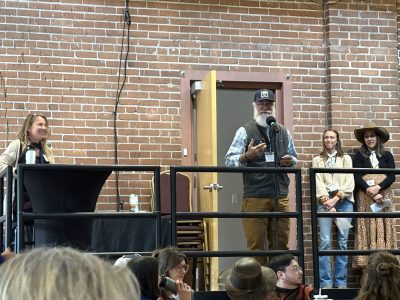
County Commission Chair P.T. Wood speaks at the Friday session of the Agri Summit. At left if Andrea Earley Coen, Executive Director of sponsor Guidestone. Right are Ashleigh Logan and Madison Everett of the Upper Arkansas Conservation District. Dan Smith photo.
Wood stressed what a challenging year it’s been for agriculture with the worsening of the drought in the Arkansas Valley and the state, but said it’s been encouraging to see steps being taken to answer the challenges.
“We’re starting to take steps to elevate agriculture in our valley and acknowledge the importance that it plays in our local economy and in our day-to-day lives in the Arkansas River Valley.”
Wood pointed out that about half of the valley’s irrigated farm and ranch land has been lost in the last 35 years; from about 88,000 acres in production in the 1980s to about 34,000 irrigated acres now. Meaning we’ve lost more than what’s left.
“It highlights the critical need for all of us, (and) the county government to wrap our arms around how we preserve agriculture for the next 165 years — to ensure agriculture exists here when Colorado turns 300.”
Among the many breakout sessions and presentations was a keynote address by Yadi Wang, titled “To Whom Do You Belong”?
It explored science, philosophy, and theology interns of geological and human timelines with a goal of a sense of place in a journey of lifelong learning. Wang later presented Farmland Common; an alternative approach to the typical generational legacy of agriculture.
Other varied presentations included one by Annie Overlin of the Colorado State University Extension discussing ranching decisions for 2026, drought strategies, and pasture renovation. She also described CSU support programs for a producer-focused outlook on drought planning, cattle market projections, and weather and ecosystem responses from an adaptive management study.
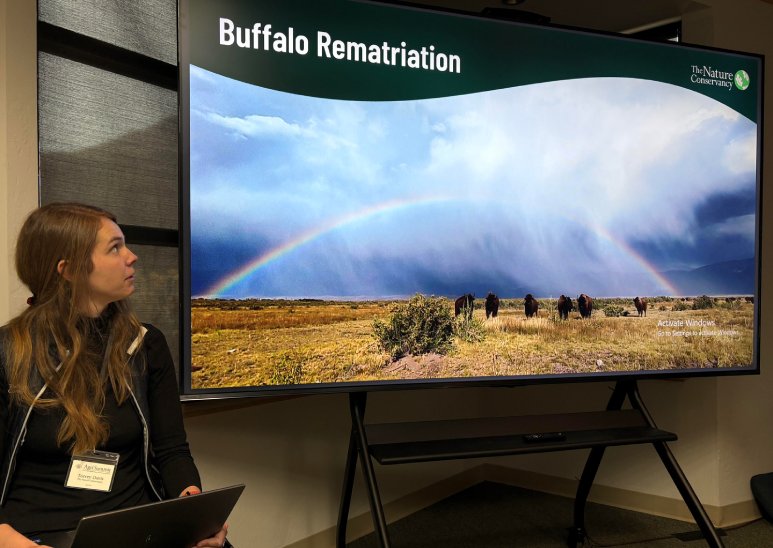
The Nature Conservancy’s Torrey Davis presented an update on the 23,000-acre Zapata Ranch Preserve, a Conservancy property near the Great Sand Dunes National Park. Davis manages care of the large bison herd on the sprawling property, and spoke of relationships with other buffalo herd organizations, including the Intertribal Buffalo Council, whose goal is of help various tribes build or maintain their own bison herds, by shipping some of the herd to them.
“And so, we’ve started working with the Intertribal Buffalo Council, which is a federally-chartered Indian organization…they work nationwide; we work with 86 different member tribes that have buffalo, basically with the intent of restoring buffalo to tribal lands and tribal people.” said Davis.
Other programs included Food as Medicine by Heart of the Rockies Medical Center Dietician/Nutritionist Sally Ayotte of Nourish Colorado. She talked about how food can support mental, emotional, and overall health and well-being.
There were many more varied offerings during the summit, including breakout sessions on virtual fencing for livestock, fungi as an asset to ecological resilience, agrivoltaics and community solar cells. Other topics included growing for chefs, the potential for small farms to have large impacts building regional agricultural economies for the future, and many more.
The summit reinforced the critical nature of building relationships and awareness within the county of the importance of local agriculture and awareness of its role on much more than simply food production.
Featured image: Torrey Davis, Zapata Ranch Preserve Manager for the Nature Conservancy, speaks March 6 at the Agri Summit on buffalo herd management. Dan Smith photo.