
I imagine one reason for Finland’s success may be that it still appears to believe in education’s intrinsic value, a notion long abandoned by the people who run our own education system. Asked about intrinsic value, they will probably maintain it is an antiquated notion or, even worse, that what isn’t measurable or “customer driven” can’t, by definition, have any value, intrinsic or otherwise. Yet haven’t we had enough of a dreary, means-to-ends Gradgrindism, something which, if Ms Riddoch is right, could never happen in Finland?
READ MORE: Meet 4 of Scotland’s rising stars ahead of Glasgow International Comedy Festival
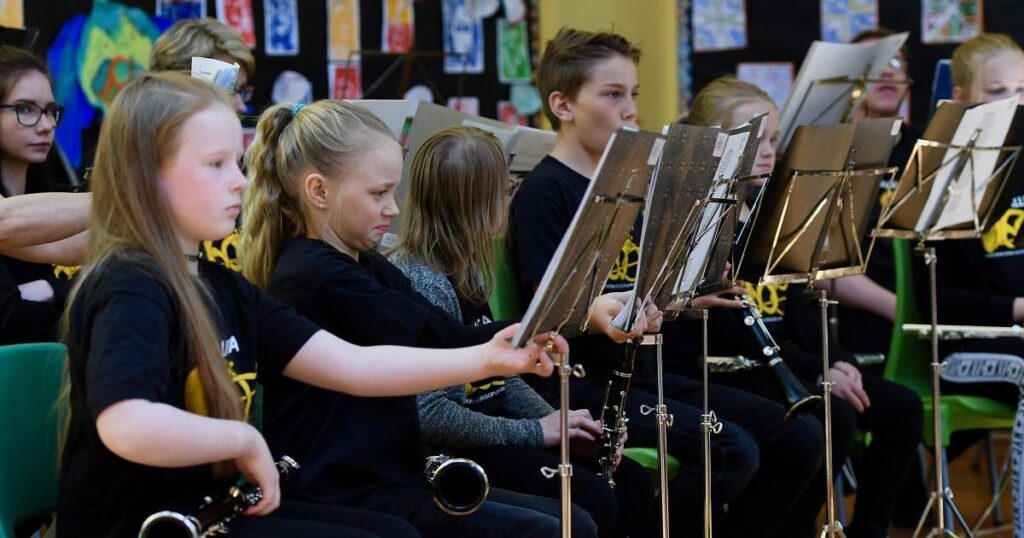
A belief in intrinsic value might also go some way to accounting for the popularity of classical music in Finland. A love of classical music is certainly one of the outcomes of its education system. There are no struggling orchestras or opera/ballet companies in Finland. Demand ensures there are many more of them than here. Finnish people flock to performances by their eight state-funded orchestras, led by the Helsinki Philharmonic and the Finnish Radio Symphony Orchestra. They, like Its National Opera and Ballet company, are backed up by a host of regional companies.
There is a similar story regarding film. Finland has a thriving domestic industry, making up to 20 films per year, that protects it from Americanised pap. Aki Kaurismaki is one of its world-famous directors.
In terms of population, Finland is a small country. Yet culturally it punches well above its weight. Perhaps its example is one that a free Scotland could seek to emulate, though this would mean far bigger state subsidies for the higher arts than is currently the case. A demand for this might cause quite a stooshie.
Alastair McLeish
Edinburgh
ON January 19 First Minister John Swinney hit out at claims local authorities may jack up Council Tax by 8% in a bid to balance their books. He said hikes of this level would not be “reasonable” and instead backed inflation-level rises of around 3%. He was also asked if he believed the government’s settlement was enough for councils to restrict tax rises to around 3%. “I think these are more reasonable numbers,” he said. “And I think you’ve got to look at the fact that we gave a very strong settlement last year”.
Aberdeenshire Council has confirmed a 10% rise. After approving a 7.8% increase in Council Tax on top of £1.5 million of cuts, the leader of West Dunbartonshire Council, Martin Rooney, predicted that it “will go bankrupt” in the near future unless things change. A report from the Accounts Commission warned that councils risk becoming financially unsustainable over the next three to five years. There is also an 8.67% increase in the combined water and wastewater charges set by Scottish Water.
READ MORE: See the full list of council tax rises across Scotland for 2026
In John’s home local authority, Perth and Kinross, SNP council leader Eric Drysdale has stated it was “one of the most challenging budget cycles” and the current financial pressures are “the highest they have ever been”. Perth and Kinross councillors then voted by 22 votes to 13, with five abstentions, to support an 8.9% rise. The SNP administration, LibDem councillors, and former SNP leader Grant Laing – now sitting as an independent – supported the SNP motion.
Occupants of a Band E home in Perth and Kinross were paying a total of £2,753.30 last year and will now pay £2,996.51. At that rate of increase by 2031 they could potentially be paying more than £4500.
Because of the fundamental lack of a firm link between Council Tax and income, a pensioner couple with a relatively low income living in a similar home to that of the First Minister (salary £170K) in Perth and Kinross will pay the same amount of Council Tax. Is that fair?
Dr Iain Evans
Edinburgh
LETTERS complaining of bank branch closures remind me of how the several prolonged Irish bank strikes between 1966 and 1976 were coped with by customers, who simply wrote cheques to each other for goods or services.
Those cheques were then endorsed on the back by their recipients “please pay to…” and given to others as payment for whatever. Very soon, there were thousands of such cheques in circulation, with many endorsements on them, with people putting them together to make up required totals for purchases, or for giving change, as well as still writing new cheques if needed.
READ MORE: Why do Glasgow’s historic buildings keep burning down?
The Irish people had in effect created their own currency as a substitute for banknotes.
This arrangement could of course have gone on forever, but when the Irish banks opened again, the holders of endorsed cheques presented them to a bank for clearance and credit to their own account.
In reality, the striking Irish banks had become unnecessary for the continuance of trade, because a new currency had been created.
Granted, people knew that their banks would finally honour their collections of multi-endorsed cheques, but there is a lesson to be learned here, surely?
Malcolm Parkin
Kinnesswood