
Production: By Europod, in co-production with Sphera Network.
EUobserver is proud to have an editorial partnership with Europod to co-publish the podcast series “Briefed” hosted by Léa Marchal. The podcast is available on all major platforms.
You can find the transcript here if you prefer reading:
The war in Iran has once again highlighted a familiar issue: when it comes to international politics, the European Union does not always speak with one voice.
Why doesn’t the EU have a single president?
After the strikes carried out by the United States and Israel against Iranian targets, European responses were diverse. Emmanuel Macron, Friedrich Merz, and Pedro Sánchez captured media attention with their positions, which were not perfectly aligned.
This was an opportunity for the European Union to refocus the debate by presenting a common stance, voiced through a single representative. Instead, three different figures spoke on behalf of the Union, adding to the statements from heads of state.
The result? A multitude of declarations that can give the impression of a certain cacophony — especially in times of international crisis, when diplomatic clarity is often essential.
How did we get here?
Let’s first recall that the European Union is a union of sovereign countries.
Even though the Treaty of Lisbon, which came into force in 2009, strengthened European diplomatic coordination, decisions on foreign policy still largely fall to the member states.
This institutional reality is often summed up by a famous question: “If I want to call Europe, what number do I dial?”
The quote, usually attributed to former US secretary of state Henry Kissinger, highlights a very real problem: the difficulty — both for allies and adversaries of the EU — in identifying a single point of contact for Europe.
Even today, leaders like Donald Trump, Xi Jinping, or Vladimir Putin might ask the same question.
The situation is made worse by the fact that the European Union has no fewer than three presidents:
There’s the president of the European Commission — currently Ursula von der Leyen — who heads the EU’s executive branch. Then there’s the president of the European Council—currently António Costa—who represents the Union at international summits.
Finally, the president of the European Parliament, Roberta Metsola, leads the institution that directly represents EU citizens.
This institutional structure reflects the balance between EU institutions and member states, which the latter hold dear.
Yet the current system sometimes leads to awkward situations, such as when Turkish president Recep Tayyip Erdoğan hosted Commission president Ursula von der Leyen and European Council president Charles Michel in a ceremonial room — and only provided one chair, facing his own, for the European Union. Von der Leyen ended up seated on a sofa, off to the side.
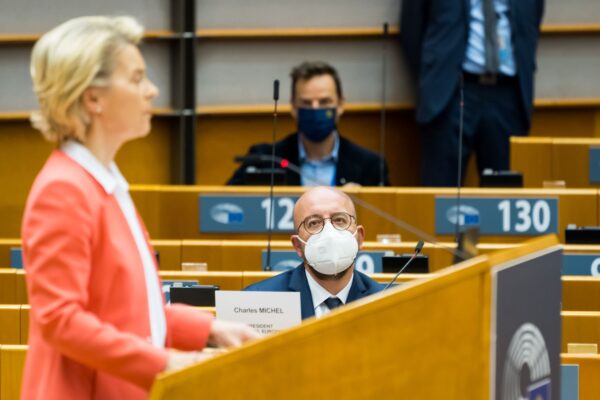
This episode marked the beginning of a series of incidents that exposed tensions and rivalry between Von der Leyen and Michel.
But beyond their personal relationship, their roles often overlap—especially in foreign affairs.
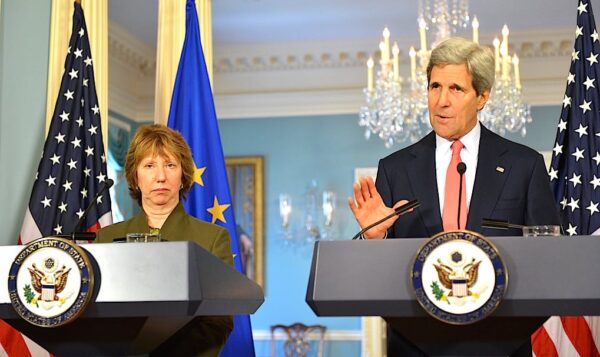
To complicate matters further, the EU also has a high representative for foreign affairs — currently Estonia’s Kaja Kallas since 2024 — who articulates the position of the 27 member states on major international issues and represents the 27 European foreign ministers.
So, why not a single president for the EU?
Proposals have already been made. One of the most concrete involves merging the roles of president of the European Council and president of the European Commission to give the Union a more unified face on the global stage.
The idea was recently revived by Manfred Weber, President of the European People’s Party, who has expressed interest in filling the role after the next elections in 2029.
Technically, it would be possible: member states would simply need to appoint the same person to lead both the Commission and the European Council.
But politically, the idea doesn’t appeal much to member states.
A single president at the helm of the European Union could take up more space on the international stage—and overshadow some heads of state or government. On many issues, national leaders prefer to promote their own interests or even pull the spotlight toward themselves for electoral gain.
And even if such a merger were to happen, one reality would remain: in the current European Union, member states always have the final say on foreign policy. The voice of a single EU president would still be limited to what the 27 are willing to let them say — at least on international matters.