
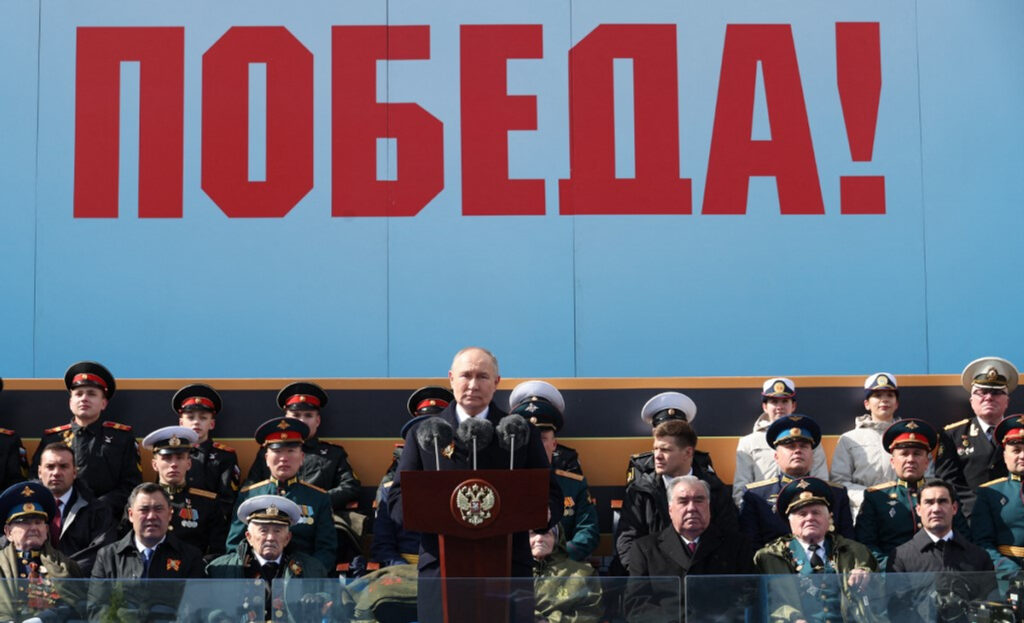
Complaints that the Kremlin’s bid to conquer Ukraine looks hopeless and that President Vladimir Putin has no exit strategy have spiked among Russian government critics and even pro-Moscow military bloggers, in the wake of a wave of positive war news for Kyiv on and off the battlefield.
Russian propagandist Ivan Pankin, a Komsomolskaya Pravda journalist on the record for supporting expanded bomb and missile strikes on Ukrainian civilians whom he called “stupid” and “primitive,” in a March 8 interview published by that outlet, questioned whether Moscow or anyone else knows when victory might come.
Follow our coverage of the war on the @Kyivpost_official.
“All the villages and so on we need to capture to achieve the goals and objectives of the special military operation – of course, they will be ours. Of course. For strategic reasons. There are absolutely no doubts about this whatsoever. It’s just when. That’s the key question. When will it all end? When will it all, finally, end? There is, I am putting this gently, a certain amount of fatigue among people. To put it mildly,” Pankin said in a video interview.
Komsomolskaya Pravda is a major Russian tabloid and a Kremlin-approved media outlet, with an estimated 3.5 million readers in Russia and 500,000 abroad, with four to five million more reading the digital version. The publication typically is rated in the top two or three of Russia’s dailies. “Special military operation” is the Kremlin-approved term for the four-year-old Russo-Ukraine War.
Other Topics of Interest
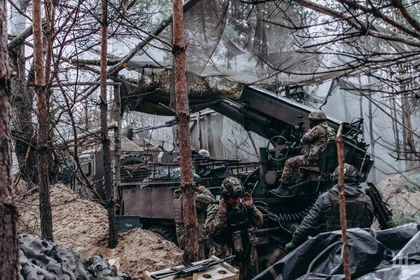
Ukraine’s military says a planned offensive has retaken more than 400 sq km and nearly cleared the Dnipropetrovsk region, forcing Russian troops to delay operations and reinforce defenses.
Danil Bezsonov, a senior official in the Russia-supported Donetsk People’s Republic, in a late February interview published on his personal Telegram channel, complained that Russian military leadership has ignored command and organization problems for years, which has prevented victory over Ukraine, and that he has little confidence those problems will be fixed. Ukraine was supposed to be a pushover and it isn’t, he told listeners.
“We’ve had to accept the reality that our weaponry isn’t unique or superior, neither side has better weapons, and there are things that the enemy has that we don’t. And the main problem, in my view, is still, you know, maybe it’s not popular to say such things, this is my subjective opinion, the problem of [insufficient] professionalism and motivation by officers in command is still there,” Bezsonov said. “And the problem is, in my opinion, is that all communications between officers and subordinates, in general, are built on humiliation, on abusive language, and things like that. That is a massive problem in my view. When a person fears his commanders more than death, more than the enemy, well, they don’t fight very well.”
A successful Ukrainian mini-counteroffensive still in progress in the southern sector took advantage of Russian troop demoralization in February, liberating about 400 square kilometers (154 square miles) of lost ground. Led by small teams of highly trained Ukrainian assault infantry that encircled and either wiped out or captured Russian troops isolated from support, and with weakened morale due to cold and hunger. The attacks, mostly in the southern Zaporizhzhia sector, made February 2026 the first month since October 2023 that Russian forces lost more ground in Ukraine than they gained.
Maksim Kalashnikov, a self-described Russian “patriotic military writer” and editor of Military Industrial Journal, an independent targeting government security professionals, in a Sunday Vlog, commenting on a devastating round of Ukrainian drone and missile strikes that had badly damaged a Russian strike drone launch site and ammunition storage in the Russia-occupied city of Donetsk, took the Kremlin to task for using bloody assault tactics and frontal assaults:
“All these positional battles, what have they thrown us into? Our leaders, the tactics they’re using. It’s turned into something like World War I. When our infantry moves up, like in the Russo-Japanese War, they reach the firing areas of the enemy, and then from the air, drones, drones, drones. It’s a horrible thing. So how do we stop it? How do we end this nightmare? Because, as we know, the strategy of attrition that Moscow has chosen – it’s really now working against the interests of the Russian Federation.”
Kalashinkov added that Kyiv’s effective air attacks were “humiliating.”
In a March 8 interview on the sometimes Kremlin-critical information platform Radio Avrora, Maksim Klimov, Russian Naval Captain Third Class (Retired, NATO equivalent rank: Lieutenant Commander), echoed Kalashnikov’s comments.
“Every day that we report ‘tactical successes,’ it’s not even a question of the casualties our troops are taking. Every single day we don’t get operational and strategic success, time is working against us. The situation is that we are trying to do something [on the battlefield]…there is a line beyond which we don’t see anything, and from there fly many, many drones, he said.
Klimov said frontline troops aren’t receiving anti-drone technology and modern communications equipment because the Russian government simply doesn’t buy it, and that the field commanders who do so privately sell it to combat units at a profit.
“State purchases [of advanced kit] for troops actually on the line, who are paying in blood, purchases for them are like from an eye dropper,” Klimov said.
Klimov, per open sources, has more than 100,000 followers, mostly Russian military professionals. Kalashnikov reportedly has around half a million followers. For most Russian viewers and readers, Kalashnikov’s evocation of World War I and the Russo-Japanese War would be a masked but unmistakably blunt warning to national leadership: In both those wars, heavy casualties led to a Russian army mutiny, revolution and overthrow of the national political leadership.
Igor “Stelkov” Girkin, a former KGB officer and commander of Russian troops operating in Ukraine in 2014-2015, now imprisoned for criticizing Russia’s war effort too directly, in an open letter published on March 6 wrote he expects President Putin and his allies to stay loyal to the narrative of continued success in Ukraine for some time, because of political unwillingness within Kremlin walls to admit to themselves the war situation is worsening and already there is no way left to reverse it.
“And what about us [Russia]? – I predict… Moscow will drag the things to the last possible moment, refusing to seek either a decisive victory or capitulation…But the ‘balance’ is gradually shifting towards ‘We can’t fight, we must capitulate!’ However, before the ‘switch’ [sufficient pressure to force the Kremlin] if this scenario comes to pass, there will still be months of [faked] ‘continuous victories’ on the battlefields….and more and more fierce bombardment of Russia’s deep rear,” Girkin said.
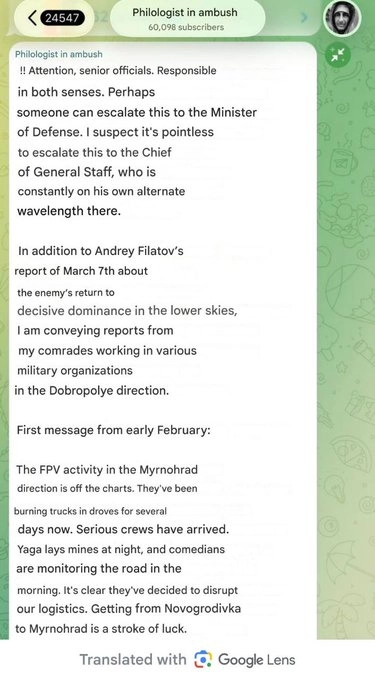
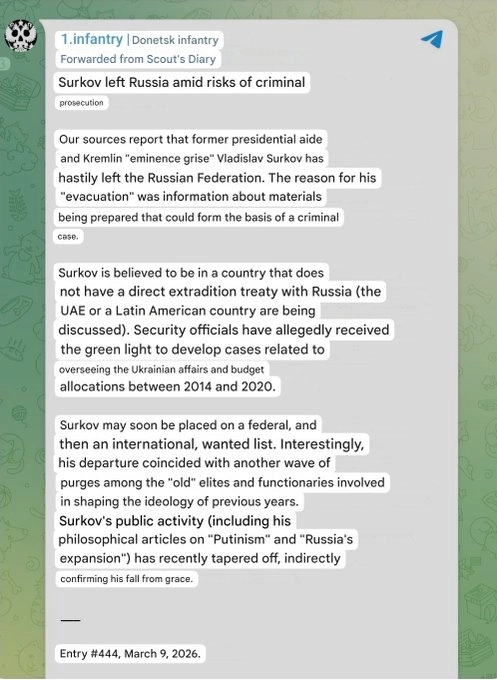
In a Tuesday review of the military balance and probable operations in Ukraine in the upcoming Spring, the Washington D.C.-based Institute for the Study of War (ISW) said that Russian offensive capacity in coming months would be weak and that Ukrainian counter-attacks in the southern Zaporizhzhia sector are real and a serious setback to Kremlin hopes to develop sufficient troop numbers and firepower to defeat Ukraine on the battlefield:
“The Russian military simply does not have the capacity to overrun Ukrainian defenses that Putin constantly claims. Ukrainian forces are successfully counterattacking…These counterattacks are generating tactical, operational and strategic effects,” the ISW report said. “The counterattacks in southern Ukraine are also having strategic effects in other parts of the theater. The cascading effects that the Ukrainian counterattacks in the [south] have generated in other sectors of the front show how constrained the Russian force structure in Ukraine really is.”