
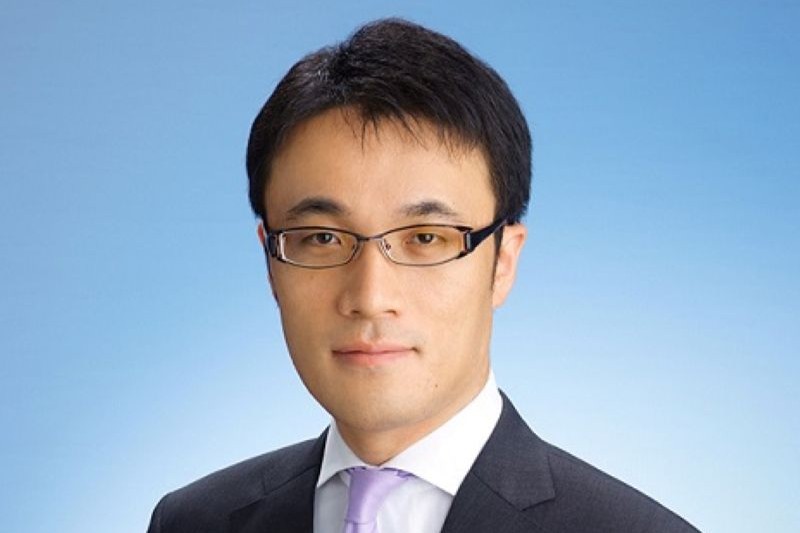
Ahead of a roundtable hosted by Funds Europe on Japan, Shinichiro Hashimoto of the MUFG Japan Equity Value Creation Fund has answered questions about the durability of reforms impacting at the company level in the country, and factors such as politics and rates policies impacting the overall performance of the market – alongside opportunities for activist investors.
Are we seeing a permanent shift in corporate mindset regarding “cost of capital” and return on equity (ROE) improvement, or are many companies merely performing short-term fixes (like one-off buybacks) to satisfy the Tokyo Stock Exchange (TSE) requirements?
Based on developments up to 2024–2025, we believe everything indicates that Japan’s corporate governance and capital-efficiency reforms will continue for many years.
Japan’s focus on improving capital efficiency through the Tokyo Stock Exchange’s (TSE) price to book ratio (PBR) initiative, enhanced disclosure of cost of capital, and stricter expectations around ROE should be regarded as a long-term, structural reform, not a temporary policy cycle. Since 2023, the TSE has introduced sustained measures requiring companies, particularly those trading below 1x PBR, to articulate how they will raise corporate value over time. Companies are expected to disclose their cost of capital, set medium-term ROE targets, and present specific initiatives to enhance profitability, asset efficiency, and capital allocation. These expectations have no end date.
This policy emphasis is reinforced by the broader alignment across Japan’s regulators, such as the Financial Services Agency (FSA), the Ministry of Economy, Trade and Industry (METI), and the TSE, which have collectively prioritised governance enhancement, balance sheet optimisation, and improved capital allocation discipline. This alignment mirrors Japan’s Stewardship Code (launched in 2014) and Corporate Governance Code (launched in 2015), both of which continue to be strengthened more than a decade after their introduction. The current capital efficiency initiative is regarded as a continuation and deepening of that structural reform.
Corporate responses indicate that many companies have incorporated ROE and PBR improvement goals directly into their medium-term management plans, supported by increased share buybacks and dividends, restructuring of loss-making units, and unwinding cross-shareholdings. We believe that these changes, once implemented, are difficult to reverse and are reshaping management mindset.
In addition, the reform has attracted renewed global investor engagement. Foreign investors increasingly view Japan as a market undergoing sustained governance and capital efficiency transformation. Their expectations reinforce the momentum for continued corporate discipline and further rerating potential. This dynamic reduces the likelihood that companies or regulators will retreat from the reform path.
Finally, Japan’s demographic and macroeconomic environment add the structural pressure for this trend to persist. With a shrinking domestic investor base and historically low capital productivity, Japanese companies are having to demonstrate higher returns on capital to attract, and retain, global investment. Broadly speaking, improving ROE and optimising balance sheets are therefore inevitable, not optional.
Do you feel that the reforms being proposed by the Takaichi administration will further strengthen the TSE/governance reforms – are there other reasons why you would keep an eye on certain proposals from the administration?
A Takaichi administration is widely expected to maintain – and potentially reinforce – the trajectory of TSE and corporate-governance reforms advanced in recent years. The policy direction toward higher ROE and more efficient capital allocation is likely to remain intact, and may strengthen even further, given that Takaichi is viewed as one of the most pro-growth reformers in the current political landscape.
To what extent do changes in FX rates, particularly JPY/USD, impact the valuation calculations you perform on individual companies; and are the share classes in the fund other than JPY – eg, USD, EUR, GBP – offered on a currency hedged basis?
For the overall FX market, a 1-yen appreciation versus the dollar tends to reduce profits by roughly 0.2–0.4%. However, for individual companies, sensitivity varies widely depending on revenue mix, cost structure and other company specific factors. For companies whose earnings are heavily driven by exports, we incorporate FX impact into our earnings forecasts, as they may influence the resulting Leveraged Buyout (LBO) valuation methodology.
We currently have a USD hedged share class available but can launch further hedged classes if required.
How does the shift from a deflationary to an inflationary environment in Japan specifically benefit the sectors where you identify most intrinsic value opportunities?
Japan’s shift from a deflationary to an inflationary environment is structurally positive for the value biased sectors where we see the strongest intrinsic value sector opportunities, including: Chemicals, Rubber Products, Marine Transport, Mining, Warehousing, Electric Power & Gas, and broader Materials. Moderate inflation restores long-suppressed pricing power and enables more consistent input cost pass-through. These sectors also benefit from strong operating leverage to nominal GDP growth, allowing even modest price normalisation to translate into attractive ROE improvement and a narrowing of the valuation discounts accumulated during decades of deflation in Japan.
Why is the LBO model a more effective predictor of alpha in the Japanese public market than traditional metrics like price to earnings (P/E) or simple price to book (P/B) ratios, and does this approach require you to focus only on companies with strong enough cash flows to theoretically support leverage?
The LBO model serves as the analytical engine of our screening process, allowing us to identify discrepancies between our estimated target price (fair value) and the current share price. This model provides a valuation framework that derives a target price under the assumption that the company has undertaken the strategic enhancements we believe are feasible. While we do examine traditional valuation measures such as P/E and P/B ratios, these metrics each capture only a narrow aspect of corporate value. P/E ratios focus solely on reported profits, and P/B ratios reflect only the balance sheet. Similarly, discounted cashflow (DCF) and economic value added (EVA) are robust valuation approaches, but they produce a target price based on the company’s current status quo and capital allocation. They do not account for the potential value that could materialize through corporate improvement.
In contrast, the LBO model highlights the intrinsic value that could be unlocked if a company executes effectively in areas identified by our investment team, such as: a) balance sheet optimisation: unwinding cross-shareholdings and idling real assets, share buybacks, increasing dividends, etc; b) business portfolio optimisation: selling out non-core loss making business, bolt-on acquisitions, etc; c) control premium: unwinding listed subsidiary companies, industry consolidation, etc.
MUFG’s engagement approach is tailored to each company’s stage in its corporate life cycle, ensuring that we encourage the most relevant and impactful improvements. For example, with a mature company, we would prioritise balance sheet optimisation rather than encouraging a bolt-on acquisition.
Deep value stocks often carry the risk of being “value traps” (cheap for a reason). How does your qualitative screening process differentiate between a company that is fundamentally broken versus one that is simply mismanaged and fixable through engagement?
Although we do not intend to go after deep value stocks generally, the LBO model identifies latent value, and our qualitative screening determines whether that value is realistically realisable. We differentiate a “fundamentally broken” company from a “mismanaged but fixable by engagement effort” by assessing our 6Cs Analysis: capital compounding, cash-flow generation, crown jewel asset, continuous corporate actions, competent management, and creating shared value by resolution of ESG issues which is compatible with sustainable earnings growth.
Can you describe in more detail the way your collaborative approach to engagement differs from that typically found in the West – as noted in the information on the strategy approach – and can you share an example where a “hostile” approach by other investors failed, but your collaborative, long-term dialogue succeeded in convincing management to implement balance sheet or portfolio optimisation?
Several hard-line activist investors attempted to expand their influence in the Japanese equity market during the 2000s and 2010s, but most were ultimately unsuccessful and eventually withdrew. Well known examples include Steel Partners’ efforts to influence Sapporo Holdings, and Third Point’s engagement with Sony. One renowned US activist also pursued smaller real-estate-related opportunities through its Japan office but ultimately concluded that the traditional activist playbook had limited prospect in Japan and exited the market.
While Japan-specific factors such as defensive takeover measures and persistent cross-shareholdings were contributing obstacles for the activists, the more fundamental challenge was the lack of support from domestic institutional investors.
In the 2020s, however, many activists returned to Japan, adopting a softer and more collaborative style of engagement and presenting pragmatic proposals that attracted backing from Japanese institutional investors. These activists now maintain regular dialogue with domestic institutional investors, including ourselves. One US activist mentioned above, which re-entered Japan around 2020, has taken positions in companies such as SoftBank, Dai Nippon Printing, Mitsui Fudosan, Sumitomo Corporation, and Tokyo Gas. They now generally avoid shareholder proposals or proxy fights, preferring a more patient approach, closely aligned with MUFG’s engagement style.
In this environment, hard-line Western activist investors find it difficult to invest in Japanese companies unless the probability of success is exceptionally high, as a failed campaign would damage their reputation and diminish their overall influence. We believe that the institutional investors employing a more collaborative engagement approach can benefit more broadly, as constructive engagement is now more widely supported in the Japanese market.
Japanese companies are famously conservative with cash. What is your specific “escalation strategy” if a company with a strong balance sheet refuses to increase payouts or buybacks despite your engagement efforts?
Proxy voting is one of the most direct and influential tools we can use to enhance corporate actions or corporate behaviour. When engagement alone does not lead to change, proxy voting especially votes against management proposals – signals that the concerns raised need to be addressed.
This escalation demonstrates that we are willing to translate dialogue into formal suggestions for governance. By voting against directors (eg, the CEO, CFO, or chairs of key committees), we can hold management accountable for ineffective capital allocation, weak governance, such as reforming poison pills or takeover defence shareholder returns, such as dividend policy, share buybacks, and unwinding cross-shareholdings. With our significant active and passive holdings, MUFG holds one of the most influential voting stakes in the Japanese equity market.
With the accelerated unwinding of cross-shareholdings (eg, the Toyota Industries example), do you view the resulting liquidity as a risk of oversupply in the market, or purely as a catalyst for capital efficiency?
With the accelerated unwinding of cross-shareholdings – illustrated by cases such as Toyota Industries – we view the release of capital as a direct outcome of the ongoing governance and capital allocation reforms in Japan. The proceeds are increasingly redeployed in ways that enhance capital efficiency: buying back shares that were previously held in mutual cross-shareholdings, strengthening dividend distributions, and reinvesting in higher-return growth opportunities. We are seeing these actions reflect a broader structural shift toward more disciplined balance sheet management and improved shareholder returns.
Given the relative weightings across various sectors versus the index, how do you manage the risk of underperformance during growth-led market rallies?
From time to time, we see bubble-like price movements in themes such as AI and defence. The most recent example occurring from October 2025 – but our valuation discipline has remained effective and has supported performance.
Given these shifts in the investment environment, we will continue to pursue attractive opportunities not only within traditional value-oriented sectors but also within growth-led segments, leveraging our LBO approach. We continue to focus on companies that are making progress in strengthening their balance sheets and optimising their business portfolios, and that still have room to enhance ROE through corporate reforms. That said, we remain watchful of any opportunities created in specific areas by ongoing TSE reforms.
Once a company implements the suggested improvements (eg, raises dividends, optimises the portfolio) and the valuation gap closes, do you automatically exit, or do you retain the stock as a “quality” compounder?
When a stock’s price nears the fair value estimated through our LBO model, we generally look to exit the position. We rarely continue to hold a stock after it rises above the fair value implied by our LBO model.
You mention that unlike typical activist funds which hit capacity limits quickly, your strategy still has “considerable room to increase” – what are the factors that enable you to avoid capacity constraints, and are there any particular trends in the Japanese equity market that could manifest as a capacity constraint on a strategy such as this?
While mid-cap stocks currently represent the core of our portfolio, we continue to identify compelling opportunities even among large-cap names. As a result, we do not expect liquidity to become a constraint for portfolio construction for the near future.