
The canonical children’s literature author: from the Global North to Latin America
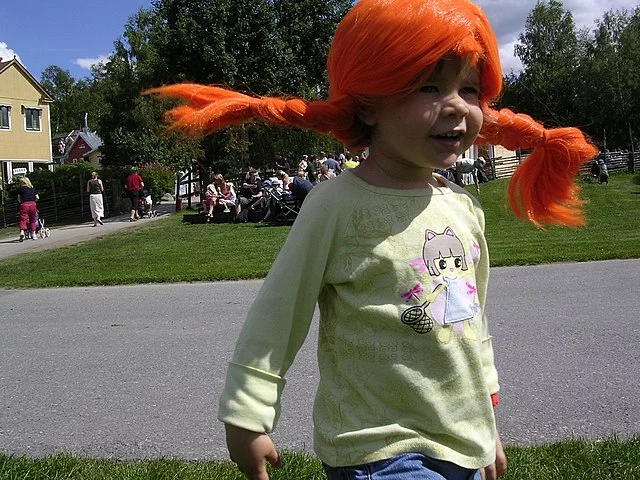
Depending on where you are on the European continent, when speaking of children’s literature in conversations with friends, soon-to-be parents or acquaintances, names such as Astrid Lindgren and Roald Dahl are likely to pop up. These writers from Sweden and Great Britain, respectively, have permeated public discourse, becoming part of Europe’s cultural heritage. Their books are deemed worthy of passing from previous generations to the next (Stevenson, 2009). People might even recognise these names without ever having read their books (Wiman in Van den Bossche, 2015), as is the case for me when it comes to Dahl.
Popular, more contemporary names that come up time and time again when talking about children’s literature – such as Eric Carle or Oliver Jeffers and their oeuvre – can be said to have left the realm of the text. The works of these authors is manifested in extra-textual forms such as plays, short films, plushies and exhibitions (Van den Bossche, 2015).
© Photo by Peter Lindberg from Wikimedia Commons under Creative Commons Attribution 2.0
If you set foot in Latin America, local names also appear despite the widespread translation of children’s literature from English (Cámara Chilena del Libro, 2023). These names include the subversive, Argentinean illustrator Isol, and multidisciplinary Peruvian writer Michaela Chirif, to name a few. Their oeuvre permeates the continent, with language not being a barrier in their easy distribution and understanding of cultural references across this stretch of land. The same happens in Chile with a name that seems to be on everyone’s lips – at least those acquainted with the world of children’s literature –, María José Ferrada.
María José Ferrada (1977), a Chilean-born journalist turned writer, has a trajectory of over 20 years of writing books. Amassing over 50 titles under her name, she has been translated into over fourteen languages, and her oeuvre has been recognised 23 times through the awarding of both national and international awards. Other recognitions include being mentioned on the Honour List of IBBY (the International Board on Books for Young People) in 2014, and her nomination for the Astrid Lindgren Memorial Award in 2021, which is the highest paid children’s literature recognition worldwide, given to a person’s complete body of work. Despite most of her corpus being children’s literature, she has also ventured into writing adult novels, essays, and poetry.
A name to look out for: Channels of canonisation of María José Ferrada
“Names such as that of María José Ferrada, distinguished with the New Horizons Award in the Bologna Children’s Book Fair, appear naturally in all conversations about the panorama of children’s literature in Chile” (Moncada, 2024). It is with this quote from Chilean national newspaper, La Tercera, that one can perceive the country’s relationship with the writer. Ferrada is an internationally renowned author who returned to her Chilean roots after having gained success in Spain. She writes about national political events or referencing the flora and fauna of Chile’s rich Southern region.
Ferrada’s process of canonisation can be seen most tangibly through the many contexts in which she is talked about. This includes literary circles, such as her participation in international book fairs – ranging from Frankfurt (DIRAC, 2021) to Lima (Chilean Embassy in Peru, 2024). She is also present in academic circles, in which she participates in university talks on a national level (Pontificia Universidad Católica de Chile, 2023) and is discussed in academic articles (Suppa, 2020; Martínez-Carratalá and Miras, 2023). Furthermore, she collaborates with governmental entities, such as the Chilean Ministry of External Relations, which is in charge of establishing international relations and distributing funds for translations. What’s more, the author plays a role in participating in German events, establishing herself as an authorial voice abroad while promoting literary exchange between Chile and Germany (DIRAC, 2024).
Her influence does not stop there, as Ferrada also has a presence in mainstream media, with appearances on national television to promote her adult novels Kramp (2017) (CNN Chile, 2017) or El hombre del cartel (2021) (Las Últimas Noticias, 2021). Additionally, she is positioned within the educational system with the inclusion of her book Niños (2013) in the national curriculum’s recommended readings (Ministry of Education, 2020). A range of newspapers and magazines have reviewed her books, and one has deemed her worthy of forming part of a new feminist canon in the wake of the #MeToo movement in Chile in 2017 (La Tercera, 2018). These channels in which she circulates are where her canonisation process expands like a ripple, extending far from the closed doors of academia and literary criticism. Access to her evocative, poetic and deeply political writing is democratised, where various agents (such as librarians, educators, booksellers, journalists and parents) involved in her canonisation process inform the success of her work through bottom-up mechanisms, challenging conventional channels of canonisation. However, these forces are in dialogue with those that confirm the status quo; traditional channels of canonisation that emerge from above and confirm the current ideologies that are set in place (Van den Bossche, 2015).
A political figure: Capturing the voice of diverse childhoods
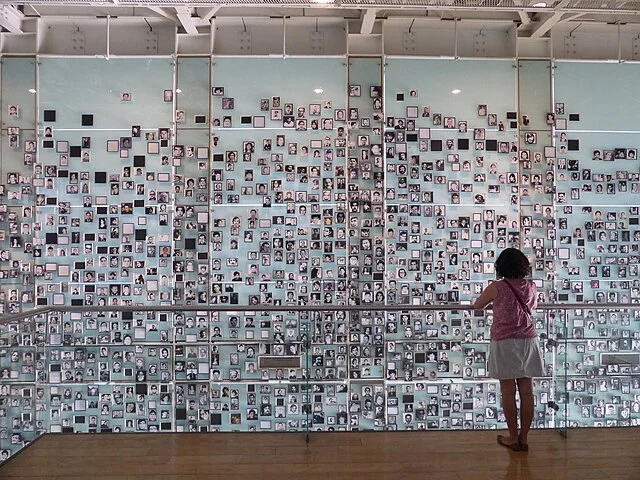
Critique and commentary on Ferrada’s work – be it linked to the literary quality of her texts or the function they have in society – often revolve around its political nature. References to Pinochet’s dictatorship from 1973 to 1989, which is a central event in Chilean contemporary history, are present in her books for both adults and children. Niños compiles short poems dedicated to children under the age of 14 who were executed or disappeared during this turbulent period; an element of the work readers only discover after they have finished reading them. However, the poems do not dwell on tragic stories of political persecution and violence; they focus on what they were denied, the mundane things in life that they enjoyed, and no longer could (Chirif, 2014).
© Photo by Carlos Teixidor Cadenas from Wikimedia Commons under Creative Commons Attribution- Share Alike 4.0
Another example is Mexique (2017). This is a historical narrative about the children who abandoned Spain in light of the Civil War and disembarked in Mexico. However, the context-specific references that permeate her work do not limit Ferrada’s readership. Her books have been translated widely and reviews from American critics point towards the valuable insights they offer into inequality, nonconformity and societal expectations in today’s society (Tin House, n.d.). Critics have deemed them timeless, which is another important factor for canonisation to occur (Weinreich in Van den Bossche, 2015).
In addition to political references in the content of her books, Ferrada’s works also hold a political function in Latin American contemporary society. She has stated that the empathy and recognition of others that she seeks to represent in her work, is key to avoiding conflict (Urdimbre Ediciones, 2021), and that she aims to represent the voice of children in her writing to get to youth so that they can build a better world (SECVER, 2020).
In consequence, she has been informally recognised as one of Chile’s children’s advocates (Troquel, 2024). One that listens to their inherently poetic understanding of the natural world and their awe at mundane daily life, capturing it in her adult self’s writing. Her work, deemed as “a reparatory act from children to children” (Cultural Corporation of Ñuñoa, 2020), gives voice to those who had their voice taken away from them, and mobilises the children of today to act, which is where the value of Ferradas’ work is deemed to lie (Troquel, 2023).
When nostalgia comes into play: An intergenerational affair
The political nature of Ferrada’s work and her authorial self have extended their area of influence beyond children and towards adults – appealing to nostalgia for childhoods passed and connecting adults with their inner-child selves. This has increased her visibility in institutionalised channels of canonisation, such as newspaper articles (Las Últimas Noticias, 2021; La Tercera, 2024) or interviews for national television (13C, 2015; CNN Chile, 2017.
Both Ferrada’s adult and child production carry an important nostalgic element. Her work is marketed to children, yet it subtly references a political context that adult mediators can potentially recognise themselves in (Illino, 2023). The poetic language that characterises her work appears to appeal to adult’s past selves, as Ferrada herself points out when discussing her book Mi barrio (SECVER, 2020). Her childlike, sensible style of poetic writing is mentioned in different reviews (Babar, 2020; Fundación Palabra, 2021; El Mundo, 2019), where it is said that she stands from the point of view of children when writing and invites the adult reader to temporarily return to the sacred space of childhood.
© Photo by Rodrigo Fernández from Wikimedia Commons under Creative Commons Attribution- Share Alike 4.0
Her two adult novels soon gained popularity, being the subject of newspaper and academic articles and having been published in 15 different countries. However, Ferrada claims to not write with a specific readership in mind, stating that these distinctions come from the outside when publishing and marketing her books.
The link between her production for children and adults continues with her adult books being told from a child’s point of view (La Tercera, 2021; Las Últimas Noticias, 2021). This is rare in literature aimed at adults, possibly due to the low status associated with children’s literature. Writing for children is seen as less valuable than writing for adult audiences (van Lierop-Debrauwer, 1999). Though political in nature, the stories told through a child’s perspective ignore the political turmoil surrounding them, leading to a naïve tone of voice that could increase relatability and emotional involvement. These are decisive qualities that cannot be overlooked in canonisation processes (Van den Bossche, 2015).
The crossover nature of Ferrada’s oeuvre, understood as fictional works that transcend the borders between adult literature and children’s literature (Beckett, 2017), is captured in a review of one of her works. This review claims that the book at hand will be “…on the shelves of those houses where children have not yet lost, due to the socially dominant bad taste, the musical ability of their ear and, of course, on the table of every adult reader of poetry” (Ventura, 2013, par. 5, my translation). Ventura refers to inherent literary qualities of Ferrada’s work that he associates with good taste, without mentioning the criteria with which this is measured. Quotes such as this one show that her work can be seen to enter a phase in which it is confirmed as being worthy of literary merit, and bestowed with authority as a piece of work deemed to be read and recognised.
From self-published to re-edited: The Iberoamerican conundrum
Situating ourselves alongside the premise that canonisation processes concern issues of power (Hunt in Van den Bossche, 2015), transnational relations have governed the construction of the image of Ferrada that Chilean readers have now.
Originally a self-published author, Ferrada’s first book was rejected by Chilean publishing houses due to it being a poetry book and not rhyming (Retamal, 2021). However, she did not sacrifice her writing style and decided to self-publish the book in 2005. She ventured into the Spanish publishing market and gained traction abroad. Ten years later, a renowned Chilean publisher, Zig-Zag, decided to publish the originally rejected book in what can be defined as a bottom-up canonisation process whereby her book was first published through a non-institutionalised channel. Then it gained popularity through the general public’s affective engagement with them and later on, through the influence her works had gained, traditional publishing houses deemed her worthy of publishing.
Laden with power dynamics between the European and Latin American continents, with all the subordination stemming from a long history of colonisation this entails, Ferrada’s work had to be recognised in Spain first (Chile’s colonising nation between 1541 and 1810) to gain the success she has now in her native country. This success, in turn, led to her being published in the rest of Latin America and propelled translations into Japanese and Danish as well.
The awards act as a fiat of quality, with numerous local and international reviews quoting them when referring to Ferrada’s publications.
Recognition in the shape of awards also speak to her role in a wider Iberoamerican context, in which relations between Latin America and Spain are concerned. Having won the Cervantes Chico Iberoamerican Award in 2022, given by the Organization of Iberoamerican States to value the work of writers for children and young adults in the region, her position within the Iberoamerican region became confirmed in a top-down manner. The awards act as a fiat of quality, with numerous local and international reviews quoting them when referring to Ferrada’s publications (Babar, 2020; Fundación Palabra, 2021; MaremotoM, 2024).
Awards within the Chilean context have also contributed to her ongoing canonisation, at home and abroad. The so-called Chilean trifecta of prestigious literary prizes has been awarded to Ferrada, pointing to her influence in governmental and literary circles. She won the Best Novel Award twice, in 2017 and 2022. Ferrada has also been awarded the Best Oeuvre Award of the Ministry of Culture in 2018, and the Chilean Government’s Municipal Literature Award of Santiago in 2018. Not coincidentally all these recognitions have been given to her work marketed towards adults, indicating a Chilean literary context which values and incentivises adult literature over that targeted at children.
However, whether her canonisation is marked by her writing for adults or not, these awards have allowed her to reach a wider audience. Marqués summarises the visibility granted by awards when writing for El Mundo newspaper in Spain (2019). He critically states that “there is no award in the world as powerful as to better the text it awards” (par. 1, my translation), pointing to the inherent aesthetic qualities that he recognises in Ferrada’s work, extending beyond awards and other institutionalised recognitions. However, he recognises the importance of awards in translation and recognition across borders. He continues to state that if one of Ferrada’s books had not said on the cover that it had won three of the most prestigious awards in her country, maybe it would not have been edited and published in Spain, which means this valuable piece of writing would not have been accessible (2019).
Insights into an ongoing relevance
© Photo by Rodrigo Marín Matamoros from Wikimedia Commons under Creative Commons Attribution-Share Alike 4.0
There are still important channels of canonisation missing in this ongoing process, even after having discussed Ferrada’s presence in academic, literary, political and educational circles, with ubiquity in institutionalised media – namely appearances on national television and newspapers with her adult novels.
First of all, librarianship plays a fundamental role in processes of canonisation, which generally indicates recommendations of a high standard (Lundin in Van den Bossche, 2015). The central figure of the librarian – alongside academics and literary critics – remains relatively absent in the corpus of sources consulted. A mention of a Spanish reviewer finding Ferrada’s work through a recommendation from a librarian friend (Marqués, 2019), and a recommendation of her novel Kramp by a network of Spanish libraries (Las Librerías Recomiendan, n.d.), speaks about the prominence of librarianship in Spain as opposed to the more widely investigated Chilean context, showcasing the lack of librarian voices.
Furthermore, whereas Ferrada has a presence in institutionalised, national media, she has not yet permeated popular culture. It may be too soon to see adaptations and remediations of her work, vital to gain a presence in popular culture (Clark in Van den Bossche, 2015). Her books have no more than twenty years of existence, and prominent awards for her oeuvre having been given in the last five to seven years only. Merchandising and other derivatives, understood as tangible references to a literary work that mark an authors’ works’ omnipresence in the cultural field do not yet exist (Van den Bossche, 2015). This might be for reasons related to the nature of her books – difficult to commercialise due to the political themes she addresses, or her poetic style of writing –, or for her stage in the canonisation process.
María José Ferrada’s complex and contingent oeuvre has the ingredients needed for its influence to expand further, which could lead to her becoming a canonised figure with her work gaining a life of its own. Fulfilling certain requirements in this process such as touching both adults and children alike, pointing to universal notions of childhood and allowing for relatability with the characters (Van den Bossche, 2015), to name a few, are qualities of Ferrada’s work that are mentioned repeatedly in articles, interviews, reviews and award announcements.
Moreover, her works can be seen as both contextually contingent and historically evolving, signifying the continuing relevance of her books in time. They seem to have a certain timelessness, despite some of them being rooted in specific political contexts, due to the universality of the matters she sensibly broaches. However, they are still deeply contingent with today’s times allowing for their continuous translation, as in the case of Niños. Ferrada signals the importance of new editions for the United States and Italy, stating that there are still children that suffer the consequences of political violence. So, to stop reproducing this cycle, when the children of today become adults, they must choose to act differently (Currículum Nacional, 2023).
Whether it is the European or Latin American, Spanish or Chilean, children’s or adults, feminist, political or poetic canon, María José Ferrada’s presence in canons, in their pluriform manifestations, is evident.
References
Beckett, S. L. (2017). Crossover Literature. Oxford Research Encyclopedia of Literature. Oxford University Press. https://doi.org/10.1093/acrefore/9780190201098.013.176
Cámara Chilena del Libro (2023). Informe Estadístico 2023. ISBN: 978-956-7070-47-3. https://camaradellibro.cl/wp-content/uploads/2024/03/INFORME_2023_ISBN…
Chirif, M. (2014, May 31). Niños. Revista Babar. https://revistababar.com/wp/ninos/
CNN Chile (2017, Match 20). María José Ferrada presentó su libro “Kramp” [Video]. https://www.youtube.com/watch?v=mvcVxnAWd_k
Corporación Cultural de Ñuñoa (2020, December 12). Presentación del libro “Niños” de María José Ferrada [Livestream]. Facebook. https://www.facebook.com/culturanunoa/videos/385821239157029
Currículum Nacional (2023, September 21). Tercera parte: recomendaciones lectoras por los 50 años del Golpe de Estado. Ministerio de Educación del Gobierno de Chile. https://www.curriculumnacional.cl/614/alt-article-344267.html
División de las Culturas, las Artes, el Patrimonio y la Diplomacía Pública (2021, September 22). La escritora chilena María José Ferrada gana el Premio Iberoamericano SM de Literatura Infantil y Juvenil. Ministerio de Relaciones Exteriores de Chile. https://www.dirac.gob.cl/noticias/literatura/traduccion/la-escritora-ch…
Embajada de Chile en Perú (2024, August 12). María José Ferrada fue parte de la delegación chilena que participó en la Feria Internacional del Libro de Lima [Images attached] [Status update]. Facebook.https://www.facebook.com/permalink.php/story_fbid=813067364345725&id=10…
Ferrada, M. J. (2017). Mexique (A. Penyas Illus.). Libros del zorro rojo.
Ferrada, M. J. (2013). Niños (M. E. Valdés, Illus.). Grafito.
García, J. (2018, May 19). El canon femenino: las escritoras chilenas que deberíamos conocer. La Tercera. https://www.latercera.com/etiqueta/canon-femenino/#
Llamas, F. (2020, September 30). Cuando fuiste nube. Revista Babar. https://revistababar.com/wp/cuando-fuiste-nube/
Las Librerías Recomiendan (n.d.). “Kramp” de María José Ferrada. https://www.laslibreriasrecomiendan.com/libro-de-la-semana/kramp-de-mar…
Maristain, M. (2024, January 10). Escribí la novela Kramp en homenaje a mi padre: María José Ferrada. MaremotoM. https://maremotom.com/escribi-la-novela-kramp-en-homenaje-a-mi-padre-ma…
Marqués, J. (2019, June 14). María José Ferrada: la magia del dolor. El Mundo. https://www.elmundo.es/cultura/laesferadepapel2019/06/14/5cfa7cd621efa0a4788b45b0.html
Martínez-Carratalá, F. A. and Miras, S. (2023). Ampliación de la experiencia lectora a través del diseño en la poesía de María José Ferrada. Catalejos. Revista sobre lectura, formación de lectores y literatura para niños, 17(9), 27-53.
Ministerio de Educación (2020). Lecturas sugeridas por Currículum. Lenguaje y Comunicación. 3° a 4° Medio. https://bibliotecadigital.mineduc.cl/bitstream/handle/20.500.12365/1755…– lenguaje-comunicacion-3-4-medio.pdf?sequence=4&isAllowed=y
Moncada, C. (2024, August 9). Literatura infantil em Chile: un mundo vibrante y complejo. La Tercera. https://www.latercera.com/culto/2024/08/09/literatura-infantil-en-chile…
Pontificia Universidad Católica de Chile (2023, July 22). Literatura infantil para mirar el mundo: Destacada escritora María José Ferrada visitará el Campus Villarrica. https://villarrica.uc.cl/literatura-infantil-para-mirar-el-mundo-destac…
Rivera, V. (2021). El Poder de la obra de María José Ferrada. Fundación Palabra. https://fpalabra.cl/el-poder-de-la-obra-de-maria-jose-ferrada/
Retamal, P. (2021, October 25). María José Ferrada: “Entrar a una escuela es como que te invitaran a la casa de una determinada sociedad”. La Tercera. https://www.latercera.com/culto/2021/10/25/maria-jose-ferrada-entrar-a-…
Sanhueza, L. (2021, May 31). Crisis social queda al descubierto por un letrero cuidado día y noche. Las Últimas Noticias. https://www.bibliotecanacionaldigital.gob.cl/bnd/628/w3-article-628591…
SECVER Oficial (2020, May 26). María José Ferrada [Video]. YouTube. https://www.youtube.com/watch?v=N7FaSAx7tq0
Stevenson, D. (2009). Classics and Canons. In M.O. Grenby & A. Immel (eds), The Cambridge Companion to Children’s Literature (pp. 108-123). Cambridge University Press.
Suppa, S. (2020). La estética y la voz ficcional en la obra de María José Ferrada. Derribando barreras en la LIJ. Catalejos. Revista sobre lectura, formación de lectores y literatura para niños, 11(6), 265-279.
Tin House (n.d.). María José Ferrada. https://tinhouse.com/author/maria-jose-ferrada/
Illino, C. (2023, August 8). “La educación va determinando cómo va a seguir funcionando la sociedad”. Troquel. https://troquel.cl/contenidos/maria-jose-ferrada-escritora-la-educacion…
Urdimbre Ediciones (2021, April 23). #Conozcamos a María José Ferrada. https://urdimbrediciones.com/conozcamos-a-maria-jose-ferrada/
Van den Bossche, S. (2015). The Perks of Being Talked About: The Outlines of Canonisation Processes. In Brought into the Limelight. Canonisation Processes at Work in Astrid Lindgren’s Oeuvre in Flanders and The Netherlands 1952-2012 [Doctoral thesis]. Universiteit Gent. https://biblio.ugent.be/publication/69166733
Van Lierop-Debrauwer, H. (1999). Crossing the Border. Authors Do It, but Do Critics? The Reception of Dual-Readership Authors in the Netherlands. In S.L. Beckett (ed.), Transcending Boundaries (pp. 3-11). Routledge.
Ventura, A. (2013, September 3). El idioma secreto. Revista Babar. https://revistababar.com/wp/el-idioma-secreto/