
 image: ©MicroStockHub | iStock
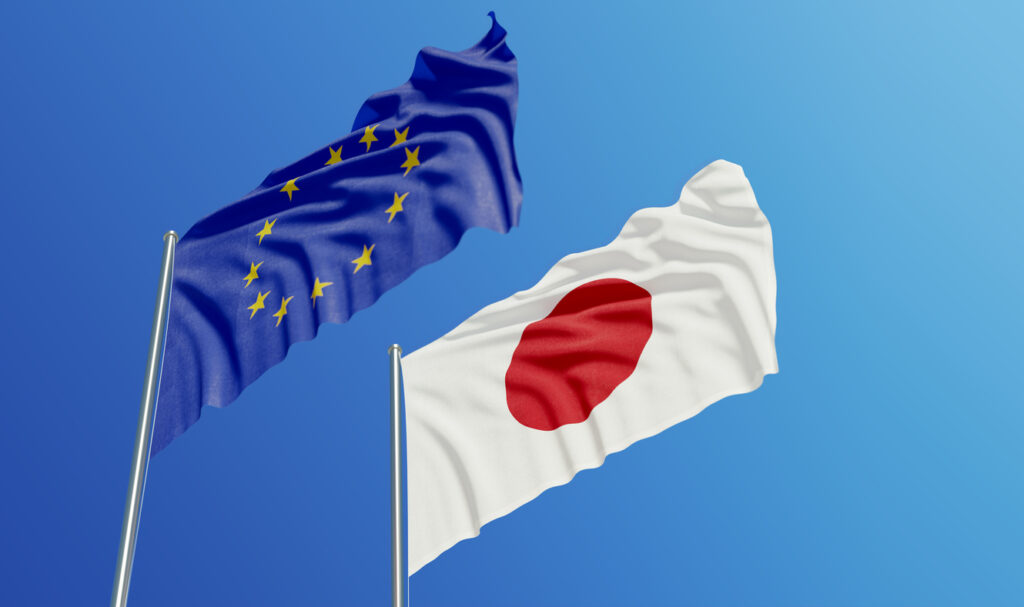
Europe and Japan have always had a strong partnership in research and innovation; Japan’s association with Horizon Europe now opens new opportunities for scientists, universities, and industries to collaborate on global challenges
Over the past two decades, cooperation between the European Union and Japan has steadily expanded, creating new agreements and funding opportunities that aim to boost scientific excellence, economic growth, and technological competitiveness.
Research partnership
Japan has become one of Europe’s most important strategic partners in science and technology. An important part of this relationship was the EU–Japan Agreement on Science and Technology Cooperation, which came into force in 2011.
The agreement established a framework for joint research efforts and encouraged collaboration between institutions, companies, and researchers on both sides.
Cooperation gained further momentum in May 2020 with the signing of a Letter of Intent to strengthen collaboration in science, technology, and innovation.
This also helped to create synergies between the European Union’s flagship research programme, Horizon Europe, and Japan’s Moonshot research and development programme, both of which focus on ambitious, high-impact scientific goals.
The Europe and Japan partnership reached another significant step in December 2025 when the European Commission and Japan successfully concluded negotiations on Japan’s association with Horizon Europe.
The agreement, expected to be formally signed in 2026, represents the closest form of collaboration the European Union offers to global partners within its research framework.
New opportunities through Horizon Europe
Horizon Europe, the EU’s largest research and innovation programme, has a budget exceeding €90 billion for the period 2021-2027. The programme is open to international partners, allowing researchers from around the world to participate in collaborative projects.
With Japan’s association with Horizon Europe, Japanese researchers will gain expanded access to the programme. They will be able to lead and coordinate their own research projects, apply for EU funding, and build partnerships with institutions across Europe and other associated countries. Transitional arrangements already allow Japanese entities to apply for calls from January 2026.
The agreement focuses particularly on Pillar II of Horizon Europe, which addresses major societal challenges through multinational collaboration. These include digital transformation, food security, sustainable agriculture, climate-neutral energy, and environmental resilience.
Cooperation in advanced materials
Collaboration between the EU and Japan is also expanding in specialised scientific fields. In April 2024, the EU–Japan Enhanced Dialogue on Advanced Materials was launched to deepen cooperation in material science and engineering.
The initiative provides a platform for policymakers, researchers, and industry leaders to exchange knowledge on emerging technologies and policy developments. It also aims to identify new opportunities for joint research projects in areas such as advanced materials for power electronics and alternatives to critical raw materials.
Funding for researchers and institutions
Several EU funding schemes are open to researchers from Japan. The European Research Council offers grants for frontier research across all disciplines. Japanese scientists who secure these grants can establish research groups in Europe, supporting both early-career and senior researchers pursuing ambitious projects.
Another major programme, the Marie Skłodowska-Curie Actions, provides mobility opportunities for postdoctoral researchers. Fellows from Japan can spend up to two years working in European research institutions, while European researchers can undertake similar placements in Japan. Japanese organisations can also participate in international doctoral networks and staff exchange programmes.
Collaborative projects delivering results
EU-Japan collaboration has already produced significant research outcomes. Projects such as e-VITA have developed smart technologies to support healthy ageing at home, combining virtual coaching systems with physical, cognitive, and social support tools.
Another initiative, CD-LINKS, connected global experts to better integrate climate change mitigation strategies with sustainable development policies.
Support and contact points
Researchers interested in participating in EU-funded projects can access support through National Contact Points, which provide guidance on funding opportunities and application procedures. Additional assistance is available through the EU’s Research Enquiry Service and through EURAXESS Japan, which helps researchers find collaboration opportunities and research careers in Europe.
As Europe and Japan deepen their research partnership, the expanded cooperation under Horizon Europe is expected to accelerate innovation, strengthen global scientific networks, and help develop solutions to some of the world’s most pressing challenges.