
- by croatiaweek
- March 11, 2026
- in
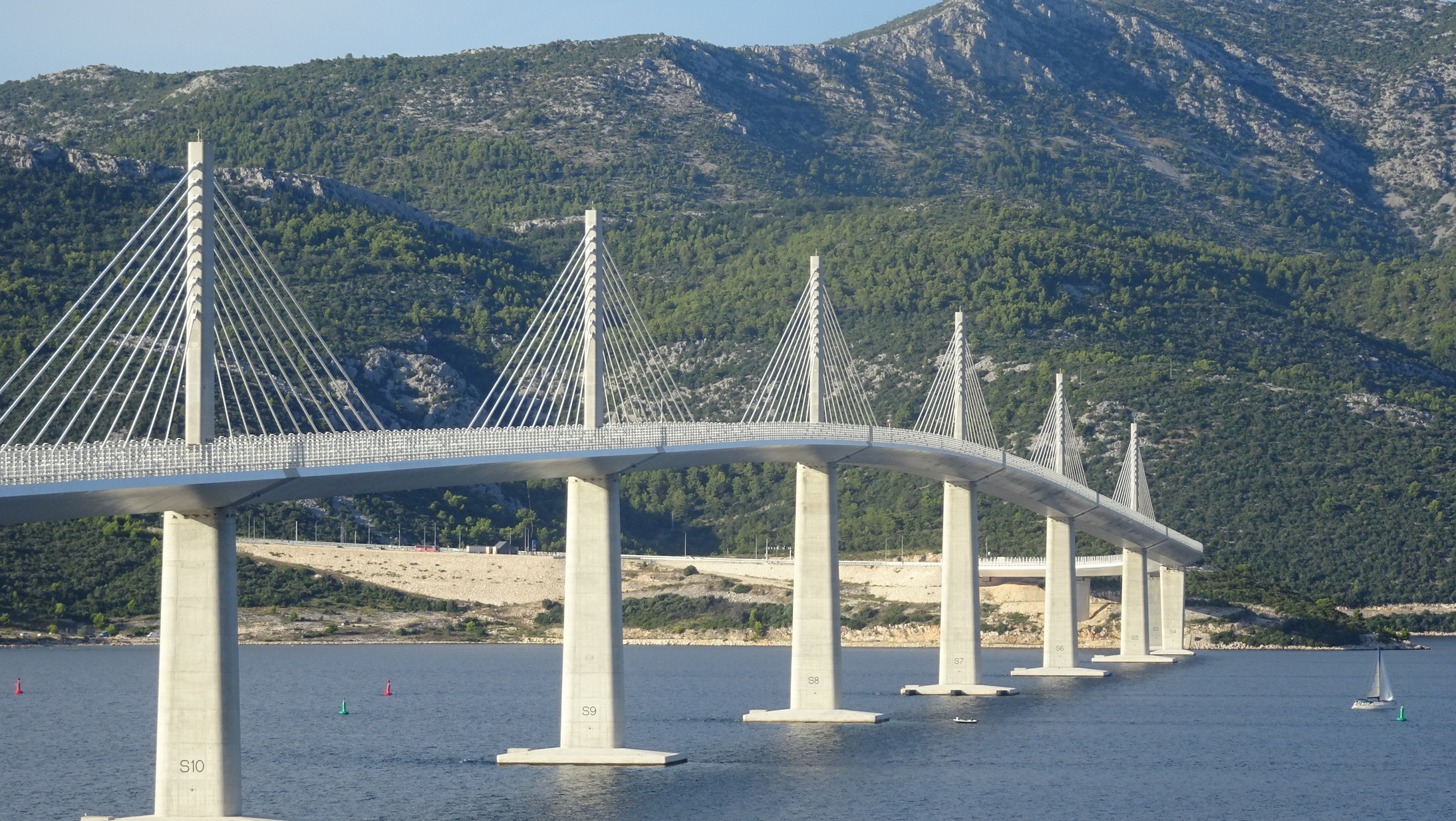
Pelješac Bridge (Photo credit: Maureliusz/CC BY-SA 4.0)
Authorities in Croatia have reassured the public that the Pelješac Bridge remains safe and stable despite reports of visible cracks on some of its concrete pillars.
The confirmation comes after an article published last week by the Italian newspaper Il Piccolo reported that cracks had appeared on several structural elements of the bridge.
According to Ivica Budimir, chairman of the board of the state road management company Hrvatske ceste (Croatian Roads), comprehensive analyses have already been carried out and there is no danger to traffic or the structural stability of the bridge, HRT reported.
“All analyses have been completed and everything is stable and in order,” Budimir said, stressing that the observed issues are not unusual for large infrastructure projects.
Repairs planned after tourist season
Budimir explained that minor defects can occur on any structure and will be addressed as part of the bridge’s warranty process.
Repairs are expected to begin after the busy summer tourist season to avoid disruption to traffic.
The bridge contractor, the Chinese construction company China Road and Bridge Corporation, is responsible for fixing any defects identified during the warranty period.
The project includes a ten-year warranty, meaning the contractor must repair any issues that arise during that time.
Three years have passed since the bridge opened, leaving seven years of warranty coverage remaining.
“All works are covered by a ten-year warranty from the contractor, and they are obliged to participate in the process as we monitor for any defects during the usage phase,” Budimir added.
Before the bridge opened, travellers heading to Dubrovnik and southern Dalmatia had to pass through a short stretch of coastline belonging to Bosnia and Herzegovina.
The bridge now links the Croatian mainland with the Pelješac peninsula, providing uninterrupted road access and bypassing the neighbouring country’s coastal corridor along the Adriatic Sea.
The total project value was approximately €420 million, with €357 million financed through EU grants.