
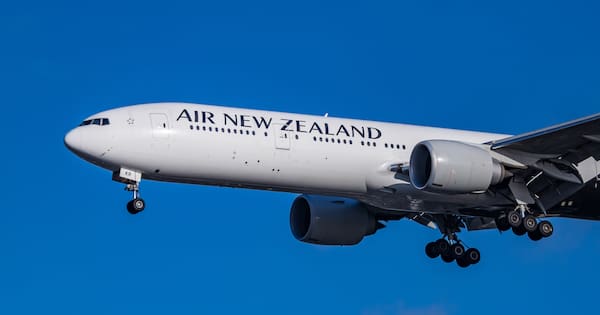
Air New Zealand is to cancel around 1100 flights through to the end of next month, affecting around 44,000 passengers.
The airline earlier this week said it had raised prices and was looking at amending its flight schedules in response to the global fuel crisis caused by the Iran war. It had also suspended its earnings guidance.
“We know that affordability around flying is a real challenge,” chief executive Nikhil Ravishankar told 1News.
“Even in these unprecedented times, there’s a limit to what we can pass on to our customers.”
The changes were about a 5% reduction in the number of flights it would operate, he said.
‘Unprecedented’: Air NZ CEO addresses fuel crisis as 1,100 flights cancelled – Watch on TVNZ+
During that period, it would operate about 22,000 flights and carry around 1.9 million passengers.
Most of the passengers would be moved onto other flights. The cancellations were focused on off-peak services and were mostly domestic.
“We’re focused on consolidating flights that are off-peak flying hours, for example, or where there is an alternative that we can re-accommodate customers.”

Ravishankar said the “interventions we’re putting in place are not only reasonable, but is what all airlines around the world are doing”.
“We’re living in unusual times, but we’re going to work very thoughtfully, very collaboratively with everyone involved.”
The airline was not looking at cutting routes.
Regional cuts
MP for Bay of Plenty Tom Rutherford said Air NZ had told him there would be a reduction in flights to and from Tauranga.
“From 16 March to 3 May 2026, there will be reductions in flights to/from Tauranga. Auckland services will be reduced by 31 rotations (averaging just one daily rotation most weeks, but maintaining full capacity during April school holidays). Wellington services down by 21 rotations (about three per week on average). Christchurch services reduced by three rotations.”
A rotation is a return trip.
“Importantly, I’ve sought and been provided assurances from Air New Zealand that this is a temporary measure in direct response to the current oil price volatility and will not be used as a stalking horse for longer-term regional route reductions.”
Marlborough Mayor Nadine Taylor said flights from Blenheim to Wellington and Auckland were also affected.
“Air New Zealand says it intends to reduce routes to Wellington three times per week, for a total of 28 rotations (inbound and outbound flights), as well as nine rotations in total between Marlborough and Auckland, during the period 16 March to 3 May.
“They are aiming to strike a balance between maintaining connectivity to all regions and to reaccommodate passengers on other flights close to their original booking. They will also focus on lower-demand and mostly off-peak flights.
“Marlborough’s routes are staying largely intact because our flights are generally at over 80 per cent capacity. This demonstrates a high level of support from our community and travellers visiting Marlborough.
“I hope this reduction in flights is swift and temporary.”
Nelson’s Nick Smith also shed light on how it would impact his region.
“As it faces cost pressures from the conflict in the Middle East driving up the price of jet fuel, Air NZ plans to cut an average of 2-3 return flights a week to Auckland, rising to as many as 10 after the April peak travel period. It also plans to chop flights to and from Wellington by an average of five a week and Christchurch services by an average of 2-3 a week.”
East Coast MP Dana Kirkpatrick said: “From 16 March to 3 May 2026, there will be reductions in flights between Gissy and Auckland. Services will be reduced by 24 rotations (averaging just one daily rotation most weeks, but maintaining full capacity during April school holidays). The Wellington service is not affected.”
MP for Rangitata James Meager said Timaru flights were not affected.