
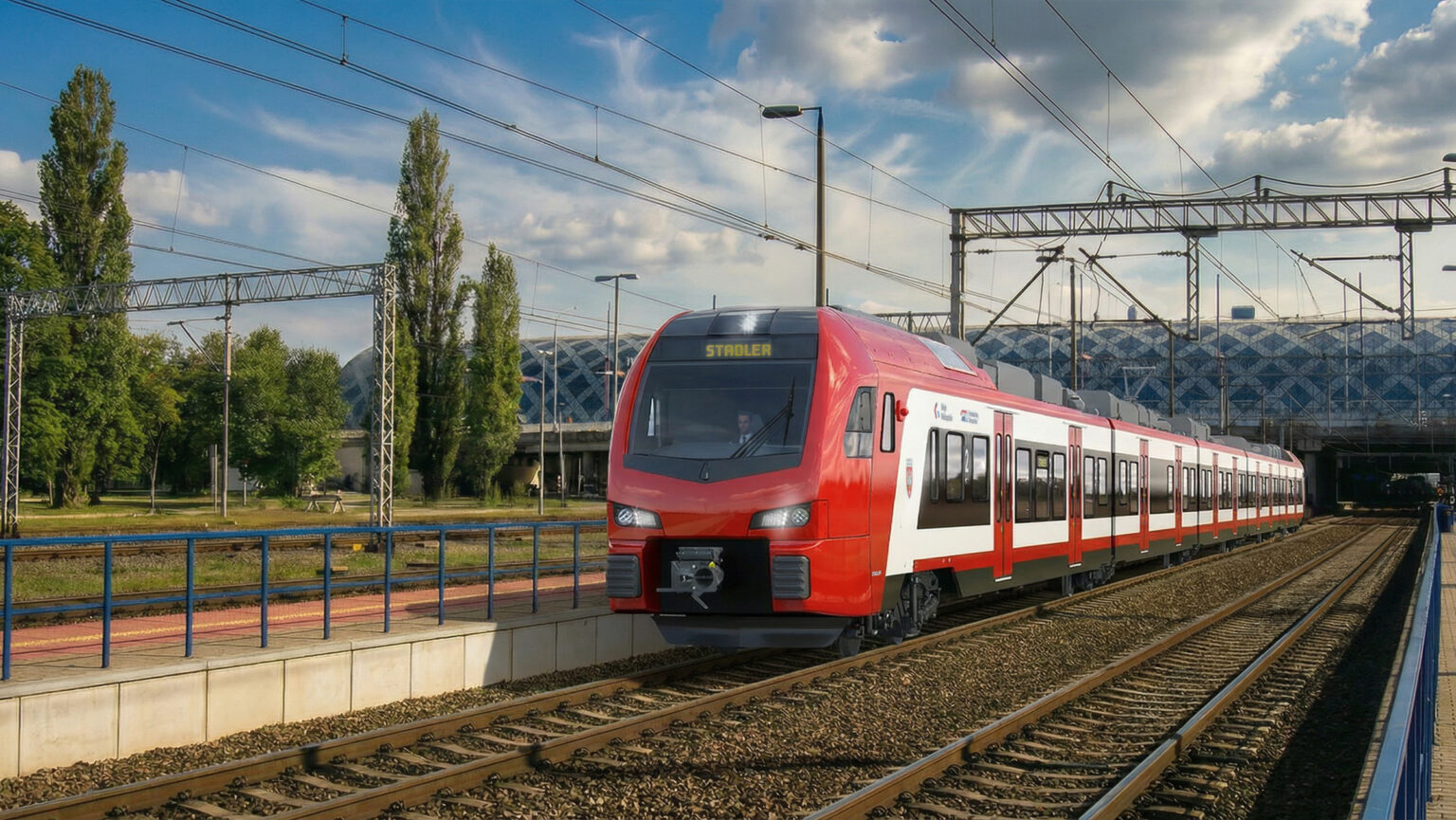
Stadler has signed a contract with the regional government of the Greater Poland Voivodeship for the delivery of up to 20 FLIRT electric multiple units.
The trains are expected to enter service from 2028 and will be used in regional and urban rail transport. The vehicles will be manufactured in Poland.
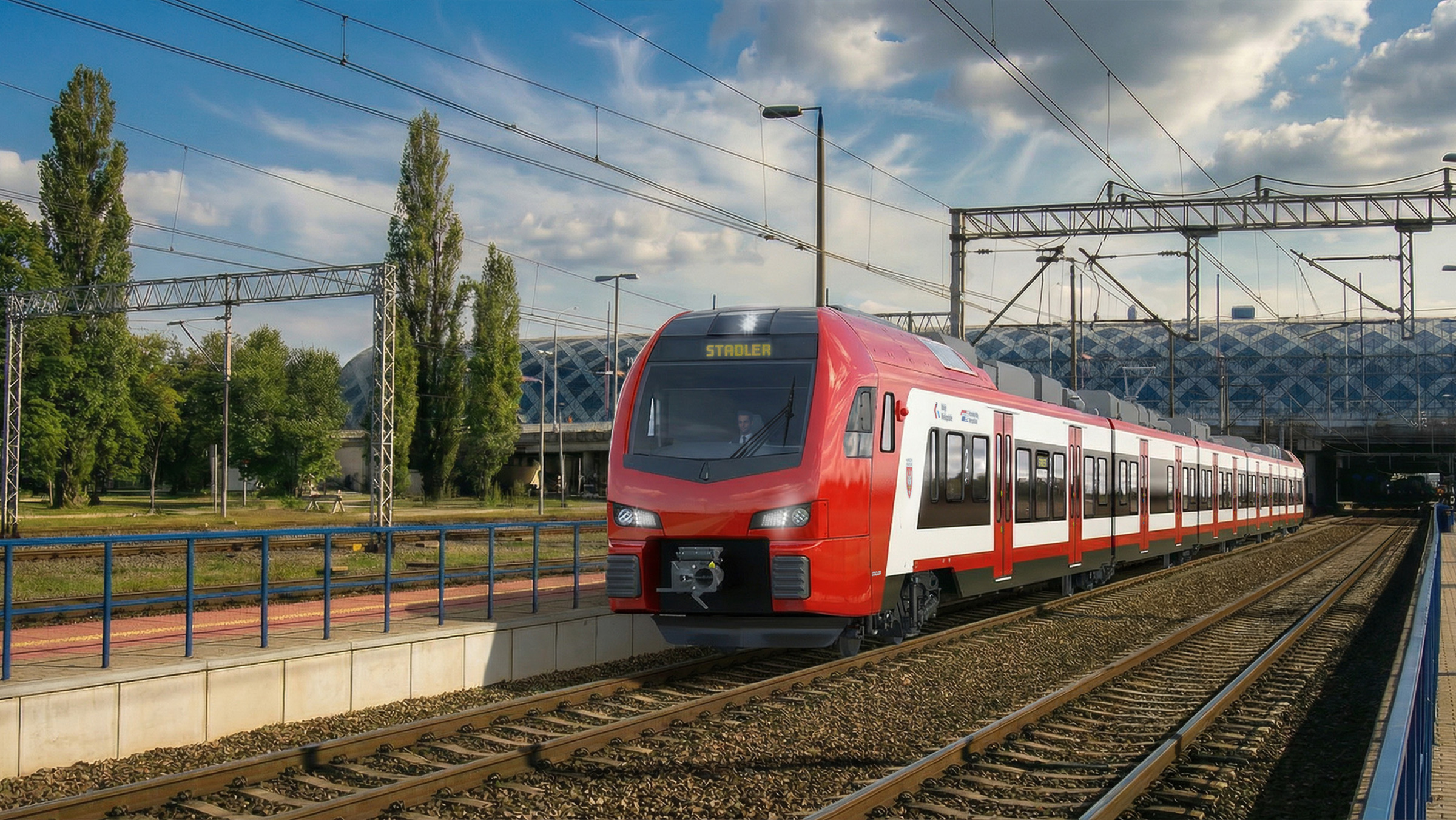
Stadler to deliver FLIRT trains for Greater Poland
© Stadler
Radosław Banach, chief executive of Stadler Polska said:
We will deliver innovative FLIRT vehicles of the latest generation to Greater Poland – modern and energy-efficient multiple units, of which more than 3,000 have already been sold worldwide in 24 countries. The FLIRT fleet has demonstrated its reliability and comfort for many years.
More than 650 FLIRT trains have been built at Stadler’s plant in Siedlce, Poland for operators in 18 countries. Of these, 127 are currently operating on railway networks in Poland.
The contract has a value of around 263 million EUR. It initially covers the delivery of 10 five-car electric multiple units, with an option for a further 10 trains. The first vehicles are scheduled to enter service in early 2028.
The investment is intended to support the development of rail transport in Greater Poland and expand regional engineering capacity.
Engineers from Stadler Polska, including teams based in Poznań, will be responsible for designing the new trains. The company currently employs around 100 engineers in Poland, about half of whom work in Poznań. Stadler plans to recruit an additional 20 engineers during the year.
FLIRT is the most widely sold train model produced by Stadler. In Poland, the trains are used by operators including Koleje Mazowieckie, Łódzka Kolej Aglomeracyjna, Koleje Śląskie and PKP Intercity.
The aluminium construction of the trains is designed to reduce weight and energy consumption compared with conventional steel vehicles. Each five-car unit can carry up to 632 passengers, including more than 250 seated passengers, and has a maximum speed of 160 km/h.
The trains will include low-floor areas, step-free access for passengers with reduced mobility, air conditioning, onboard passenger information systems and Wi-Fi. Safety equipment will include video surveillance, emergency communication systems and defibrillators. The trains will also be equipped with European Train Control System Level 2.
Tags
Products & Services