
From reproductive rights to climate change to Big Tech, The Independent is on the ground when the story is developing. Whether it’s investigating the financials of Elon Musk’s pro-Trump PAC or producing our latest documentary, ‘The A Word’, which shines a light on the American women fighting for reproductive rights, we know how important it is to parse out the facts from the messaging.
At such a critical moment in US history, we need reporters on the ground. Your donation allows us to keep sending journalists to speak to both sides of the story.
The Independent is trusted by Americans across the entire political spectrum. And unlike many other quality news outlets, we choose not to lock Americans out of our reporting and analysis with paywalls. We believe quality journalism should be available to everyone, paid for by those who can afford it.
Your support makes all the difference.
Read more
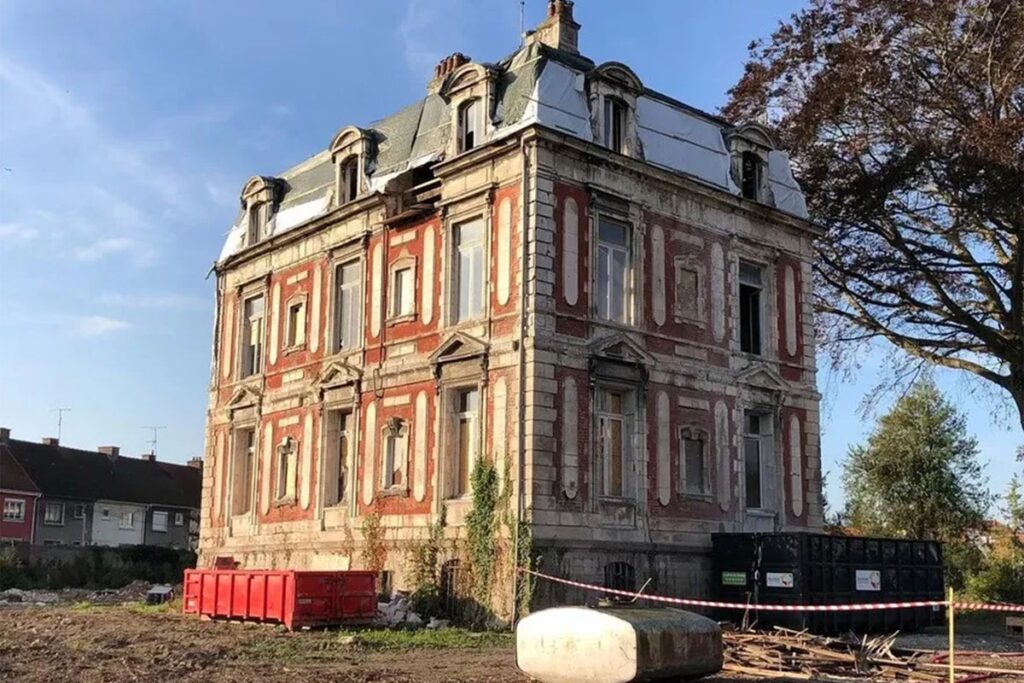
A famous nineteenth century chateau in France has been converted into council flats, triggering outrage among traditionalists who brand it an “eyesore” .
The Château du Tournepuits, in Guines near Calais, was built in 1848 for a powerful French landowner and politician, Narcisse Boulanger.
After his death in 1937, the building was sold on before being abandoned and left to rot for several years.
Instead of being restored to its former glory, the ornate house was recently converted into nine modern council flats, to the dismay of locals and architectural enthusiasts.
The intricate mansard roofs have now been replaced with grey cladding and a cubic exterior. The house has also been extended with a modern design, so that there is a mismatch of the original red and white brick against the dull timber.
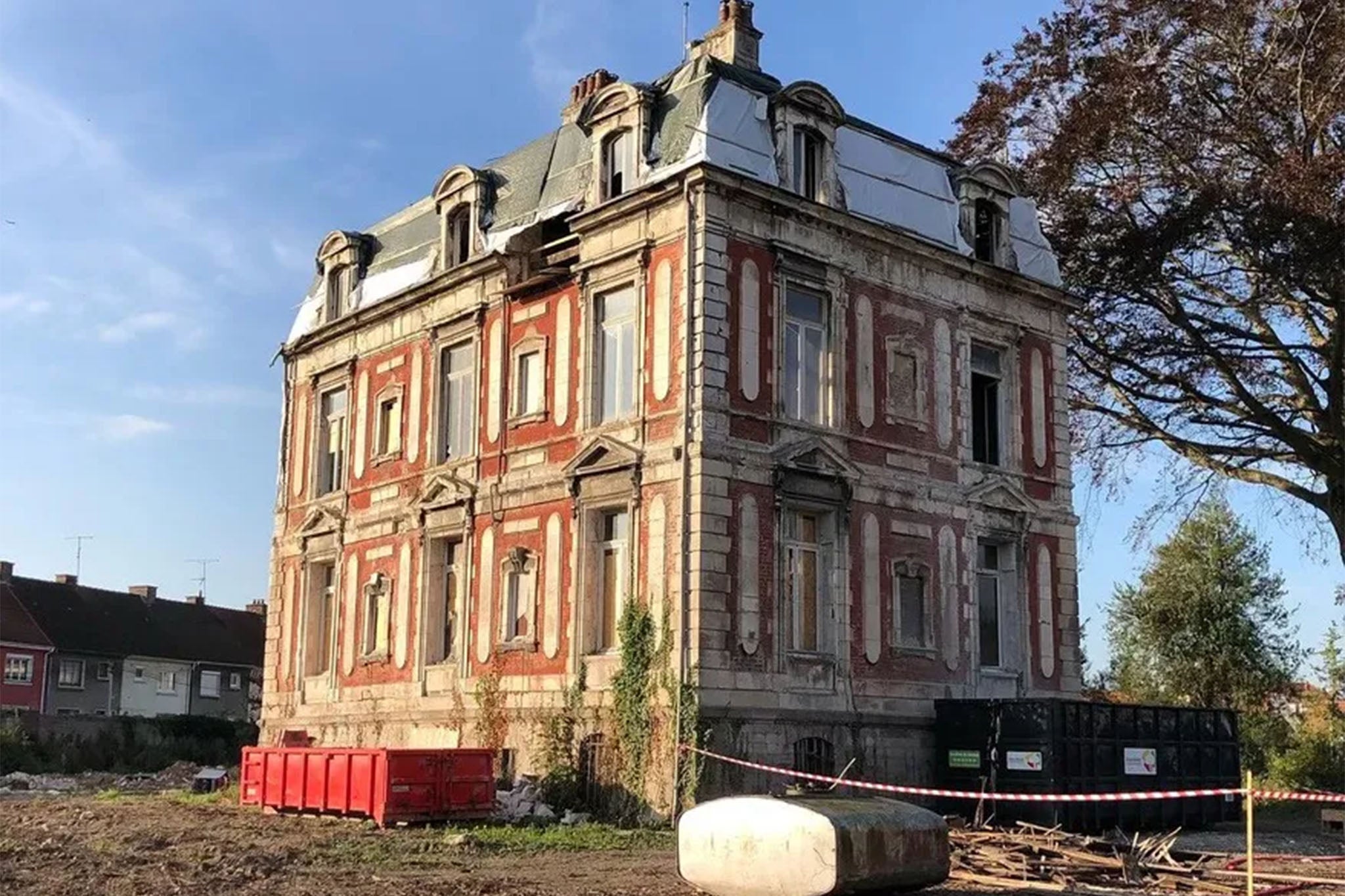
open image in gallery
The ornate house was recently converted into a nine modern council flats to the dismay of locals and architectural enthusiasts (Supplied)
The new low-carbon housing units comprise of six two-bedroom apartments and three one-beds.
The company managing the project, Foncière Chênelet, said in a report by real estate platform, Figaro Immobilier: “The aim is to test rehabilitation solutions on dilapidated and vacant buildings in the town centre, transforming them into high-energy-performance, low-carbon social housing, fully adapted for aging and disability.”
The project cost around €2.8 million (£2.43m), of which €1.265 million was covered by Foncière Chênelet, €732,983 by the French National Housing Agency (Anah), and €470,000 by three mutual insurance companies (AG2R, Malakoff Humanis, and Ircem).
Ten local contractors were involved in the construction of the large-scale project, which took three years to complete.
To maximise the number of apartments created, an extension was built around the rear of the building, along with an additional story on the second floor to replace the roof structure, which had previously been damaged by dry rot.
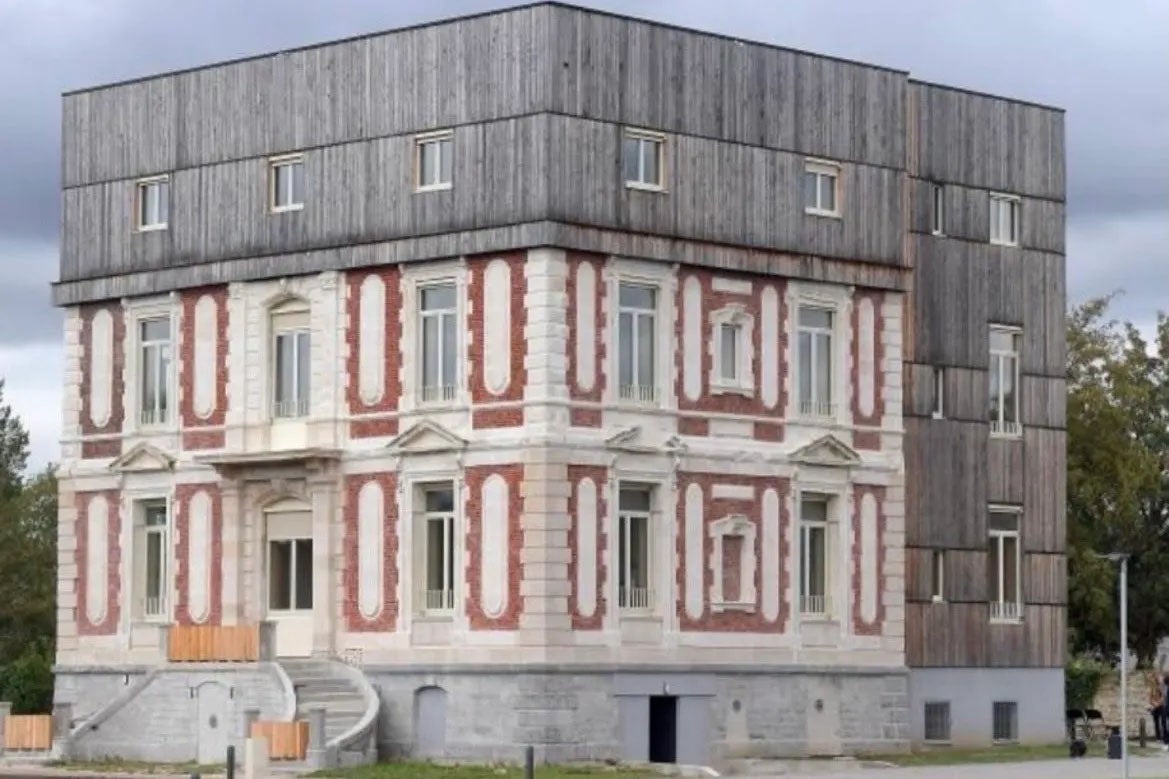
open image in gallery
The low-carbon housing units comprise of six two-bedroom apartments and three one-beds (Supplied)
However the reaction to the new eco-friendly design has been less than favourable.
Louvre curator Nicolas Milovanovic described it on X as: “Absolute ugliness under the pretext of a social and ecological project. It’s enough to make you cry.”
Jean Messiha, french economist, told The Times: “It would have been better to tear it down – that would have been more honourable than erecting this eyesore.”
And art historian Pierre Jacky wrote online: “One always believes one has reached the worst in terms of vandalism against our heritage” and then he went on to describe the chateau as the latest cultural landmark to be “purely and simply massacred”.