
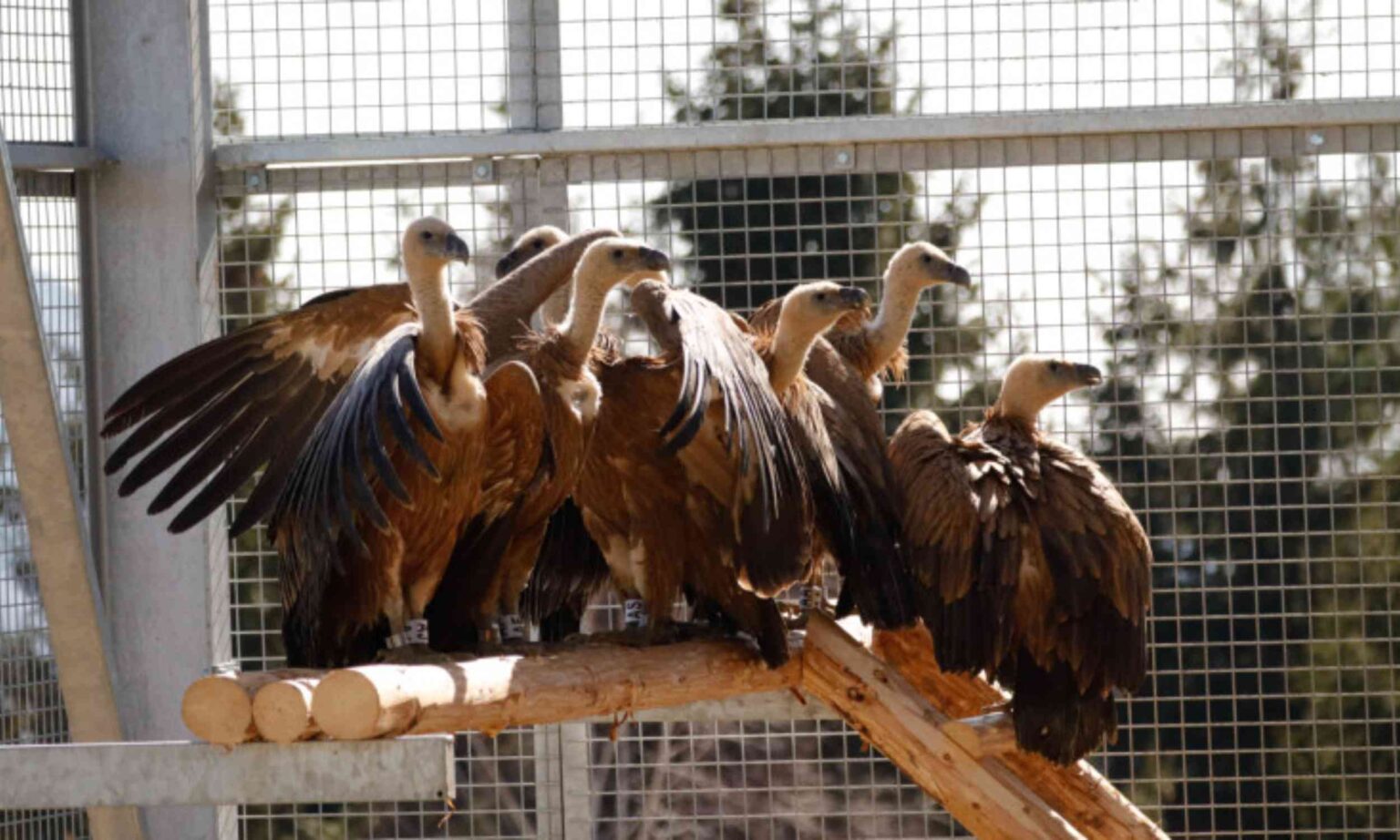
Researchers report that twenty-five griffon vultures have been successfully transported to Romania and placed in a controlled mountain aviary, marking the first active return of the species after more than seventy years.
The arrival establishes the starting population for a restoration effort designed to rebuild a missing scavenger role in the country’s mountain ecosystems.
Griffon vultures return

A newly built aviary on a mountain slope near the village of Rucar now holds the first twenty-five griffon vultures brought from Spain.
Operating the release program, Foundation Conservation Carpathia uses the enclosure to document how the birds adjust to the cliffs and open landscapes surrounding the Fagaras Mountains.
Those young individuals represent the founding group intended to establish a breeding population after the species disappeared from Romania in the mid-twentieth century.
Whether the birds remain near the site will determine if the project can progress from controlled acclimatization to eventual release in the wild.
Why vultures vanished
Poisoned carcasses set for wolves and bears hit vultures hard because the birds fed on the same dead animals.
Hunting added more pressure after people wrongly treated the species as a pest instead of a cleaner.
Egg collecting also stripped future generations from the landscape, which helps explain why sightings dwindled into scattered strays.
By the late 1960s, Romania no longer had confirmed breeding, leaving a gap conservation groups had discussed for decades.
Preparing vultures for release
For about six months, the birds will live in an acclimatization aviary, about 1,700 square feet (158 square meters) and nearly 20 feet (6 meters) high.
That enclosure lets the birds adjust before release, and food passes through separate openings to keep people out of feeding routines.
Cameras and later transmitters, small tracking devices carried on the birds, should show whether the flock stays near the release area.
Success at this stage does not mean success in the wild, but failure here would end the plan early.
Built for soaring
Adult griffon vultures carry a wingspan of roughly eight to nine feet (2.4 to 2.7 meters), which helps them cover huge distances with little effort.
Using thermals, rising columns of warm air, they climb without constant flapping and search broad open country for food.
Cliffs matter because the species nests on ledges, while open ground nearby makes landing and takeoff much easier.
Those traits help explain why the Fagaras Mountains suit the project, but they also tie the birds to safe, undisturbed rock faces.
Nature’s cleanup crew
When a large animal dies in the open, griffon vultures feed on carrion, the remains of dead animals.
By removing soft tissue fast, they shorten the time a body stays exposed to insects, dogs, and other scavengers.
Yet the science is more careful than conservation slogans, because a 2022 review found mixed evidence for direct health benefits.
That nuance does not shrink the birds’ ecological role, but it does argue for measuring results instead of repeating folklore.
Lessons from Bulgaria
Across the border in Bulgaria, released griffon vultures needed years, not seasons, before the first wild chick appeared.
That timeline fits the species’ slow biology, since pairs raise only one chick a year and young birds mature slowly.
One reintroduction site there produced a breeding nucleus after more than a decade, showing how persistence matters as much as transport.
Romania’s first flock therefore looks less like a finish line and more like the opening move.
Completing the food web
Romania once held all four European vulture species, which made its mountain food webs richer and more complete.
In the Fagaras range, a long mountain chain in central Romania, bears, wolves, lynx, bison, and beavers had already returned before vultures.
Adding a soaring scavenger changes more than the species list, because it reconnects cliffs, carcasses, and valley communities.
That wider frame helps explain why conservation groups describe the birds as part of landscape repair, not simple species replacement.
People on the ground
Local officials, veterinarians, donors, and conservation staff built this project as a regional partnership rather than a one-off wildlife drop.
That structure spreads costs and responsibility, while giving nearby towns a reason to connect biodiversity with jobs and visitors.
“Healthy and complete ecosystems are the foundation of a sustainable economy and a future in harmony with nature,” said Marius Gavrea, sustainability manager at ING Bank Romania.
Plans for a visitor center in Valea Mare Pravat, another nearby Arges community, show that local leaders expect public benefits too.
Risks facing the project
Poison still shadows every vulture project in the Balkans because one bait meant for predators can kill several scavengers.
Power lines can erase gains on their own, as other Balkan reintroductions have already shown through electrocution losses.
Because Romania is building this population from scratch, each lost bird carries more weight than it would in Spain.
The program’s real test will come after release, when survival matters more than headlines or careful construction.
A new chapter for vultures
Romania’s new flock means more than a symbolic comeback, because it joins landscape repair, slow biology, and local politics in one project.
If the birds stay, feed safely, and return to breed, Romania will recover not just a species but a working ecological role.
Photo credit: Carpathia.
—–
Like what you read? Subscribe to our newsletter for engaging articles, exclusive content, and the latest updates.
Check us out on EarthSnap, a free app brought to you by Eric Ralls and Earth.com.
—–