

Malta this year is marking the 10th anniversary since Parliament unanimously recognised Maltese Sign Language as a national language, in what was described as a historic milestone for inclusion, respect and dignity for the deaf community in Malta and Gozo, a government statement said Saturday.
The anniversary was commemorated during a ceremony attended by Minister for Inclusion and Volunteering Julia Farrugia, held to mark 10 years since the establishment of the Maltese Sign Language Council.
The recognition of Maltese Sign Language was described as a key step in giving persons who are deaf or hard of hearing greater opportunities to express themselves, participate more fully in society and strengthen their identity. For the deaf community, sign language is not only a means of communication, but also an expression of culture and identity.
Over the past decade, several developments have followed the legal recognition of the language, including the setting up of the Maltese Sign Language Council, the development of specialised services for people who are deaf or hard of hearing, and the introduction of University of Malta courses aimed at training sign language interpreters.
As part of this commitment, an investment of €70,000 was also made to develop and offer the first course taught in Maltese Sign Language, another step intended to increase access to education and strengthen the use of the language across society. Malta was also noted as being among the first countries internationally to introduce a registration system and warrants for sign language interpreters.
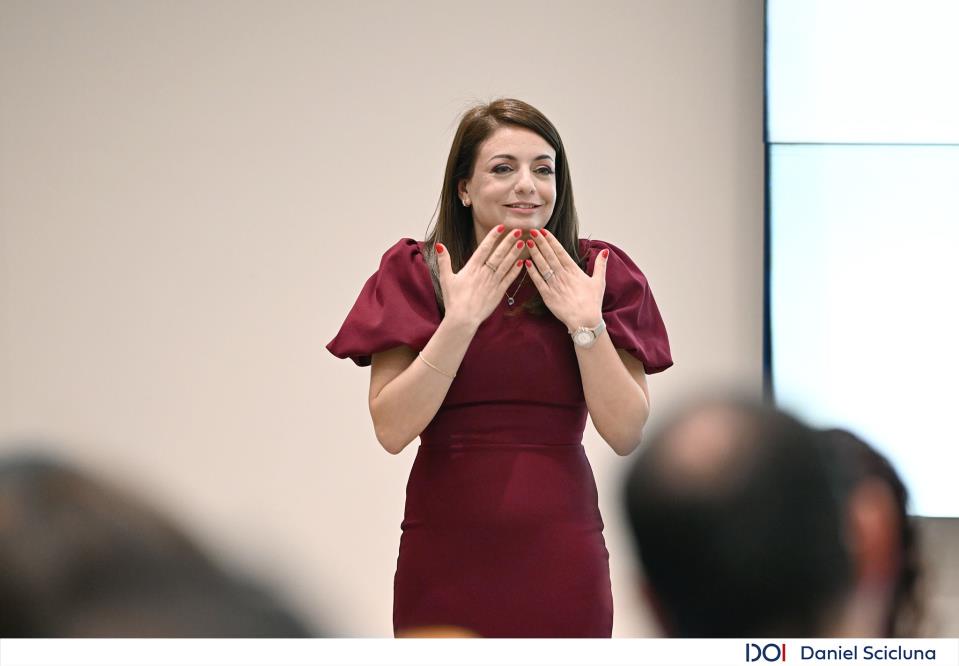
Addressing the ceremony, Farrugia said the recognition of Maltese Sign Language had been a historic move that clearly showed the kind of country Malta aspires to be.
“The recognition of Maltese Sign Language was a historic step that clearly showed what kind of country we want to be. A country that embraces inclusion, respects diversity and gives a voice to everyone,” the minister said.
She added that the deaf community should not be seen as one that needs to adapt to society, but as an integral part of the country’s identity. Farrugia said the government would continue working to strengthen rights, services and opportunities for the deaf community so that no one is left behind.
In her message, Maltese Sign Language Council chairperson Annabelle Xerri said the vision from the outset had been clear: to ensure that the law would not remain merely words on paper, but become a lived reality in classrooms, public services, daily life and homes across Malta and Gozo.
Xerri also noted a significant increase over the years in interest in learning Maltese Sign Language, with more people choosing to study it and discovering that it is a complete and rich language with the same value and structure as any spoken language.
She said the commemoration was also an occasion to thank the deaf community and the activists who had worked for many years to ensure that their language and culture were recognised and respected.