
A Note for the Reader: The Danish Party Landscape
The Danish political scene is divided into two main blocs. The Blue Bloc on the right includes Venstre—the Liberal Party (the historical liberal party), and Dansk Folkeparti—the Danish People’s Party (the populist nationalist party) which, since the early 2000s, has established an anti-immigration discourse that has become the reference point for political competition in the country and has pushed the entire political landscape to the right on this issue, in addition to Liberal Alliance and Det Konservative Folkeparti—the Conservative People’s Party.
The Red Bloc on the left includes Socialdemokratiet—the Social Democrats, which represents a striking example of the leftward-to-rightward drift on the issue of immigration, having led governments that passed some of the strictest immigration laws in Danish history despite its historical roots in the social left. Socialistisk Folkeparti—Green Left occupies a centrist position, while Enhedslisten—the Red-Green Alliance represents the clearest left-wing voice in rejecting racism toward immigrants and demanding integration policies grounded in international human rights conventions and socialist left values.
This party distribution is not merely an organizational map. It is the key to understanding the nature of the debate around immigration and integration in the current electoral campaign ahead of the parliamentary elections scheduled for 24 March 2026. In the midst of this electoral campaign, and amid intense competition between the two blocs, the issue of refugees and integration returns to the forefront of political debate with remarkable weight, as if it is being portrayed as one of the fundamental problems threatening the cohesion of society.
Most parties, including some center and center-left parties, tend to interpret the success or failure of integration through cultural, religious, or ethnic factors, as if these factors are the decisive determinant in the matter. There is no doubt that religious and cultural factors have an effect on some aspects of integration, yet this effect remains limited and is insufficient to explain the phenomenon at its core.
The debate, particularly within the circles of the Blue Bloc parties, and sometimes within some quarters considered part of the left, revolves around language, dress, religious values, and what is called “culture.” This narrow focus conceals, whether deliberately or inadvertently, the deeper social, economic, and political factors, and reduces a profoundly complex issue to a simplified electoral slogan that serves an agenda of voter mobilization, more than it seeks to understand the problem or offer realistic and just solutions.
Rather than treating integration as a complex social and historical process in which structural, psychological, and economic factors are intertwined, it is reduced to simplified cultural and religious slogans deployed to stoke fear and mobilize voters, with the direct negative consequences this entails for the integration process itself. Some of these discourses go beyond the human rights values enshrined in the Danish constitution and international human rights conventions. The racist discourse promoted by certain elements of the Danish right effectively results in treating Danish citizens of immigrant origin, particularly those from Muslim-majority countries, as if they were suspects required to continuously prove their innocence, despite the fact that the vast majority of them work, contribute, and genuinely integrate into Danish society.
Yet a deeper question is rarely raised in public debate, neither by the Blue Bloc nor by most parties of the Red Bloc: how do refugees themselves view the concept of the state? And what have their historical experiences taught them about the nature of the relationship between the individual and authority?
The State as They Knew It: An Apparatus of Repression, Not a Service Institution
Many refugees coming from the Middle East and parts of Asia and Africa have spent most of their lives under authoritarian and corrupt states. For them, the state was not a public institution serving society and protecting the rights of its members. In their daily experience, it was a repressive power apparatus operating largely in the interest of a narrow elite at the expense of the broader society, tied to systematic corruption, bribery, security services dominating public life, and bureaucracy unaccountable to the people. It was, more often than not, an unelected authority, or one that resorted to fraudulent and staged elections that amounted to nothing more than a facade for legitimizing an already existing rule, treating people as subservient subjects rather than citizens with rights.
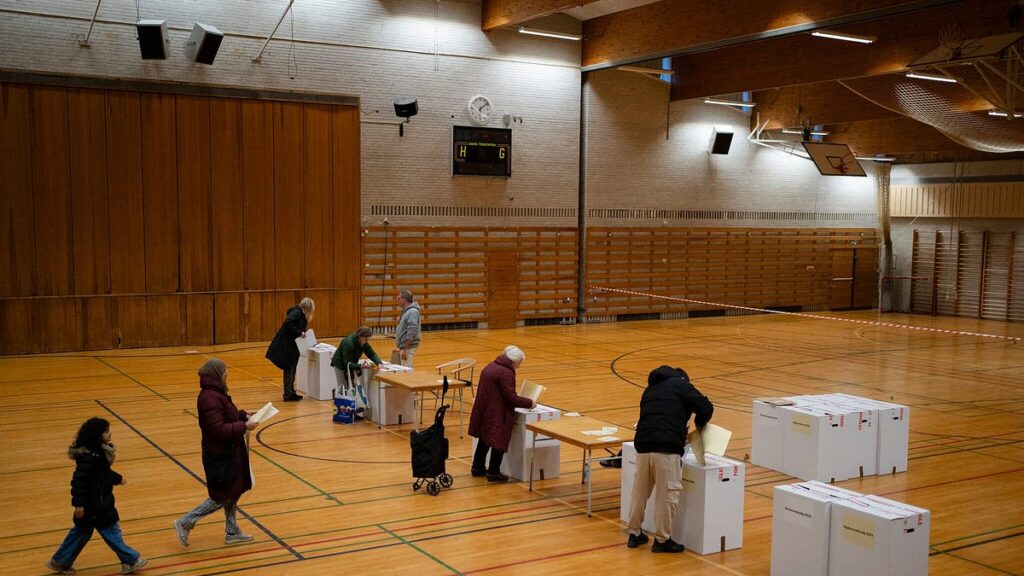
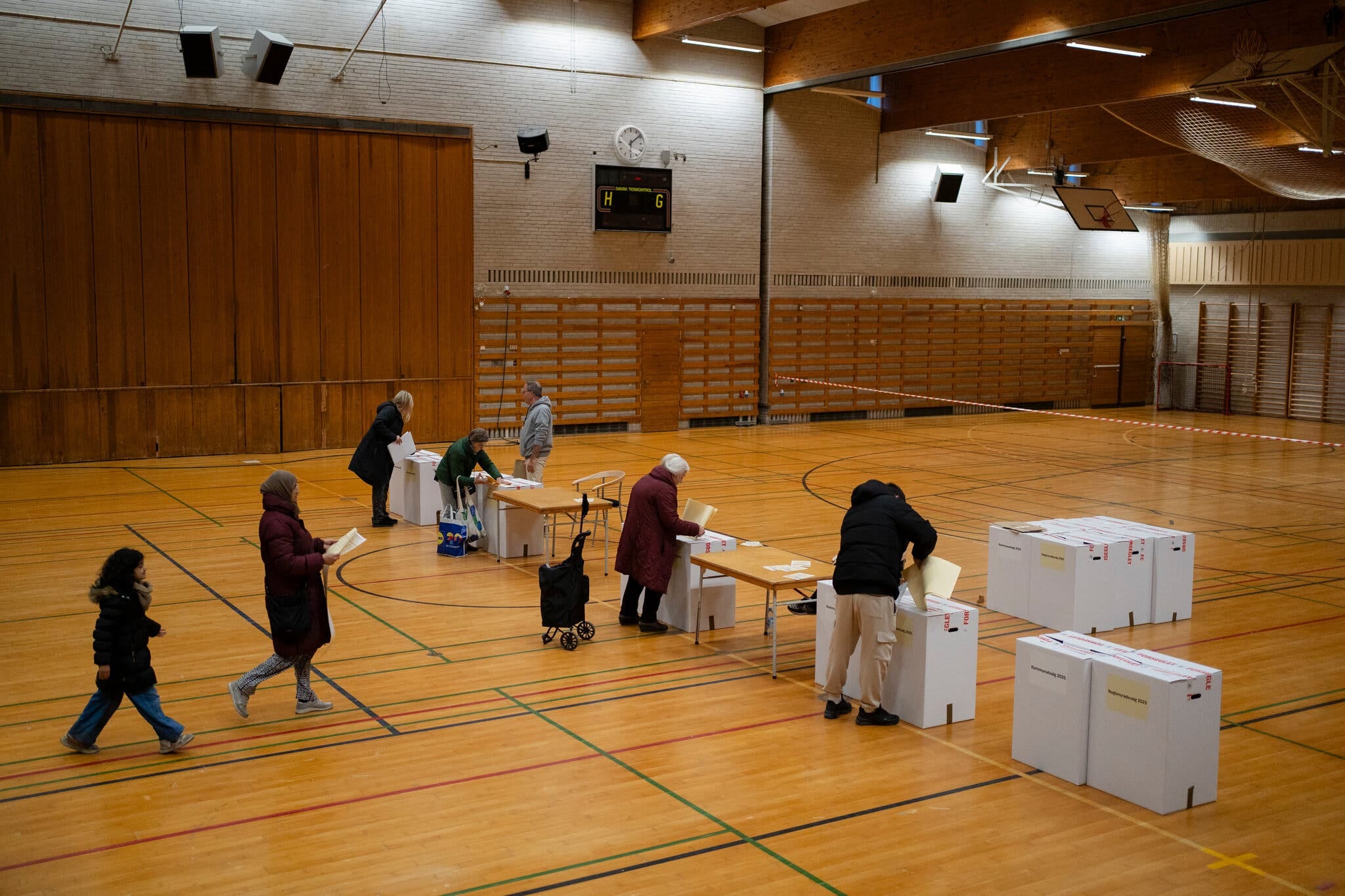
This deeply rooted experience with falsified elections, or their total absence, explains a significant part of what researchers in Scandinavian democracies observe: lower voter participation rates among Danish citizens of foreign origin compared to native citizens. Participation in elections is not an innate behavior. It is an acquired practice built on a firm trust that the individual’s vote makes a genuine difference. Those who have known in their lives only ballot boxes that change nothing, or are used to falsify the will of the people, need time and tangible experience to be convinced that things are different here.
Most importantly, these states in many cases did not arise in a vacuum. They took shape and maintained their grip on power through a close alliance between political rulers and the benefiting local and global capitalist elites. These are states that frequently received political, military, and financial support from Western international powers under the pretext of regional stability and combating extremism, while simultaneously crushing civil society and preventing any form of independent democratic or trade union organization. This international context is an inseparable part of understanding the crisis, as the Western societies that today ask about the causes of integration difficulties bear at the same time a considerable share of historical responsibility for economic inequality and for sustaining the regimes that produced these refugees and forged within them this deep relationship of suspicion and fear toward the state.
In such repressive and corrupt systems, it becomes entirely natural for people to try to circumvent the state rather than cooperate with it. They avoid formal procedures, circumvent laws and evade taxes, seek informal ways to complete transactions, and rely on networks of personal, family, and regional relationships rather than public institutions that no one trusts. This is not an inherited cultural trait in the simple essentialist sense. It is, for the most part, the logical outcome of a long and inherited historical experience with a state that has consistently repressed and plundered society rather than served it.
Denmark: A Model Born from Class Struggle
When these refugees arrive in Denmark, they find themselves confronted with a model entirely different from anything they have known. Although the modern state remains ultimately part of a class-structured social order within the capitalist system, in Denmark and the Scandinavian countries generally it rests on democratic institutions, free and independent elections, relatively high institutional transparency, and legal rules applied to a large degree equally to everyone regardless of their affiliation or wealth.
Yet this model did not emerge spontaneously, nor was it a gift from the state or the ruling class. It is, at its core, the result of a long and arduous history of class struggles by the labor movement, trade unions, and left-wing and social movements and organizations, which through collective organization and sustained political work gradually managed to impose a broad framework of social rights. Free public education, comprehensive healthcare, the social security system, and labor protection laws were not born with the Danish state. They were wrested through decades of social and organizational struggle between workers and capital, and have today become an established part of the social contract upon which Scandinavian society rests.
Yet these gains are not safeguarded forever. They are perpetually vulnerable to erosion, circumvention, and rollback whenever the left-wing and trade union movement weakens and its presence in the public sphere recedes. The history of capitalism demonstrates that capital does not voluntarily relinquish what has been taken from it, and that every retreat in the power of collective organization opens a window for the renewed curtailment of these rights under ever-changing pretexts. This is what makes the preservation and development of these gains dependent, in every generation, on the vigilance of progressive movements and the continuation of their organization and active political participation.
This historical truth is a fundamental key to understanding the nature of the Danish state. When a migrant or refugee is told that the state here is “different,” these words remain abstract unless accompanied by the historical context that produced this difference: organized labor movements, strikes and protests, collective bargaining, and political struggle that spanned generations before culminating in this level of social rights.
This state also rests on a legal framework grounded in human rights principles, including legal equality between women and men, the separation of religion from the state, the protection of children’s rights, and the right of all citizens and residents to education, healthcare, and human dignity regardless of their social or economic status. For many refugees coming from societies where these rights do not enjoy adequate legal protection, internalizing these rules and understanding their logic is not merely a cultural adaptation. It is an essential part of understanding the nature of the secular democratic state itself and how it functions.
The vast majority of refugees gradually adapt to this model and engage with it. They learn to trust public institutions, enter the labor market, pay taxes, participate in community life, and raise their children within this system. Yet there remains a small minority that stays longer in the grip of the old experience with the state, engaging with the Danish system through the logic of what it was accustomed to in its previous country: resorting to informal work, attempting to circumvent laws, or relying on informal networks rather than public institutions.
Integration Policies and the Problem of Understanding the State
The integration difficulties of this minority are most often interpreted in mainstream political discourse as a fundamental cultural or religious problem requiring ever more restrictions, tests, and conditions. The more accurate and realistic explanation is that in many cases the issue is a difficult transition from a deeply rooted conception of the state as an apparatus of repression and corruption, to a radically different conception that sees it as a social solidarity institution worthy of trust and participation. Those coming from authoritarian experiences need time and genuine investment to understand that the relationship between society and the state in Denmark operates on entirely different rules from what they have lived.
Current Danish integration policies do not adequately address this fundamental dimension. Rather than focusing on explaining the nature of state institutions, how they function, and the history of struggle that produced them, policies have accumulated over recent years under mounting pressure from the right and far right, moving toward tightening laws, expanding value-based tests, and imposing increasing restrictions on residency and certain social rights. These are policies that proceed from the prior assumption that the refugee in general is a problem to be contained and controlled, not a human being carrying a complex historical experience that requires serious understanding and engagement.
This approach does not merely fail to achieve integration. It may reinforce among some refugees the old image of the state as a hostile entity lying in wait for them, which is precisely the opposite of what declared integration policies claim to pursue.
What genuine integration requires, by contrast, is a clear explanation of how state institutions function, the organic relationship between taxes and public services, and the role of trade unions and labor laws in protecting workers. Learning the language is undoubtedly necessary, yet it is insufficient on its own for understanding society. Understanding the state and its institutions, and understanding the relationship between social rights and shared obligations, is no less important than the ability to speak Danish.
Formal Work and Taxation: Participation in Solidarity, Not Submission to Authority
Among the concepts most in need of reframing in the context of integration is the concept of informal work, known in Denmark as “black work.” In some countries, working without registration or without paying taxes is considered a natural necessity for survival, and is sometimes viewed as a form of resistance against a corrupt state that does not deserve to be funded. This logic is historically understandable in the context of authoritarian systems that appropriate taxes for the benefit of rulers rather than for the service of society.
In a state that depends on a collective tax system like Denmark, however — a system that was itself wrested through workers’ struggle to fund public services — informal work does not merely mean a legal violation. It means weakening a system of social solidarity built over generations. Every tax paid here goes to schools, hospitals, infrastructure, and the social security system from which everyone benefits, including the refugees themselves.
When a person understands this organic connection between what they pay and what society receives, paying taxes becomes an entirely different act. It is no longer submission to an external authority. It becomes voluntary participation in a social solidarity framework from which all benefit.
The same applies to tax evasion and attempts to circumvent laws. In authoritarian systems, people may view circumventing the state as a form of self-defense, and even as legitimate opposition to a corrupt regime. In a society built on shared public institutions, however, these practices weaken the mutual trust between society and the state and reduce the resources upon which schools, hospitals, and public services depend — services from which everyone benefits.
Genuine Integration: A Social Experience and a Shared Responsibility
For all these reasons combined, integration policies can include practical and direct examples that bring these concepts closer to everyday reality: explaining how schools and hospitals are funded through taxes, how workers obtain their rights through formal employment contracts and trade unions, and how laws protect workers when employment is registered. This understanding can also be reinforced by encouraging refugees to participate in political, civic, and trade union life, and in local associations and community activities.
When people see how democratic institutions function in daily life, and how labor, trade union, and social movements managed to wrest broad social rights through collective organization, integration becomes a genuine social process rather than a mere administrative obligation or a values examination imposed by the state from the outside.
Integration, however, does not concern state policies alone. It also rests on a shared, multi-party responsibility. The host society and its institutions bear the responsibility of explaining the nature of the state, its rules, and its history of struggle. The Danish media bears a particular responsibility in this context: it has an obligation to focus on and highlight the many positive aspects of the integration journey, rather than amplifying certain erroneous practices that remain exceptions and not the rule, and transforming them into a stereotype that serves right-wing discourse and deepens social division.
The small minority of refugees who continue to view the state through the lens of their previous experiences, meanwhile, genuinely need to reconsider this image. The state in Denmark, despite its shortcomings and the class contradictions that cannot be denied, is not a daily apparatus of corruption and repression as many have known it in their previous countries. It is, to a large degree, a public institution that guarantees fundamental rights, provides extensive social services, and upholds the law before everyone.
This fundamental distinction is precisely what this minority needs to internalize. Respecting laws, registering employment, paying taxes, and engaging with public institutions transparently are not merely legal obligations imposed by an external authority. They represent a form of genuine participation in a system of social solidarity shaped over long decades of struggle by manual and intellectual workers and by trade union and social movements.
The vast majority of refugees have already become part of this system through work and contribution to society, and this is a trajectory worthy of reinforcement and continuation. This mutual engagement contributes to deepening integration and building greater mutual trust between Danish society and newcomers, and serves as a reminder that genuine integration cannot be reduced to linguistic or value-based tests. At its core, it is a path of shared social solidarity that deserves to be built on mutual understanding and respect.
Political Participation: A Democratic Duty and an Act of Solidarity
From this very starting point, participation in elections becomes a duty no less important than paying taxes or joining a trade union. The electoral vote in a relatively democratic society is an instrument of genuine influence over decisions that affect everyone’s daily life, from the level of health and education services to labor laws and housing policies. Danish citizens of foreign origin who refrain from voting due to an inherited distrust of the electoral process leave the field open to voices that shape policies at their expense.
In the upcoming parliamentary elections on 24 March 2026, there is a clear stake on the line. Either preserving and developing the social gains wrested by the historical left, or allowing the process of gradual erosion of these gains to continue under the pressure of right-wing discourse. In this context, Enhedslisten—the Red-Green Alliance represents the clearest and most principled voice in defending the framework of social rights, rejecting racist discourse toward immigrants, and demanding integration policies grounded in equality and human dignity. As is the case with all genuine left forces anywhere, these forces are not without internal debates and reservations about some of their positions, yet they remain today the most influential and effective option for those who wish to contribute to safeguarding and strengthening this social model.
Participating in elections and voting for left-wing forces is an inseparable part of genuine integration in a society whose social gains were built on collective struggle and democratic participation. Those who have lived long under a state that stole their votes now have an important opportunity: for their voice to be part of a real decision.