
Published on
March 14, 2026
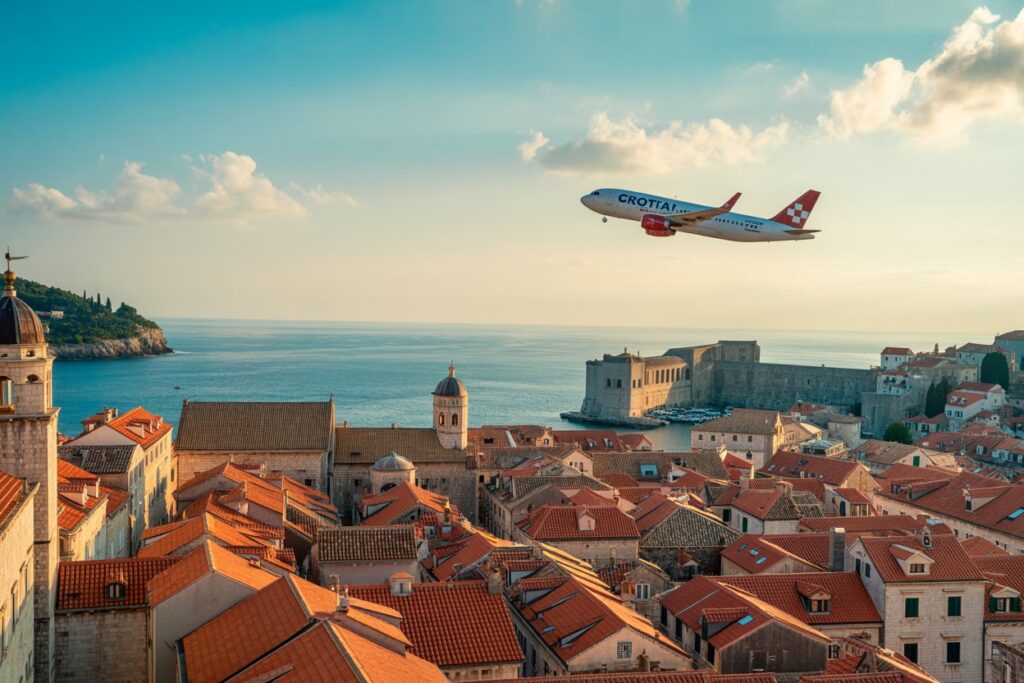
Image generated with Ai
In the traditional travel playbook, March is usually the month of “Early Bird” specials. It’s when families lock in their summer villas and solo travelers map out their Mediterranean island-hopping routes months in advance. But as we navigate the spring of 2026, Croatia Airlines is observing a complete rewrite of those rules.
The ongoing conflict in the Middle East has injected a dose of caution into the global travel market. Rather than committing to plans six months out, travelers are now waiting until the very last second to hit “purchase.”
The Death of the Early Bird?
Data from Croatia Airlines indicates a sharp decline in long-range bookings compared to the same period in 2024 and 2025. However, this isn’t because people have stopped wanting to travel. Instead, the “booking window”—the time between buying a ticket and boarding the plane—has shrunk from months to mere days.
“We are seeing a ‘pulse’ style of booking,” says a representative from the airline’s commercial department. “As soon as a week looks stable globally, we see a massive spike in reservations for the following 72 hours. People are no longer planning; they are reacting.”
Croatia as a “Safe-Haven” Destination
While destinations in the Eastern Mediterranean and North Africa have seen a cooling of interest due to their proximity to the Middle East conflict, Croatia has emerged as a primary “safe-haven.”
For travelers from the UK, Germany, and Scandinavia, the Adriatic coast offers the perfect blend of Mediterranean climate and perceived geopolitical distance. Dubrovnik, Split, and Zagreb are seeing a surge in “diversion bookings”—travelers who originally intended to visit places like Egypt or Jordan but have pivoted to Croatia for peace of mind.
Advertisement
Advertisement
The Psychological Shift: Why We Wait
The “Last-Minute” trend isn’t just about logistics; it’s about the psychology of uncertainty. In 2026, travelers are dealing with:
- Airspace Anxiety: The fear of sudden flight path closures or rerouting.
- Economic Hesitation: Waiting to see if fuel surcharges or inflation will impact the final cost of the trip.
- Flexibility Over Savings: Many travelers are now willing to pay a slightly higher “last-minute” fare if it means they don’t have to risk a non-refundable deposit on a trip that might be disrupted.
How Croatia Airlines is Adapting
To keep up with this volatile demand, Croatia Airlines has had to become as flexible as its passengers. The airline has implemented several strategic shifts:
Advertisement
Advertisement
- Dynamic Capacity Management: Shifting larger aircraft to routes that show a sudden “last-minute” spike in demand.
- Enhanced Flexibility Policies: Promoting fares that allow for easy changes, acknowledging that a traveler’s “safe window” might change overnight.
- Real-Time Marketing: Focusing digital advertising on “Current Safety and Stability” rather than just “Summer Sun.”
What This Means for Your Trip to the Adriatic
If you are eyeing a trip to the Pearl of the Adriatic this year, the “Last-Minute” trend offers both opportunities and challenges.
The Pros: You can wait to see how global events unfold before spending your hard-earned money. You aren’t “locked in” to a situation that makes you uncomfortable. The Cons: Spontaneity comes at a price. Hotel availability in popular spots like Hvar or the Dubrovnik Old Town can be scarce if you book only 48 hours in advance, and flight prices tend to climb as the departure date nears.
The Human Element: Connecting in Turbulent Times
At its core, travel is an act of hope. It’s an assertion that the world is still worth seeing, even when the news cycle feels heavy. By choosing Croatia, many travelers are finding a way to satisfy their wanderlust without the added weight of anxiety.
The locals in Dubrovnik and beyond are feeling this shift, too. There is a renewed sense of gratitude for the visitors who do make it. The “last-minute” traveler is often seen as more present, more appreciative of the stability and beauty that the Croatian coast provides.
Expert Tips for 2026 Travelers
- Follow the “14-Day Rule”: If you want a balance of safety and savings, try to book exactly two weeks out. It’s often the sweet spot where you can judge the global climate without the prices hitting their absolute peak.
- Use Comparison Tools: With airlines constantly shifting prices based on real-time demand, tools like Google Flights or Skyscanner are essential for catching a sudden price drop.
- Check Local News: Follow outlets like The Dubrovnik Times to get a sense of the “vibe” on the ground before you fly.
Conclusion
The 2026 travel season may not look like the ones that came before it, but the desire to explore remains undiminished. Croatia Airlines’ data proves that while the world may be unpredictable, the human spirit’s need for a sunset over the Adriatic is constant. We’ve simply traded our planners for our passports—ready to fly whenever the window of opportunity opens.
