
93
A panel discussion on the intersection of geopolitics, climate policy and energy security highlighted how global conflicts are accelerating the shift toward renewable energy, with speakers from India and Bhutan emphasizing resilience, sustainability and peace.
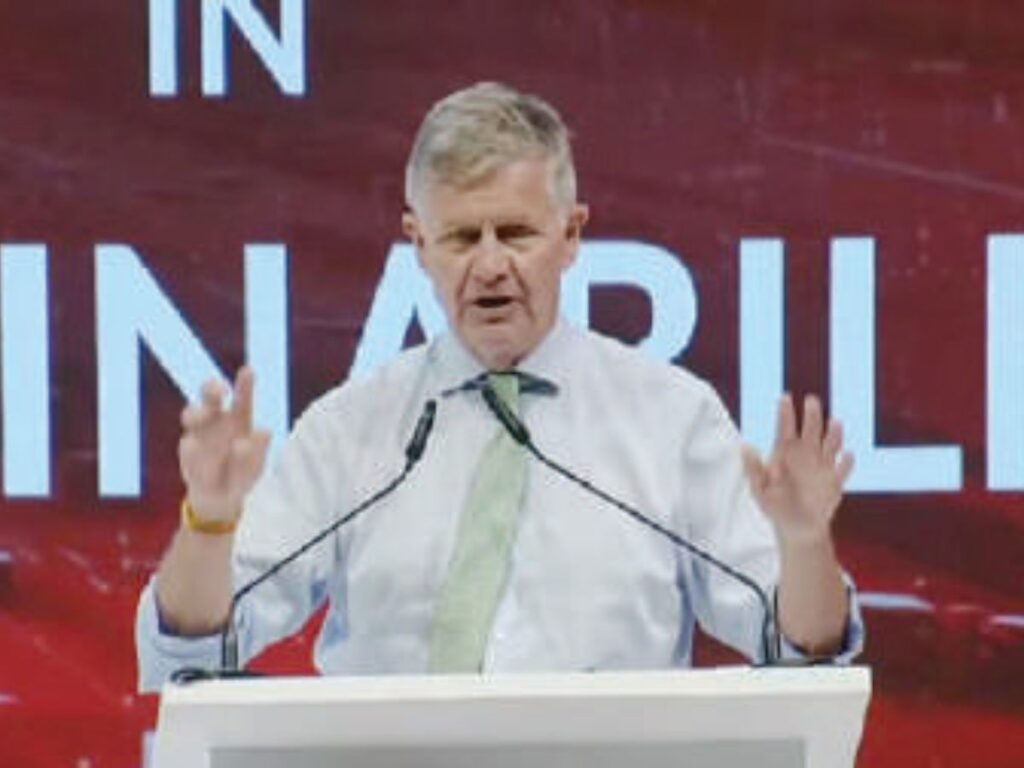
Opening the discussion at the NXT Conclave 2026, Erik Solheim said that recent geopolitical tensions, particularly in the Middle East, are pushing countries to rethink their dependence on fossil fuels. Referring to global energy volatility, he said the situation had inadvertently turned former US President Donald J. Trump into “the largest promoter of renewable energy on planet Earth.”
“Of course the war which is now happening in the Middle East is the strongest public relations for renewables at any point in human history,” he said. “Everyone wants to be independent of the volatility of the oil market. And how can you do that? Well, you go into solar, into wind, into hydropower.”
Speaking from India’s perspective, Rajya Sabha MP Harsh Vardhan Shringla said geopolitical instability is now a permanent feature of global politics and countries must adapt accordingly. He warned that institutions such as the United Nations and the Bretton Woods institutions are facing increasing challenges.
“I think we have to prepare for a reality in which the rules-based international order is today very much under threat,” he said. “Geopolitical developments and disruptions are going to be a part of our existence whether we like it or not.”
Shringla noted that distant conflicts can directly affect India’s economy and daily life. “The conflict in Iran is already having an impact on our lives here,” he said. “There is talk of LPG shortages, LNG supply chain gaps and even impacts on agriculture because fertilizers may not be available.”
Despite these challenges, he emphasized that India is progressing rapidly toward its climate commitments under the Paris Agreement. He highlighted the country’s goal of generating 500 gigawatts of renewable energy capacity.
“We had committed that 50 percent of our installed electricity capacity would come from green energy,” he said. “As we speak, more than half of our electric capacity is already from green sources.”
From Bhutan’s side, Deputy Speaker of the National Assembly Dasho Sangay Khandu stressed the importance of economic diversification and resilience in a volatile world.
“The world is interconnected. Something happening anywhere will definitely have an impact on the global economy,” he said.
He added that smaller economies must rethink traditional approaches. “This is the time to think about what to do next. Do we stay back and wait for things to stabilize, or do we take action and create new options for our future?” he asked.
The discussion concluded with a call for peace and cooperation. Shringla reiterated India’s diplomatic philosophy, citing Prime Minister Narendra Modi. “India is not neutral,” he said. “India is on the side of peace.”