
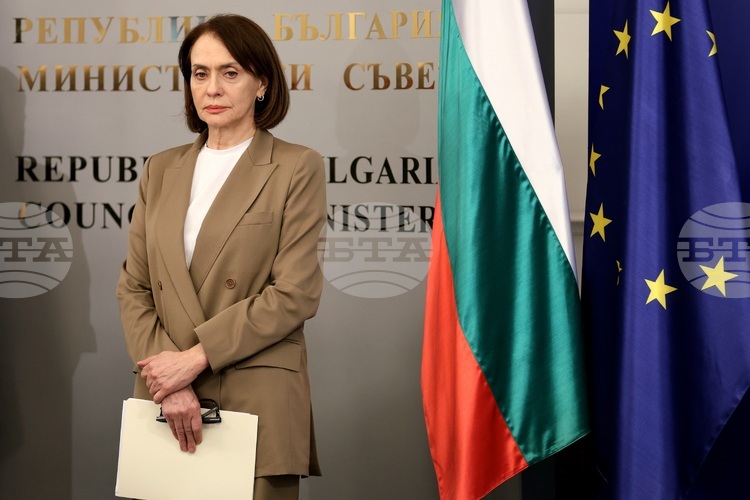
Bulgaria is in a better position compared with other European countries regarding gas and oil supplies, as it relies far less on petroleum products through the Strait of Hormuz, with the main deliveries coming via the Black Sea, said caretaker Foreign Minister Nadezhda Neynsky on Darik Radio, commenting on the conflict in the Middle East.
“As an EU member state, Bulgaria has guaranteed reserves, which provide much greater stability for the economy. The Lukoil refinery processes crude oil. The issue is with the prices, over which we have no influence, but the government is monitoring them and taking measures to combat profiteering. State oversight in preventing profiteering is key. If oil prices become unaffordable for businesses or households, measures will be announced. A very thorough analysis is being conducted, and the government is prepared for all scenarios,” she added.
Neynsky said the operation of Lukoil is being examined. “At this stage, we have reserves regarding supplies,” she assured, noting that Bulgaria has long-term contracts with Azerbaijan and currently no reason exists for price increases. “If the conflict continues too long and oil prices keep rising, the government is ready with a package of measures.”
“There is no direct threat to our country, except insofar as any war is a threat to world peace,” she said. On whether Europe risks paying the price for another conflict, Neynsky noted that the pressure from Iran is for everyone to pay – the Middle East pays through war, by closing the Strait of Hormuz, and there are talks of activating the Houthis, who could obstruct supply channels. Iran’s method of pressure is through oil prices. There was an interesting proposal from Russia – to take enriched uranium to Russia as a kind of guarantee to stop the war, which the US refused, as such a step raises numerous questions, also posing a threat to world peace. “Some even say that the war in Iran will be decided primarily in the Strait of Hormuz, and whether the US will first succeed in destroying the nuclear ballistic facilities used by the Revolutionary Guard, because the problem in Iran is whether the national leadership can control this Revolutionary Guard Corps,” Neynsky added.
On whether there is a risk of an Iranian missile being aimed at Bulgaria, Neynsky said that at this stage she believes there is no such risk, which is the assurance from Iran’s Ministry of Foreign Affairs. “That is the verbal side of the matter. Practically, it is important that Bulgaria is a NATO member,” she added. According to her, the remaining gap in Bulgaria’s defence system is the lack of missile defence. There are facilities in northern Greece that protect Bulgarian territory, she noted.
Neynsky also said that a meeting is scheduled in Brussels on Monday between her and the Greek Foreign Minister, where these issues will be discussed again. A meeting with the US Ambassador to NATO is also planned, where she will hear their plans and assessments of the conflict and will reaffirm Bulgaria’s desire to receive full guarantees for the security of its people.
Regarding the US aircraft stationed at Vasil Levski Sofia Airport, Neynsky stressed that they are not being used for the Middle East war. The tanker planes are there under a NATO commitment, and NATO is not a party to the Gulf war. “These planes are here with a very clear mandate, and there is no request to change it,” she added.
On the US lifting sanctions for purchasing Russian oil and whether this measure is reasonable, Neynsky said that her view aligns with that of Ukrainian President Volodymyr Zelenskyy, that it gives Russia a serious lifeline in the war against Ukraine. “Focused on oil issues and the Gulf war, and attempts to prevent the threat from Iran, we must not forget the other war. Russia and Iran are allies not only in the war in Ukraine, but also in the war in Iran, regardless of what is publicly stated,” Neynsky said.