
Published on
March 15, 2026
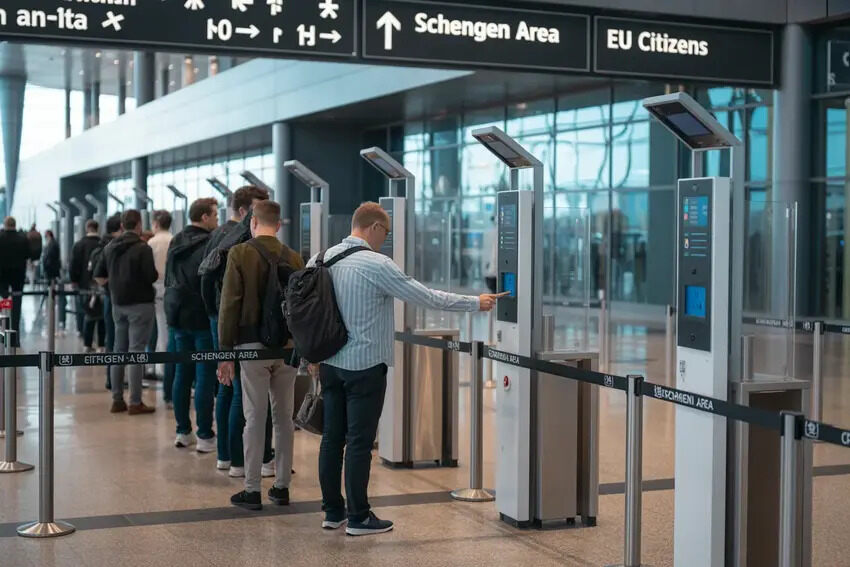
Image generated with Ai
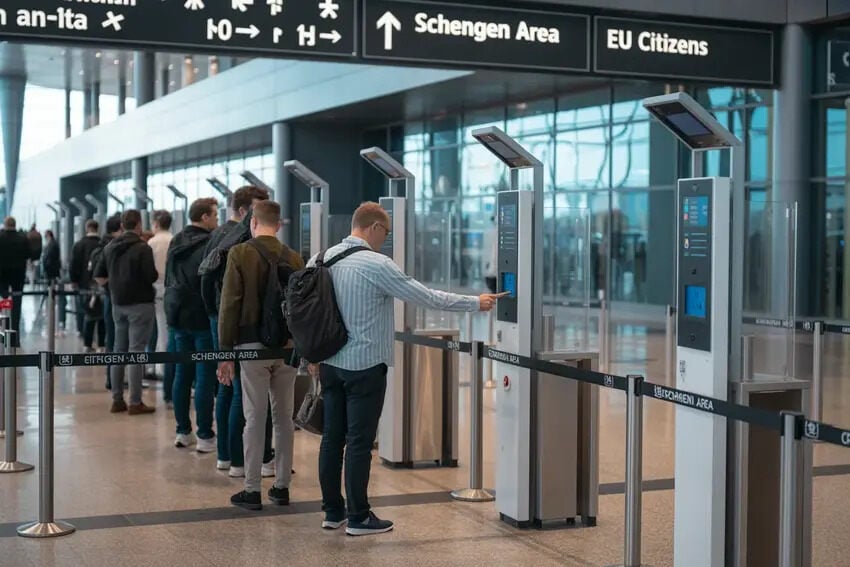
France has joined Spain, Germany, Italy, Denmark, Netherlands, Portugal, and other EU countries in the groundbreaking move to implement the Entry/Exit System (EES) by 2026, a revolutionary biometric system aimed at transforming border security and efficiency across the Schengen Area. This system will replace traditional passport stamps with facial recognition and fingerprint scanning technologies, offering a faster and more secure way to track the entry and exit of non-EU travelers. The shift comes as part of the EU’s broader strategy to modernize its border management, reduce human error, prevent overstays, and enhance security, particularly as international travel continues to grow. By embracing this technology, these countries aim to streamline border processes while maintaining high security standards, ensuring a safer and more efficient travel experience for millions of visitors each year.
As global travel continues to soar, border security has become a critical concern for both governments and travelers alike. The European Union (EU) is responding to this growing challenge with a cutting-edge solution — the Entry/Exit System (EES). Starting in April 2026, the EU will fully implement this biometric border management system across the Schengen Area. France, along with many other EU nations, will join the movement toward a more secure and efficient way of tracking non-EU travelers’ movements. This initiative promises to revolutionize border control, streamline the entry process, and bolster security.
The Entry/Exit System (EES): An Overview
The EES is designed to replace the traditional passport stamping process with a biometric registration system. Instead of receiving a stamp on their passport, non-EU nationals will now have their biometric data—facial images and fingerprints—electronically recorded upon entry and exit from the Schengen Area. This data will be securely stored in a central database, providing a streamlined way for border authorities to track the date, location, and duration of a traveler’s stay.
The system will apply to short-term visitors (up to 90 days within any 180-day period), including tourists, business travelers, and other non-EU nationals. The EES aims to make border checks quicker and more efficient while enhancing security and reducing human error. This system is expected to be fully operational by April 2026, with an initial phase of implementation beginning in October 2025.
Advertisement
Advertisement
How the Entry/Exit System Works
When non-EU travelers first enter the Schengen Area after the system is activated, they will have their biometric data—including a facial photograph and fingerprints—captured by border authorities. This data will be linked to their passport information and securely stored in a central EU database. During subsequent visits, travelers’ identities will be quickly verified using this pre-recorded data, eliminating the need for full data capture during each visit.
Once the system is in place, travelers can expect faster processing times at border crossings after their initial biometric registration. This will significantly reduce waiting times at busy airports and land borders, especially during peak travel periods.
Advertisement
Advertisement
Why the EU is Introducing the EES
The EES is part of the EU’s ongoing efforts to modernize its border management systems and improve security. Currently, manual passport stamping is still in use at many Schengen Area borders, which has led to human errors, inefficiencies, and security vulnerabilities. By switching to a digital, biometric system, authorities will be able to automatically calculate the duration of a visitor’s stay and ensure compliance with Schengen visa regulations. This will help identify overstays and prevent illegal immigration more effectively.
Furthermore, the EES is expected to improve security by detecting identity fraud more efficiently. The system will allow border officials to quickly compare biometric data across multiple entries and exits, making it easier to identify travelers who may be using fraudulent documents or overstaying their allowed time.
Countries Participating in the EES
The EES will be implemented across all countries in the Schengen Area, which includes both EU and non-EU members. Below is a detailed list of countries where the Entry/Exit System will be fully operational by 2026:
- France
As one of the largest and most visited countries in Europe, France’s participation in the EES will ensure that travelers entering the country will experience smoother and more secure border checks. France’s top airports and land borders will be among the first to adopt this advanced system. - Spain
Spain, another top European destination, will play a key role in the new biometric border management system. With its wide range of international airports and land crossings, Spain is committed to enhancing border security and efficiency through the EES. - Germany
Germany, a hub for international business and tourism, is expected to see significant benefits from the introduction of the EES. The system will provide faster and more reliable border control, improving the travel experience for millions of non-EU visitors each year. - Italy
Italy, with its rich cultural heritage and numerous tourist attractions, is set to implement the EES at all major airports and ports. The system will help maintain high security standards while ensuring that tourists and business travelers can move through borders with greater ease. - Denmark
Denmark’s entry into the EES will bring enhanced border control across its airports and land borders. This system will improve the flow of travelers and strengthen security as part of Denmark’s commitment to a unified Schengen Area. - Netherlands
The Netherlands, known for its international connectivity, will integrate the EES to ensure a seamless travel experience for visitors while maintaining high security standards at its busy border checkpoints. - Portugal
Portugal, with its increasing number of international tourists, will join the effort to implement biometric border control to ensure a smooth and secure entry for travelers, reducing wait times at major airports like Lisbon and Porto. - Belgium
As a central point in Europe, Belgium will benefit from the EES by enhancing its ability to monitor the flow of travelers through key international airports such as Brussels Airport. The system will contribute to both security and efficiency in one of Europe’s most connected regions. - Other EU Schengen Members
- Austria
- Finland
- Sweden
- Norway
- Luxembourg
- Poland
- Slovenia
- Slovakia
- Czechia (Czech Republic)
- Estonia
- Latvia
- Lithuania
- Hungary
- Romania
- Malta
- Liechtenstein
- Iceland
- Switzerland
Non-EU Schengen Members:
- Norway
- Switzerland
- Iceland
- Liechtenstein
These countries, which are not EU members but are part of the Schengen Area, will also fully implement the Entry/Exit System, ensuring that travelers moving across Europe will experience uniform, high-security border checks.
What Travelers Can Expect at the Border
When the EES is implemented, travelers should prepare for an initial biometric registration at their first entry to the Schengen Area. This may take extra time, especially during the early days of the system’s implementation. After biometric data is collected, subsequent border crossings will be much faster, as officials will only need to verify the stored data instead of capturing it again.
Data Protection and Privacy
The EU has emphasized that the EES complies with its strict data protection laws. All biometric data will be securely stored and accessible only to authorized authorities for specific security and border control purposes. Travelers will also have the right to access their personal data and request corrections if necessary.
France, along with Spain, Germany, Italy, Denmark, Netherlands, Portugal, and other EU countries, is set to implement the Entry/Exit System (EES) by 2026 to enhance border security and efficiency. This revolutionary biometric system will replace passport stamps with facial recognition and fingerprint scanning, streamlining border processes while strengthening security across the Schengen Area.
As the Entry/Exit System rolls out across the Schengen Area, France, Spain, Germany, Italy, and other participating countries are positioning themselves to provide safer and more efficient travel for millions of non-EU visitors. With its focus on biometric technology, this system will modernize border control, enhance security, and streamline the traveler experience for those entering and exiting the Schengen Area. The EES is a significant step forward for Europe’s travel industry and an essential measure in the ongoing effort to combat security risks while ensuring the smooth flow of international travelers.
