Find winning stocks in any market cycle. Join 7 million investors using Simply Wall St’s investing ideas for FREE.
-
Chevron (NYSE:CVX) has declared force majeure at the Leviathan gas field in Israel following war related shutdowns linked to the escalating Iran Israel conflict.
-
The company has reached a major settlement with the U.S. Department of Justice involving significant penalties tied to renewable fuel credit violations.
-
Chevron is pursuing aggressive new oil deals in Venezuela that could position it as the largest private producer in the Orinoco Belt.
-
The company is planning a workforce reduction of up to 20% by 2026 after the Hess acquisition as part of a multi year restructuring plan.
For you as an investor, these developments bring together several core themes around Chevron (NYSE:CVX) in one moment. The company is a large integrated oil and gas producer with exposure across upstream, midstream, and downstream. It is now contending with operational disruption in Israel, regulatory penalties in the U.S., and expansion efforts in Venezuela at the same time. In the context of ongoing energy transition policies and persistent geopolitical risk, this mix of issues relates directly to Chevron’s business model and risk profile.
Looking ahead, the combination of force majeure at Leviathan, the U.S. settlement, Venezuelan projects, and planned headcount cuts raises important questions about Chevron’s future production mix, cost base, and regulatory scrutiny. As more details emerge on the duration of the Leviathan shutdown, the implementation of the restructuring plan, and the terms of Venezuelan oil output, investors may want to focus on how these factors influence Chevron’s operational resilience and capital allocation priorities.
Stay updated on the most important news stories for Chevron by adding it to your watchlist or portfolio. Alternatively, explore our Community to discover new perspectives on Chevron.
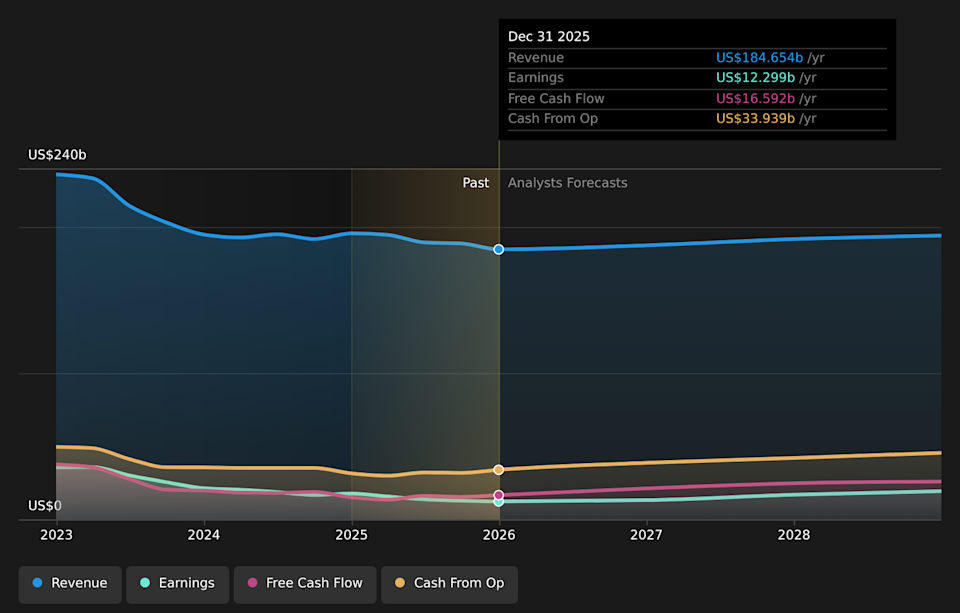
NYSE:CVX Earnings & Revenue Growth as at Mar 2026
2 things going right for Chevron that this headline doesn’t cover.
For you, the key thread running through these updates is how Chevron is rebalancing risk and cash generation across its portfolio. The force majeure at Leviathan shows how exposed large offshore gas projects can be to geopolitics, even when tied to long term regional demand. At the same time, the Venezuela oil deals would tilt Chevron further toward heavy crude in a country where contract stability and sanctions policy have been recurring pressure points. The U.S. renewable fuel settlement adds another layer by highlighting that compliance and systems around environmental programs matter just as much as headline production growth when you think about long term execution.
-
The Leviathan shutdown and Venezuela expansion intersect with the narrative’s focus on low cost production and large long life assets. This reinforces the idea that Chevron is leaning into scale projects that can support future cash generation if they run as planned.
-
The renewable fuel credit violations and increased geopolitical exposure in Israel and Venezuela cut against the narrative’s emphasis on efficiency and regulatory adaptation, as they point to operational and compliance risks that could weigh on margins or require extra spending.
-
The combination of force majeure, sanctions sensitive agreements and a multi year restructuring to deliver US$3b to US$4b of structural cost reductions may not be fully captured in the narrative’s discussion of project risk, especially where political decisions can override commercial plans.
Knowing what a company is worth starts with understanding its story. Check out one of the top narratives in the Simply Wall St Community for Chevron to help decide what it is worth to you.
-
⚠️ Operational disruption at Leviathan during a regional conflict underlines Chevron’s exposure to security events in key producing hubs and how quickly volumes can be taken offline by government orders.
-
⚠️ Expanding in Venezuela while also restructuring after the Hess deal concentrates more value in higher risk jurisdictions, which can compound existing analyst flagged issues such as dividend coverage and insider selling if projects underperform.
-
🎁 Higher crude and LNG prices during supply disruptions can support cash flows from Chevron’s global production base, giving the company more room to fund its US$3b to US$4b structural cost reduction plan and ongoing dividend payments.
-
🎁 If Venezuelan output ramps under new agreements, Chevron could gain scale in the Orinoco Belt that supports its position versus peers such as Exxon Mobil, Shell and BP across heavy oil and integrated refining chains.
From here, you may want to watch three things in particular. First, how long production at Leviathan remains halted and whether Chevron discloses any material financial hit or project timing changes. Second, the specific terms and execution of the Venezuela deals, including how production levels, payment mechanisms and any U.S. licensing conditions are structured. Third, the pace and quality of the planned 15% to 20% workforce reduction through 2026, and whether the company shows progress toward its stated US$3b to US$4b cost savings without harming core project delivery.
To stay informed on how the latest news impacts the investment narrative for Chevron, head to the community page for Chevron to keep up with the top community narratives.
This article by Simply Wall St is general in nature. We provide commentary based on historical data and analyst forecasts only using an unbiased methodology and our articles are not intended to be financial advice. It does not constitute a recommendation to buy or sell any stock, and does not take account of your objectives, or your financial situation. We aim to bring you long-term focused analysis driven by fundamental data. Note that our analysis may not factor in the latest price-sensitive company announcements or qualitative material. Simply Wall St has no position in any stocks mentioned.
Companies discussed in this article include CVX.
Have feedback on this article? Concerned about the content? Get in touch with us directly. Alternatively, email editorial-team@simplywallst.com