
Global warming is altering the natural cycles of plants and animals across the planet. However, recent research has identified a species that, at least for now, seems to benefit from these environmental changes.
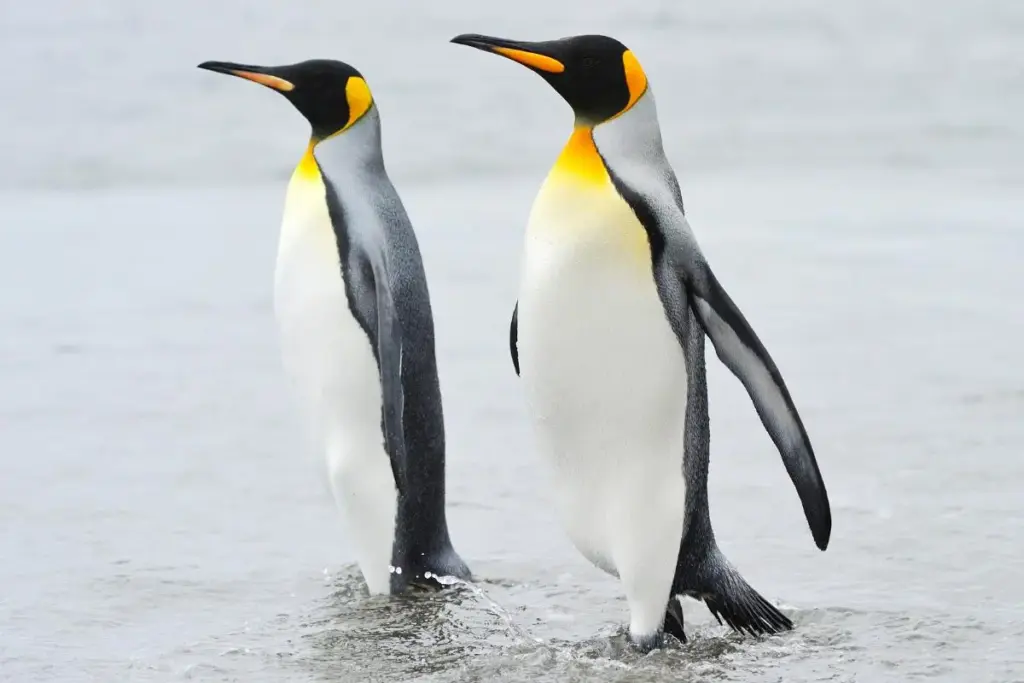
This is the king penguin, one of the most emblematic seabirds of subantarctic ecosystems. A study published in Science Advances analyzed the behavior of nearly 19,000 individuals inhabiting a subantarctic archipelago.
The results show that this species has advanced its breeding season and significantly improved its breeding success.
 The king penguin surprises scientists by adapting to global warming in a changing ecosystem. Photo: Oceanwide Expeditions.
Changes in reproduction linked to temperature increase
The research recorded that the king penguins began their reproduction 19 days earlier than at the beginning of the 21st century. This change is related to the increase in temperatures and modifications in the ocean’s seasonal cycles.
As a result, the reproductive success rate increased by about 40%, which surprised the scientific community. Researchers highlight that the species possesses a remarkable ability to adapt to environmental variations.
Additionally, the individuals show flexibility in their feeding routes, moving to different ocean areas in search of resources. This behavior allows them to better take advantage of changes in the distribution of their prey.
What is phenology and why does it concern scientists?
Changes in the natural calendar of species are studied within a discipline known as phenology. This field analyzes how biological cycles, such as flowering or reproduction, respond to climatic variations.
In most cases, global warming causes mismatches between species that depend on each other. For example, plants may bloom early while pollinating insects are not yet active.
This type of desynchronization can affect entire food chains and endanger the survival of numerous species. For this reason, scientists consider the adaptation of the king penguin to be an uncommon case within this global phenomenon.
 The king penguin surprises scientists by adapting to global warming in a changing ecosystem. Photo: Oceanwide Expeditions.
Ecological characteristics of the king penguin
The king penguin is one of the largest penguin species on the planet, only surpassed by the emperor. It primarily inhabits subantarctic archipelagos, where it forms large breeding colonies on beaches and coastal areas.
Its diet is mainly based on fish, especially the lanternfish, although it can also consume squid and other marine organisms. Unlike other penguins, it has a notable reproductive flexibility and can reproduce from late October to March.
Additionally, it has a long lifespan that can exceed 20 years in the wild. This combination of longevity, diverse diet, and adaptable behavior could explain its ability to face environmental changes.
Why is climate change usually negative for most species?
Although the case of the king penguin is encouraging, climate change remains a threat to global biodiversity. Most species cannot adapt as quickly to climate transformations.
When temperatures rise, many plants, insects, and animals modify their biological cycles at different rates. This creates mismatches in key processes such as pollination, reproduction, or the availability of food.
In marine ecosystems, additionally, the warming of the water alters the distribution of fish and other organisms in the food chain. For this reason, many penguin species with more limited diets face a greater risk due to changes in the ocean.
Scientists warn that the apparent success of the king penguin could be temporary. If warming continues to intensify, the ocean currents, temperatures, and food availability could change again, altering the current balance of these ecosystems.