
Published on
March 16, 2026
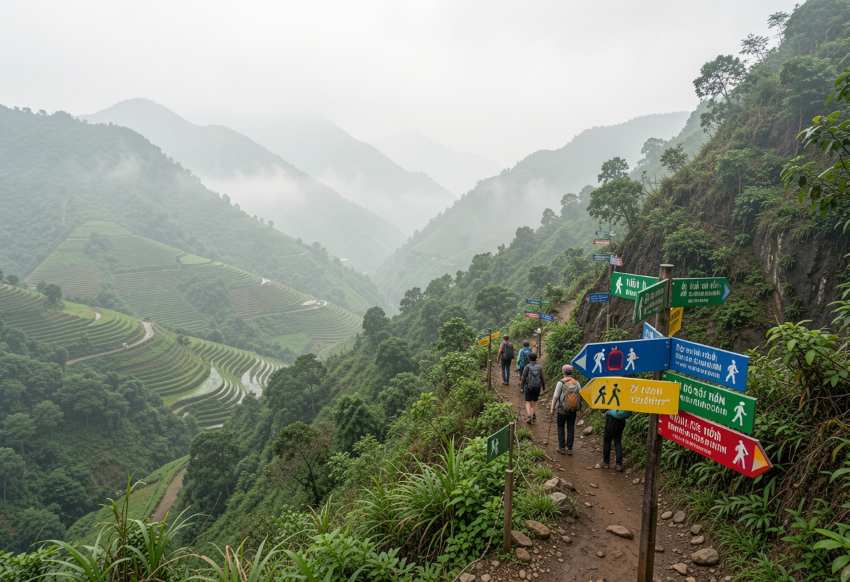
Image generated with Ai
Vietnam’s natural topography is characterised by a dramatic landscape, with rolling hills and majestic mountain ranges covering roughly three-quarters of the country. These lush, biodiverse environments have long been recognised for their enormous potential for nature-based activities. Long-distance trekking, competitive trail running, and immersive cultural exchanges are increasingly seen as the future of the country’s tourism industry.
Because of the country’s extensive network of biosphere reserves and national parks, both international and domestic investors have expressed strong interest. As a result, the advancement of trail-based tourism is now regarded as a critical pillar for the strategic and long-term evolution of the regional tourism industry. To help with this growth, the Czech Republic’s Embassy in Vietnam has launched a collaborative initiative.
The European Standard of Exploration
Global trends in nature exploration—specifically hiking within mountainous terrains—have seen a surge in popularity over recent years. This global appeal is largely attributed to established infrastructure, such as the sophisticated trail-marking networks found in Europe. The Czech Republic’s system, in particular, is widely acknowledged as one of the most comprehensive and technologically sound frameworks in existence.
It has been observed that this specific travel trend is gaining significant momentum across the Asian continent. Within the borders of Vietnam, a noticeable shift in traveller behaviour has been identified, particularly among the younger demographic. Frequent, short-duration weekend expeditions into forests and local ecosystems are being prioritized over traditional leisure stays. By introducing a standardized marking system, the safety and accessibility of these remote areas are expected to be significantly enhanced.
Advertisement
Advertisement
Knowledge Transfer and Local Empowerment
The scope of this international initiative extends beyond the mere installation of physical signage. A comprehensive educational programme is planned, wherein Czech specialists will conduct intensive training sessions. These workshops are designed for forest rangers, members of local communities, and student volunteers.
Through this transfer of technical expertise, the local workforce will be empowered to manage and maintain the marking system independently. The long-term objective is to ensure that the infrastructure remains robust without a perpetual reliance on foreign technical assistance. This approach not only fosters environmental stewardship but also creates specialized employment opportunities within rural mountainous regions.
Advertisement
Advertisement
Implementing the Pilot Framework
A phased approach to this development has been proposed by the Czech Embassy, beginning with a localized pilot project. A specific region will be selected to serve as the testing ground for these international standards. Once the pilot phase is subjected to rigorous monitoring and evaluation, a refined model will be drafted for nationwide replication.
Later this month, technical experts from the Czech Republic are scheduled to arrive in Vietnam. During this visit, detailed presentations regarding safety requirements, technical benchmarks, and the inherent economic value of organized trail networks will be delivered to local stakeholders. These discussions are vital for aligning European methodology with the unique environmental conditions found in Southeast Asia.
Navigating Regulatory and Environmental Protection
The alignment of this project with Vietnam’s national goals for sustainable growth has been confirmed by the Vietnam National Authority of Tourism (VNAT). However, a strong emphasis has been placed on the necessity of adhering to existing forestry regulations. The preservation of protected flora and fauna must be prioritized throughout the implementation of any new tourism infrastructure.
Rigorous guidelines regarding forest protection are expected to be integrated into the trail-planning process. This ensures that the influx of hikers does not lead to ecological degradation. By coordinating closely with forestry authorities and national park administrations, a balance between human exploration and environmental conservation can be meticulously maintained.
Overcoming Infrastructure Limitations
Currently, several systemic challenges impede Vietnam’s trail tourism market. The lack of unified standards and clear route planning has historically hampered the sector’s growth. Furthermore, many popular hiking routes lack necessary infrastructure, such as designated rest stops, emergency rescue stations, and standardised safety equipment.
The proposed pilot scheme aims to address these shortcomings. The quality of eco-tourism services is expected to improve as tourism boards, local governments, and international experts work together. By establishing a professionalised framework, Vietnam is positioning itself to become a premier adventure destination, providing world-class safety in some of the world’s most breathtaking natural landscapes.
