
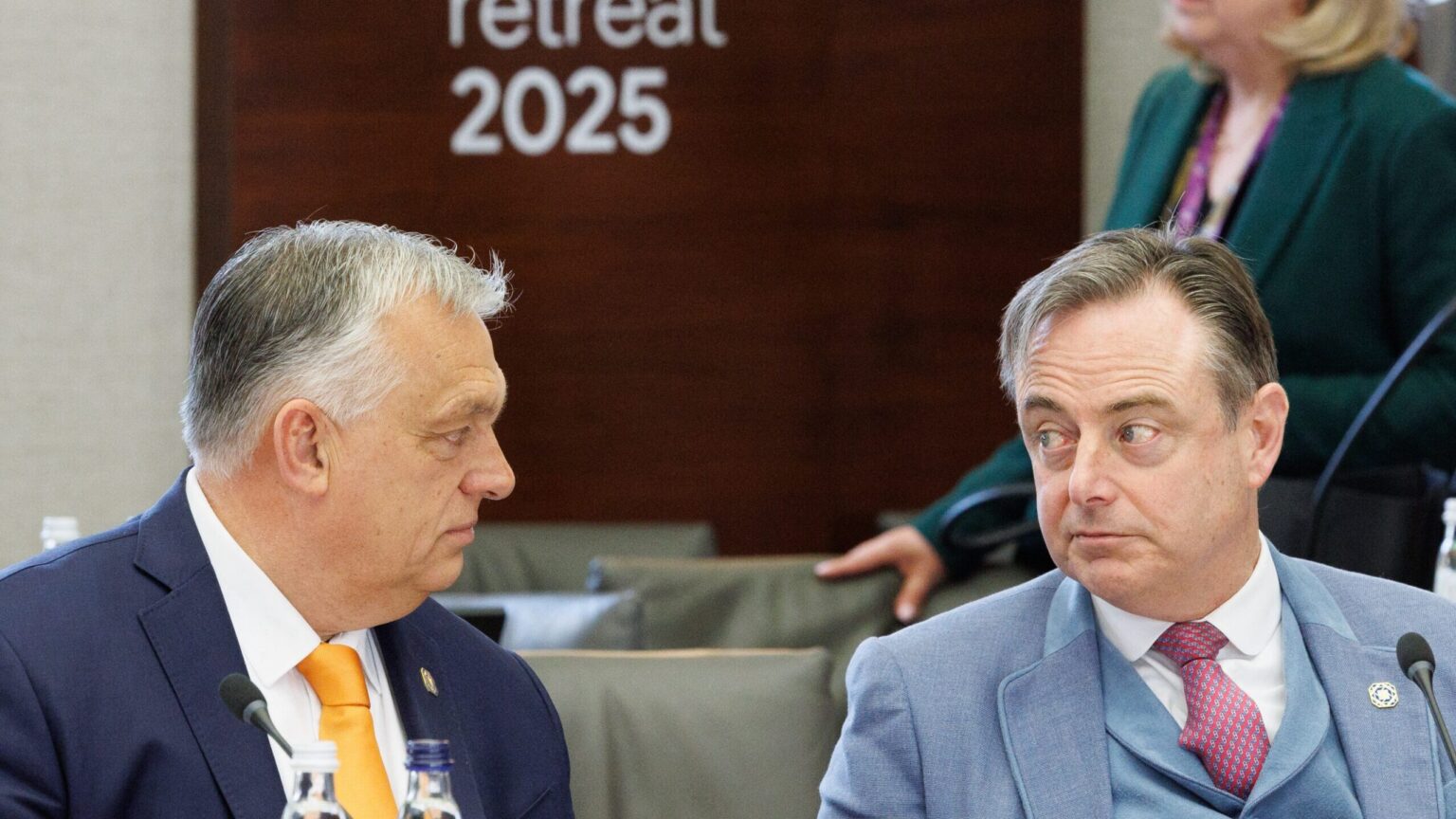
Belgian Prime Minister Bart De Wever said that Europe must restore dialogue and negotiate with Russia in order to end the war in Ukraine in an interview with the Belgian newspaper L’Echo. De Wever added that a negotiated settlement was also necessary to restore access to cheap Russian energy, which formed the foundation of European economic and industrial power in past decades.
The Belgian prime minister’s remarks caused shock among EU politicians and Western media as well, as they go directly against the mainstream position regarding the war in Ukraine within the European Union. For a long time, the only leader openly and frequently advocating such an approach was Hungarian Prime Minister Viktor Orbán, who was later joined by Slovak Prime Minister Robert Fico and—after his recent electoral victory—Czech Prime Minister Andrej Babiš. French President Emmanuel Macron and Italian Prime Minister Giorgia Meloni have also signalled similar positions regarding the dialogue with Russia, although not as directly as Orbán or De Wever in the interview.
According to De Wever, however, European leaders privately agree with his position, ‘but no one dares to say it out loud’. This is also a frequently repeated argument of the Hungarian government. ‘We must end the conflict in the interest of Europe,’ De Wever declared, adding that this must be done ‘without being naive towards Putin’.
‘We must normalize relations with Russia and regain access to cheap energy,’ the Belgian prime minister emphasized once again, adding that his position is simply ‘common sense’.
‘We must normalize relations with Russia and regain access to cheap energy’
Bart De Wever further argued that Europe’s dual strategy—supporting Ukraine militarily while attempting to squeeze Russia’s economy through sanctions—has become ‘untenable’ without the backing of the United States. ‘Given that we are unable to pressure Putin by sending weapons to Ukraine, and cannot suffocate his economy without US support, only one method remains: making a deal,’ he stressed.
The Belgian prime minister’s remarks—surprisingly sober and realistic for a Western European leader—come at a time when Washington has temporarily lifted sanctions on Russian oil that was already loaded onto ships as of 12 March. The decision, announced by US Secretary of the Treasury Scott Bessent, makes it possible for countries to deliver, sell, or offload Russian crude oil and petroleum products, easing pressure on the global energy market disrupted by the war in Iran.
Europe has been particularly affected by supply disruptions in the Strait of Hormuz, as the bloc moved to cut off much of its Russian natural gas imports following the outbreak of the war in Ukraine and is currently phasing out Russian oil. This decision has proven strategically short-sighted, as the first major crisis has sent energy prices skyrocketing. Benchmark Dutch TTF gas prices jumped nearly 30 per cent in early March, briefly approaching €70 per MWh before stabilizing around €60. Overall, European gas prices have surged dramatically since the conflict began, in some cases rising by as much as 60 per cent.
Prime Minister Orbán has recently called on the European Union to suspend sanctions on Russian energy to tackle the crisis and protect European citizens and industries. The Hungarian government introduced fuel price caps for diesel and petrol on 10 March, as the country’s energy security is already threatened by Ukraine’s blockade of Russian oil transit through the key Druzhba pipeline since 27 January.
Welcoming the decision of the Trump administration, Hungarian Minister for Foreign Affairs and Trade Péter Szijjártó also criticized the EU for not taking similar steps.
However, Western European leaders have not shared Hungary’s positive reaction to the US decision. German Chancellor Friedrich Merz and European Council President António Costa openly condemned it, stating that it could have a negative impact on European security and hurt Ukraine. Speaking on 10 March, EU Commissioner for Economy and Productivity Valdis Dombrovskis said the situation remains ‘very clear’ and that the bloc ‘must continue to exert maximum pressure on Russia.’
‘The current remarks from De Wever are not the first time he has gone directly against the EU mainstream’
The current remarks from De Wever are not the first time he has gone directly against the EU mainstream. The Belgian prime minister made headlines in late December 2025 when he led a blocking minority against plans by the European Commission to use immobilized Russian assets—most of which are held at Euroclear Bank in Belgium—as collateral for a €210 billion reparations loan to Kyiv. De Wever ruled out such plans from the beginning, calling them ‘complete madness’.
Orbán—also a vocal opponent of the proposal—praised De Wever for his ‘heroic stand’, while Western mainstream media, led by POLITICO Brussels, began to give the Belgian prime minister the ‘Hungarian treatment’, labelling the country as Russia’s ‘most valuable asset’.
Related articles: