
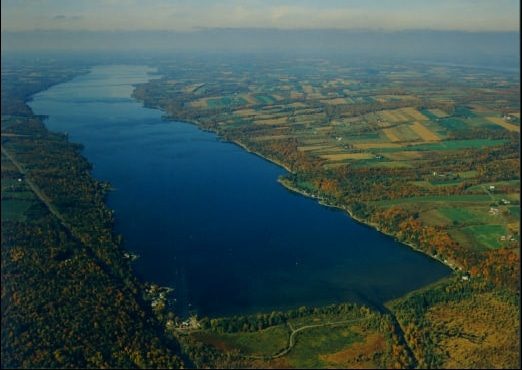
A lake that supplies drinking water to tens of thousands of Cayuga County residents faces a persistent and growing threat — and the man tasked with protecting it says the fight is far from over. Harmful algal blooms remain one of the most serious dangers to Owasco Lake, according to Adam Effler, PhD, executive director of the Owasco Lake Watershed Management Council.
Effler recently appeared on the program Inside Government with Guy Cosentino to discuss the state of the lake, the science behind its vulnerabilities, ongoing legal battles over watershed regulations, and what it will take to keep the water safe for the communities that depend on it.

His message was clear: protecting Owasco Lake requires science, regulation, and cooperation — and none of those elements can be taken for granted.
Why Owasco Lake Is Especially Vulnerable to Pollution
To understand the challenge, Effler started with geography. Owasco Lake sits within what he described as a drainage basin — a land area where rainfall and snowmelt collect and eventually flow into the lake itself.
That drainage basin, known as the Owasco Lake watershed, covers approximately 208 square miles. That’s an unusually large area relative to the size of the lake. And that imbalance matters enormously when it comes to water quality.
Because the watershed is so large compared to the lake, pollutants carried by rain and snowmelt — fertilizers, eroded soil, and other materials from surrounding land — have a relatively easy path into the water. There’s simply a lot of land feeding into a comparatively small body of water.
“The Owasco Lake watershed can be best described as a drainage basin,” Effler said, describing the land area where rainfall and snowmelt ultimately flow into the lake.
This geographic reality shapes every decision the Watershed Management Council makes. It also explains why protecting the lake isn’t just about what happens at the water’s edge — it’s about what happens across more than 200 square miles of surrounding land.
The Harmful Algal Bloom Problem Isn’t Going Away
Among the threats Effler highlighted, harmful algal blooms stand out as a continuing and serious concern. These blooms — dense growths of cyanobacteria, sometimes called blue-green algae — can produce toxins dangerous to humans and animals. They have been a recurring problem in Owasco Lake and in many other bodies of water across New York State and the broader region.
The conditions that fuel algal blooms are closely tied to the same runoff issues Effler described. Nutrients like phosphorus and nitrogen, often originating from fertilizers applied to farmland or lawns within the watershed, act as fuel for bloom growth. Warm temperatures and calm water conditions can accelerate the problem further.
For a lake that serves as a primary drinking water source for Cayuga County communities, a serious bloom event isn’t just an environmental concern — it’s a public health emergency. Treating water contaminated by algal toxins is complex and costly, and in severe cases, standard water treatment may not be fully effective.
Key Facts About the Owasco Lake Watershed
Information
The core challenge the council faces isn’t lack of awareness — it’s the sheer complexity of managing land use across a 208-square-mile area involving multiple landowners, municipalities, and competing interests.
- Runoff from agricultural land contributes nutrients that feed algal growth
- Soil erosion carries additional pollutants directly into the lake
- The large watershed-to-lake ratio amplifies the impact of every pollution source
- Protecting the lake requires cooperation from landowners and communities across the entire drainage basin
- Science, regulation, and voluntary cooperation are all described as necessary components
Legal Battles Add Another Layer of Uncertainty
Beyond the environmental science, Effler’s conversation touched on legal challenges surrounding watershed regulations. While
Watershed regulations typically govern what landowners within the drainage basin can and cannot do — rules around fertilizer application, construction near waterways, and land management practices that affect runoff. These rules can be contentious, particularly for agricultural operations and property owners who may see them as burdensome.
The tension between protecting a shared public water supply and respecting private land use is not unique to Owasco Lake, but it plays out with particular urgency here given the lake’s role as a drinking water source.
What This Means for the People Who Drink This Water
For residents of Cayuga County who rely on Owasco Lake for their drinking water, Effler’s warnings carry a direct and practical weight. A lake under sustained pressure from nutrient runoff and algal blooms is a lake whose long-term reliability as a safe water source cannot be assumed.
Water treatment facilities can manage many contaminants, but algal toxins present a particular challenge. The cost of treating compromised water rises significantly during bloom events, and those costs are ultimately passed on to ratepayers and municipalities.
The broader message from Effler’s appearance is that the health of Owasco Lake isn’t a background issue or a distant environmental concern. It’s a present and ongoing challenge that requires sustained investment, regulatory backbone, and community-wide commitment to responsible land stewardship.
What Comes Next for Owasco Lake Protection
Effler’s remarks suggest that the Owasco Lake Watershed Management Council will continue pursuing its multi-pronged approach — combining scientific monitoring, regulatory enforcement, and outreach to landowners and communities across the watershed.
The legal battles over watershed regulations remain unresolved based on available information, meaning that some of the tools officials rely on to limit harmful runoff may continue to face challenges in the near term.
What is clear is that the people responsible for protecting this lake view harmful algal blooms as a persistent, long-term threat — not a problem that has been solved or is on a clear downward trajectory. Continued vigilance, they argue, is not optional.
Frequently Asked Questions
What are harmful algal blooms and why are they dangerous?
Harmful algal blooms are dense growths of cyanobacteria that can produce toxins dangerous to humans and animals. They are a key identified threat to Owasco Lake, which serves as a primary drinking water source for Cayuga County.
How large is the Owasco Lake watershed?
The Owasco Lake watershed covers approximately 208 square miles, an unusually large area relative to the size of the lake itself, which increases its vulnerability to runoff pollution.
Who oversees the protection of Owasco Lake?
The Owasco Lake Watershed Management Council oversees lake protection efforts. Adam Effler, PhD, serves as the organization’s executive director.
What types of pollutants threaten Owasco Lake?
According to Effler, key pollutants include fertilizer runoff, soil erosion, and other materials carried into the lake by rainfall and snowmelt from surrounding land uses within the watershed.
Are there legal disputes affecting watershed protection?
Effler acknowledged ongoing legal battles over watershed regulations during his appearance on Inside Government, though specific case details were not provided in the available source material.
What does protecting Owasco Lake require?
Effler described the effort as requiring a combination of science, regulation, and cooperation across the entire watershed — with no single approach sufficient on its own.