
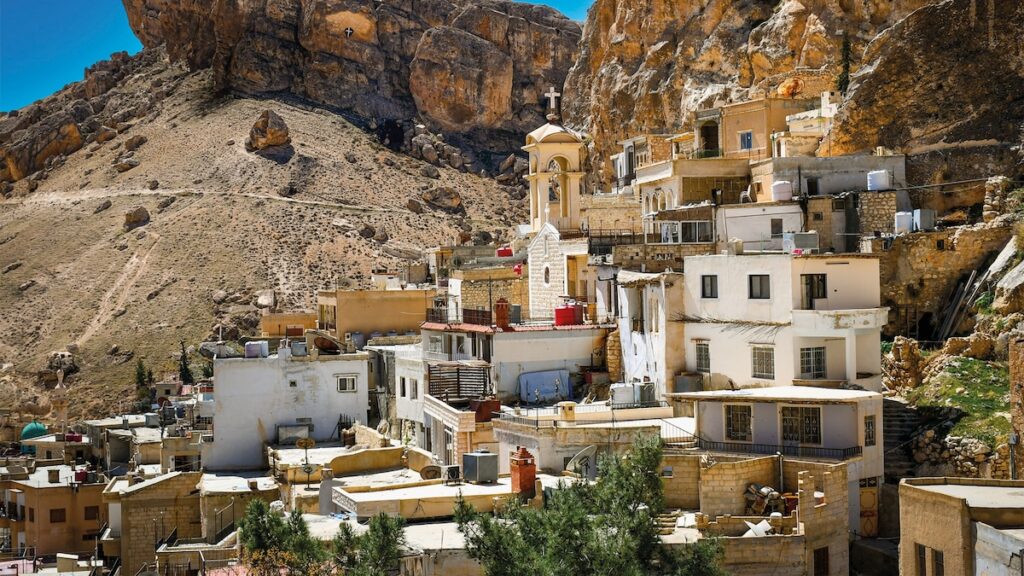
Linguistic obstacles remain: a splintered diaspora, an Arabic-dominated social media, and a workforce and educational system where Aramaic is now largely obsolete. And yet the people of Maaloula, as usual, are reluctant to give up hope.
During the war, Maaloula’s iconic statue of Mary, the mother of Jesus, was blown up. But now, a new 10-foot statue of Mary (called the Lady of Peace) stands in its place atop a cliff, watching over the village below.
Rabi’ah Mustafa Saliba, a practicing Sunni Muslim, says the statue moves her every time she visits. “It represents hope not just for Christians, but for all Syrians,” she says. “It tells me we can always rebuild.”
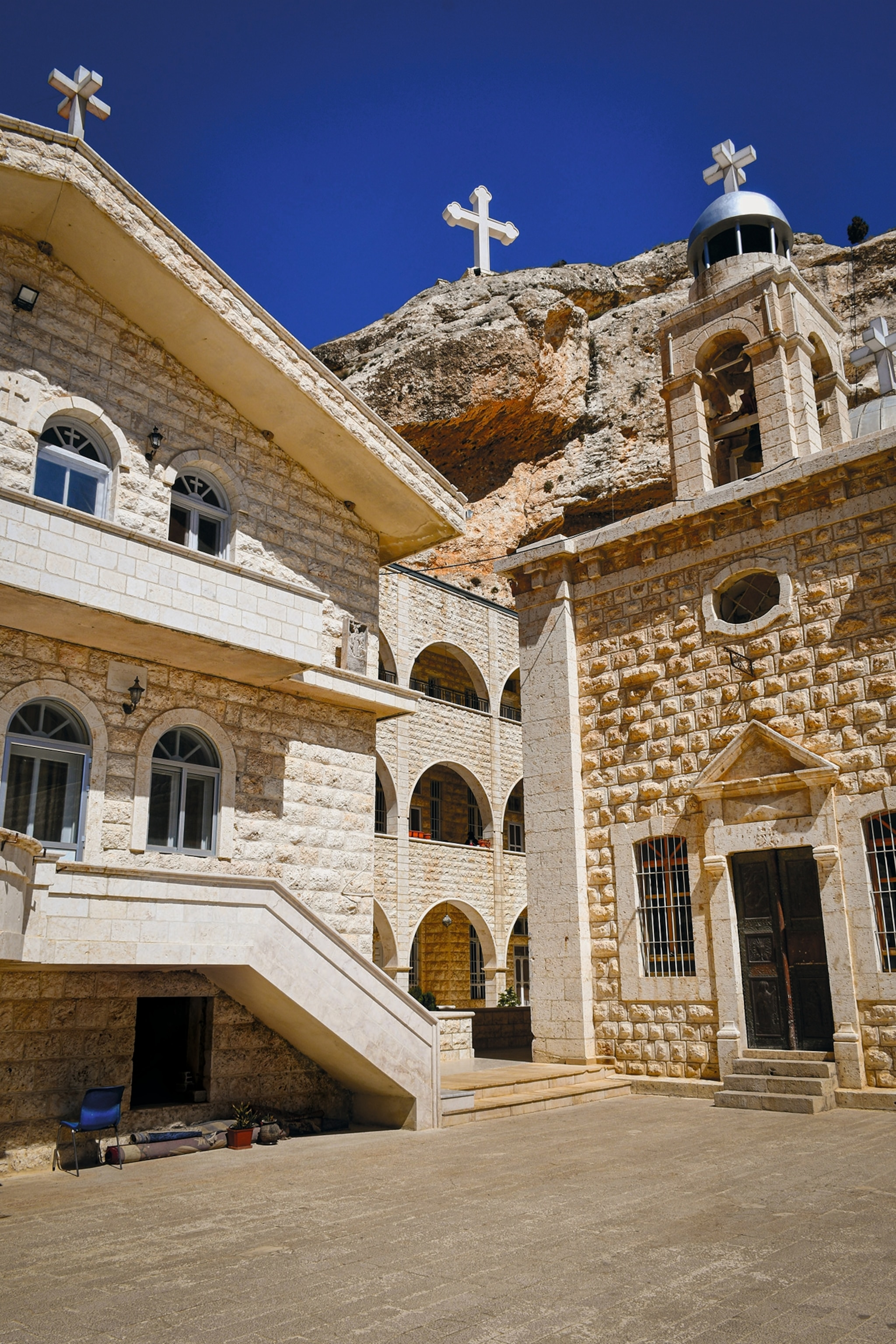
The Convent of Saint Thecla and the adjoining convent church of Saint John the Baptist in Maaloula are built around the sacred grotto where the Roman-era Saint Thecla took refuge.
RYAN BILLER
As the language continues to disappear, Michline Zarour teaches with urgency, determined to pass on to her son what she herself learned as a little girl. And her efforts have not been in vain. Her six-year-old son can sing in Aramaic, understands conversation in Aramaic, and speaks it with a “moderate vocabulary.”
“The people of Maaloula know how to endure,” she says. “So, that’s what we will continue to do—endure.”