
Published on
March 16, 2026
By: Rana Pratap
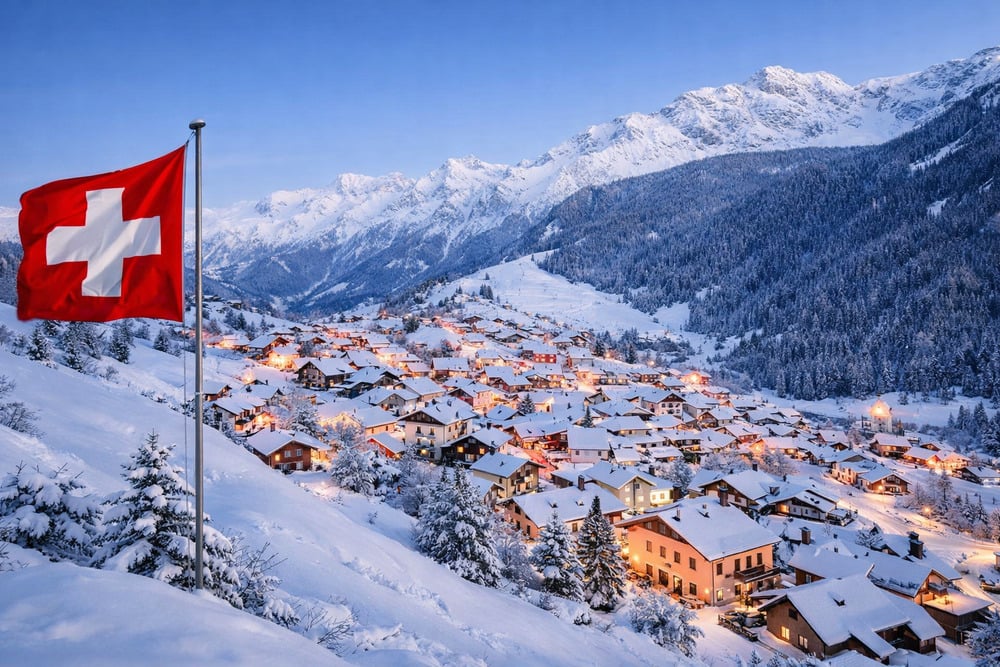
Image generated with Ai
By reopening one of Europe’s busiest travel corridors and restoring seamless cross-border travel across Central Europe, Germany has ended border checks along the Swiss frontier as temporary Schengen controls expire, enabling Switzerland to join France, Italy, Austria, the Netherlands, and others in experiencing tourism gains. The decision eliminates the regular passport inspections that were implemented in September 2025 and caused delays for everyday freight traffic, tourists, and commuters travelling between the two nations. Travel inside the Schengen Area is now easier and more predictable because to the removal of systematic inspections, which promotes greater tourism flows between linked European locations. As main transport routes between northern Europe, the Alpine region, and southern Europe are once again connected by simpler mobility, short city breaks, Alpine vacations, and cross-border cultural tours connecting Switzerland with France, Italy, Austria, and surrounding countries are anticipated to increase.
For travellers and tourism operators, the change represents far more than a technical policy adjustment. The Germany–Switzerland border lies at the centre of a vast travel network linking Western, Central and Southern Europe. When inspections were reintroduced in September 2025, the impact was felt across transport routes, supply chains and tourism corridors stretching from the Netherlands to northern Italy.
Now, with systematic checks removed, tourism authorities and travel operators across several European countries expect smoother journeys, faster itineraries and renewed growth in multi-destination travel.
Why Germany Introduced Border Checks in the First Place
Germany reintroduced temporary controls on several internal Schengen borders on 16 September 2025. The decision was taken under Article 25 of the Schengen Borders Code, which allows member states to restore border inspections if a serious threat to internal security or public order emerges.
Advertisement
Advertisement
Authorities cited multiple factors behind the decision. Rising irregular migration pressures across European routes, increased activity by people-smuggling networks and broader security concerns linked to geopolitical tensions were all cited as reasons for the temporary measure.
Switzerland was one of nine neighbouring states affected by the controls. Although the checks were limited and targeted, they introduced new layers of complexity for travellers and businesses moving across the border daily.
Advertisement
Advertisement
Logistics companies reported delays of between 15 and 45 minutes for trucks during peak commuting hours. Courier services operating between Zurich, Stuttgart and Germany’s Rhine-Ruhr industrial region also experienced higher operational costs due to additional documentation and waiting times.
The Importance of the Germany–Switzerland Border
The frontier between the two countries stretches approximately 362 kilometres and runs largely along the High Rhine and Lake Constance. Unlike many traditional international borders, this one cuts through a region where urban centres, industrial zones and transport networks function almost as a single economic space.
Advertisement
Advertisement
Cities such as Basel, Konstanz, Schaffhausen and Waldshut sit directly along the border, with communities often divided only by a bridge or a railway line. Public transport routes, cycling networks and road corridors frequently cross the border multiple times within a single journey.
For decades, the open-border arrangement under the Schengen system has allowed residents to move freely between the two countries without systematic passport inspections. This freedom of movement has been essential for regional labour markets, tourism and supply chains.
A Daily Corridor for Workers and Travellers
One of the most significant features of the Swiss–German border is the scale of cross-border commuting. Switzerland’s strong economy and higher average wages attract thousands of workers who live in neighbouring countries but travel daily to Swiss workplaces.
Across Switzerland, more than 400,000 cross-border workers are employed in sectors such as healthcare, engineering, logistics, hospitality and finance. A significant portion of them reside in Germany.
Along the German–Swiss border alone, tens of thousands of commuters cross every day to reach offices, factories and hospitals in cities such as Basel and Zurich.
These workers rely heavily on predictable travel times. Even relatively small border delays can disrupt daily routines and affect business productivity. For this reason, the removal of checks is widely welcomed by employers and commuters alike.
Freight and Supply Chains Depend on the Route
The frontier also plays a critical role in Europe’s freight and logistics system. The Basel region serves as a strategic gateway linking Germany, Switzerland and France.
Trucking corridors connecting the Rhine-Ruhr industrial area with Swiss manufacturing centres pass through this region, carrying everything from pharmaceutical products to high-value engineering components.
Just-in-time delivery systems, which rely on precise scheduling and minimal storage, are particularly sensitive to border delays. During the six months of inspections, companies had to build additional buffers into transport schedules.
With the removal of checks, freight movement is expected to return to normal speeds, reducing logistical uncertainty and improving supply chain efficiency.
How Open Borders Stimulate Tourism
Open borders are one of the core principles of the Schengen Area. They allow travellers to move freely between participating countries once they have entered the zone.
When routine inspections are removed, several tourism advantages appear immediately:
- Travel times between destinations decrease
- Road and rail journeys become more predictable
- Tour operators can create smoother multi-country itineraries
- Short trips and weekend travel become more attractive
Because the Germany–Switzerland corridor sits at the heart of Europe, its reopening influences tourism flows across a wide network of destinations.
Countries Benefiting from the Reopening
The return of unrestricted travel along the German–Swiss border strengthens tourism across several neighbouring countries. The following destinations stand to benefit from improved mobility and renewed visitor flows.
Switzerland
Switzerland experiences the most immediate tourism impact because Germany represents one of its largest visitor markets. With border checks removed, German travellers can once again reach Swiss destinations without delays or uncertainty.
Popular locations likely to benefit include Zurich, Lucerne, Interlaken and the Swiss Alpine resorts. These destinations attract visitors year-round for skiing, hiking and scenic rail journeys.
Short city breaks and weekend tourism are also expected to increase. Residents of southern Germany frequently travel across the border for leisure, shopping and cultural events. When journeys become smoother, such spontaneous travel tends to grow rapidly.
Germany
Germany’s tourism sector also benefits from the reopening of the border. Swiss residents often visit nearby German towns for shopping, restaurants and entertainment.
Regions close to the frontier are particularly likely to see increased visitor activity. The Black Forest, the Lake Constance region and historic cities such as Freiburg attract travellers from Switzerland seeking nature, wellness tourism and cultural experiences.
Border towns benefit strongly from day-trip tourism, where visitors cross the frontier for only a few hours but still contribute to local economies through retail spending and dining.
France
France gains indirectly through the Upper Rhine tourism region, where three countries meet within a relatively small geographical area.
Cities such as Strasbourg, Colmar and Mulhouse form part of a cross-border cultural landscape connected to Germany and Switzerland. Visitors exploring the region frequently move between these destinations during a single trip.
When travel barriers disappear, tourists are more likely to include multiple cities in their itineraries. This dynamic strengthens tourism businesses across the entire tri-national area.
Italy
Northern Italy also benefits from smoother travel across the Swiss–German corridor. Many travellers heading toward Italy from Germany pass through Switzerland.
Popular destinations include Milan, Lake Como and Lake Maggiore, which lie just south of the Alpine passes connecting the two countries.
Tourists travelling by train or car along scenic Alpine routes often combine visits to Switzerland and Italy. Easier cross-border movement encourages these combined itineraries, increasing visitor numbers in Italian lakeside resorts and mountain towns.
Austria
Austria forms another key component of Central Europe’s Alpine tourism network. Travellers frequently combine visits to Germany, Switzerland and Austria during the same holiday.
Regions such as Tyrol, Salzburg and Vorarlberg are well known for winter sports, hiking and scenic landscapes. When internal European borders operate smoothly, tourists can travel across these destinations without administrative complications.
The reopening of the Swiss frontier therefore supports broader tourism growth throughout the Alpine region.
Netherlands
Tourists from the Netherlands often travel south through Germany on their way to Switzerland and the Alps. Road trips and rail journeys linking Dutch cities to Alpine destinations are common during both summer and winter holiday seasons.
When border crossings are faster and more predictable, travellers feel more confident planning longer journeys. This encourages tourism flows from northern Europe into the heart of the continent.
Dutch travellers are particularly active in skiing holidays and summer mountain tourism, making them a valuable market for Swiss and Austrian resorts.
Belgium
Belgium benefits in a similar way to the Netherlands. Many Belgian tourists travel through Germany when heading toward Switzerland, Italy or Austria.
Smooth cross-border movement makes these journeys easier to plan and reduces uncertainty for travellers driving long distances across the Schengen Area.
Belgian visitors are known for extended European road trips that combine multiple destinations. Improved mobility therefore encourages itineraries that include several countries during a single holiday.
Multi-Destination Tourism Becomes Easier
One of the most significant effects of open borders is the growth of multi-country travel. Tourists increasingly prefer journeys that include several destinations rather than remaining in a single location.
For example, a typical European travel route might include:
- Zurich in Switzerland
- Strasbourg in France
- Munich in Germany
Another itinerary might connect Milan, Lucerne and Freiburg within a single holiday.
When border inspections slow travel, these routes become less attractive. Once restrictions disappear, they quickly regain popularity among international visitors.
Schengen Mobility and Europe’s Tourism Network
The Schengen system remains one of Europe’s most powerful tourism advantages. By removing internal borders, it allows travellers to explore multiple cultures, landscapes and cities without passport checks between each destination.
However, the temporary reintroduction of border inspections in recent years has highlighted how sensitive this system can be to political or security concerns.
Migration pressures, geopolitical tensions and organised crime have led several countries to restore temporary checks at various times. While these measures are usually limited and time-bound, they demonstrate that open borders cannot always be taken for granted.
The reopening of the German–Swiss frontier therefore represents a return to the core principle of Schengen mobility.
The Future of Travel Across Europe
Even as internal borders reopen, Europe is preparing to introduce new digital systems to strengthen external border management.
Upcoming technologies will record biometric data and track the entry and exit of non-European travellers entering the Schengen Area. These systems aim to enhance security while preserving the freedom of movement inside the region.
For travellers within Europe, the goal is to maintain seamless journeys across internal borders while ensuring better monitoring of external arrivals.
Germany ends Swiss border checks as Schengen controls expire, making smoother multi-country trips and boosting tourism in Switzerland, France, Italy and Austria.
A Key Travel Corridor Reopens
The lifting of border checks between Germany and Switzerland restores one of Europe’s most important travel corridors. The frontier sits at the intersection of major transport networks linking northern Europe with the Alps and the Mediterranean.
For tourism industries across Switzerland, Germany, France, Italy, Austria, the Netherlands and Belgium, the reopening signals renewed momentum for regional travel.
Faster journeys, simpler itineraries and stronger multi-destination tourism all contribute to economic activity across hotels, restaurants, transport services and cultural attractions.
In the interconnected geography of Central Europe, the reopening of a single border can ripple across an entire continent’s travel network. With inspections now lifted along the Swiss frontier, the benefits are likely to be felt well beyond the two countries directly involved.
Germany ends Swiss border checks as temporary Schengen controls expire, making cross-border travel easier and boosting tourism in Switzerland, France, Italy, Austria and the Netherlands through smoother multi-country trips The ruling reinstates one of the most significant transit routes in Central Europe, enabling travellers, commuters, and companies to travel more freely between linked locations. Travellers are more inclined to arrange trips that span many nations on a single itinerary as border waits vanish, boosting local businesses, promoting regional tourism, and upholding the fundamental Schengen ideal of easy travel throughout Europe.
