
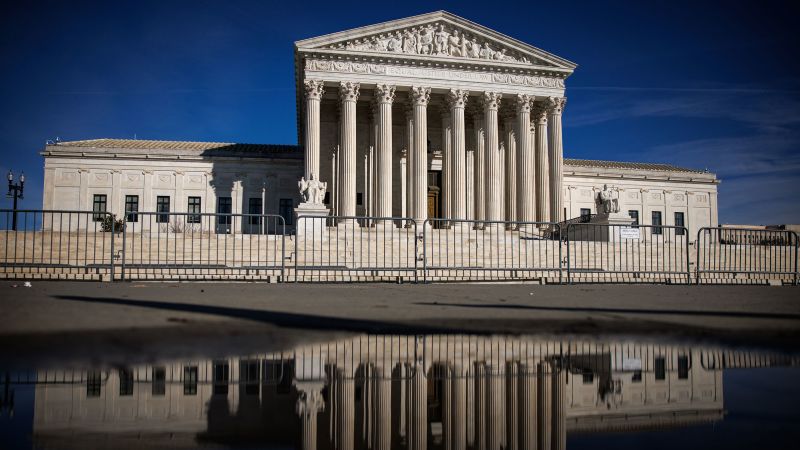
The Supreme Court announced Monday it will decide whether President Donald Trump can terminate temporary deportation protections for hundreds of thousands of foreign nationals, agreeing to hear arguments next month on an issue that has been central to the administration’s immigration agenda.
The decision came in a pair of emergency appeals involving 6,000 Syrians and some 350,000 Haitians who have lived in the US legally for years.
The court deferred a request from the administration to remove protections for those people now while it considers the bigger question of whether a president may end the temporary protections more broadly. That means the people at issue in the case will retain their legal protections for now.
The court’s argument calendar was already set for the term that will end in June and its unusual decision to hear arguments in the case in April likely underscored that several similar cases challenging the administration’s moves are pending in lower federal courts and likely would have eventually reached the high court anyway.
In the Syrian case, Trump filed the emergency appeal at the Supreme Court in February, urging the justices to allow his administration to end Temporary Protected Status for the Syrians. TPS allows people who arrived from certain countries at times of upheaval to temporarily live and work in the US legally. As part of a broader effort to curb immigration, Trump has sought to end the status for multiple groups.
The case involving TPS for Haitians arrived at the Supreme Court last week. That appeal from the administration followed a scathing ruling from a federal district court in Washington, DC, in February that blocked the administration from letting Temporary Protected Status expire for Haitian nationals.
The 6-3 conservative Supreme Court has granted the administration deference to cancel those designations in the past, including in a case involving Venezuelans with TPS status that the court decided in May. It reiterated that position in a second emergency ruling in October.
TPS recipients are vetted and are ineligible if they’ve been convicted of any felony or more than one misdemeanor in the US. The Homeland Security secretary has discretion to designate a country for TPS. Critics, including DHS officials, say the designations were never intended to be permanent.