
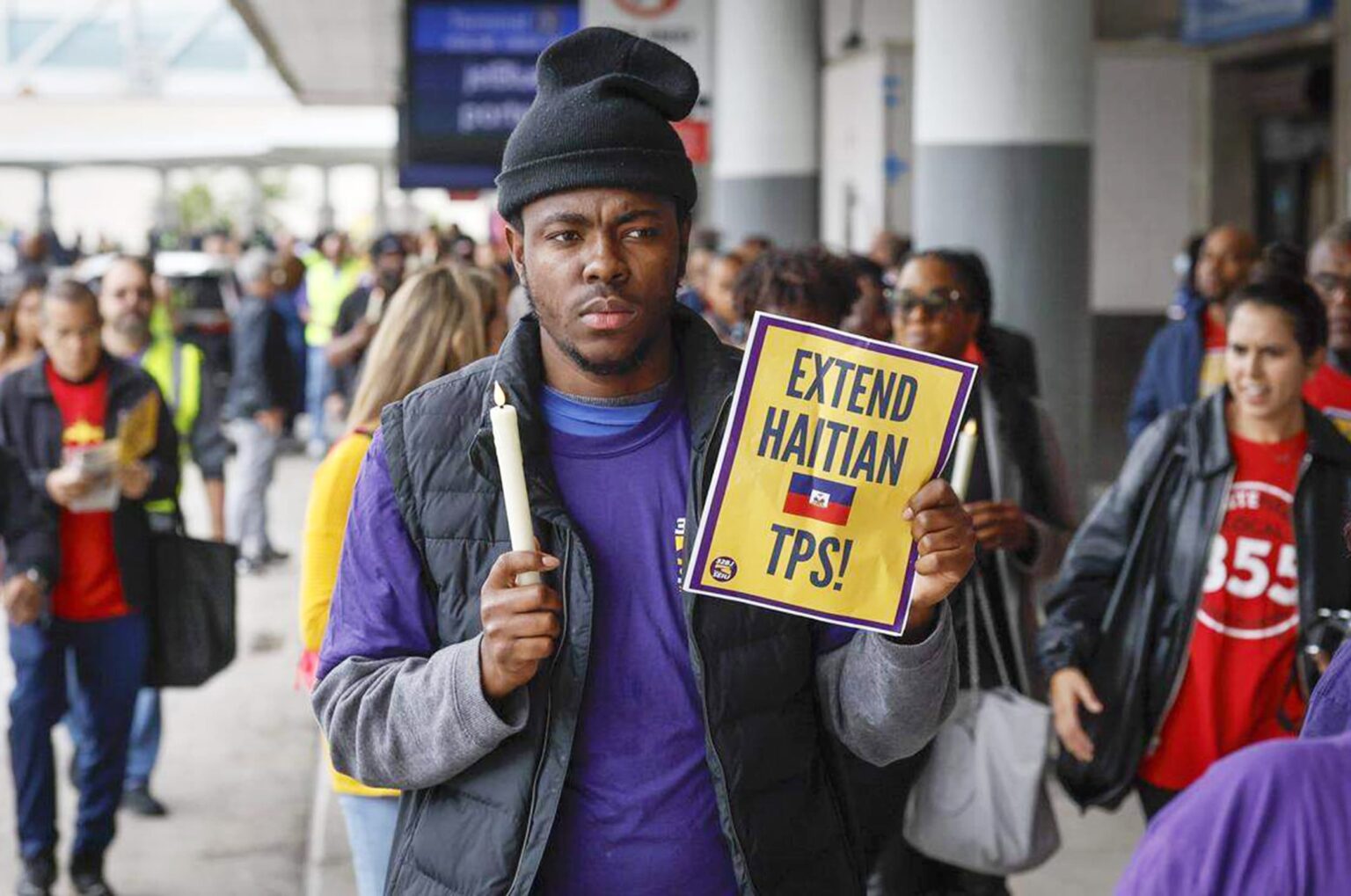
The Supreme Court on Monday agreed to consider the Trump administration’s arguments for why it should be able to end temporary immigration protections for people from Haiti and Syria, as the administration has complained to the justices that lower courts are unduly interfering with executive immigration policy.
As opposed to immediately granting emergency orders in favor of the administration as it has done in previous cases, the high court deferred acting on the government’s applications until after it hears oral arguments in late April. That means the lower court victories for immigrants will remain in place for now in these cases.
The Supreme Court’s decision to intervene at this early stage in the immigration litigation adds to the many important cases the court is set to decide this term, another one being President Donald Trump’s attempt to end birthright citizenship, which is set for a hearing earlier in April.
Lawyers for Syrian and Haitian nationals have argued there’s no urgent reason for the government to be able to end their humanitarian protections immediately, whereas the immigrants face great dangers if the government is allowed to deport them.
Continuing a theme of Trump’s second term, the Justice Department’s appeals in these cases have expressed annoyance at lower court rulings that stopped the government from doing what it wants to do, when it wants to do it.
“This is the government’s fourth application for a stay arising from lower courts’ refusal to allow the Executive Branch to terminate Temporary Protected Status (TPS) for various countries on the eve of the terminations taking effect,” Solicitor General John Sauer wrote in his application in the Haiti case. He was referring to prior applications regarding Venezuela, in which the high court granted emergency relief for the government, and the application regarding Syria, which the justices will now be considering alongside the Haiti appeal.
Sauer complained to the justices that lower courts have been unlawfully second-guessing the decisions to terminate protections made by Kristi Noem when she was the head of the Department of Homeland Security.
“Unless the Court resolves the merits of these challenges — issues that have now been ventilated in courts nationwide — this unsustainable cycle will repeat again and again, spawning more competing rulings and competing views of what to make of this Court’s interim orders,” Sauer wrote. He urged the justices to “break that cycle by granting stays as well as certiorari before judgment” in both the Syria and Haiti cases.
But while the court granted certiorari before judgment, meaning it’s taking up the cases before the lower courts have fully ruled, it declined to immediately grant the stays that Sauer sought, which would’ve provisionally sided with the government while the litigation continues. Now it’s up to the government to convince the justices to upend the status quo.
Lawyers for Syrian and Haitian TPS holders have been arguing that there’s no good reason to do so.
Opposing what they put in scare quotes as the government’s bid for “emergency” relief, lawyers for Syrian nationals said the administration sought that relief “from an order that preserves the immigration status of 6,132 people who have lived here lawfully for years — in many cases more than a decade.” They called those TPS recipients “highly sought-after doctors and medical professionals, reporters, students, teachers, business owners, caretakers, and others who have been repeatedly vetted and by definition have virtually no criminal history. The government apparently needs urgent authority to send them to a country in the middle of an active war.”
Recommended

Jordan Rubin is the Deadline: Legal Blog writer. He was a prosecutor for the New York County District Attorney’s Office in Manhattan and is the author of “Bizarro,” a book about the secret war on synthetic drugs. Before he joined MS NOW, he was a legal reporter for Bloomberg Law.
Latest Post