
Published on
March 17, 2026
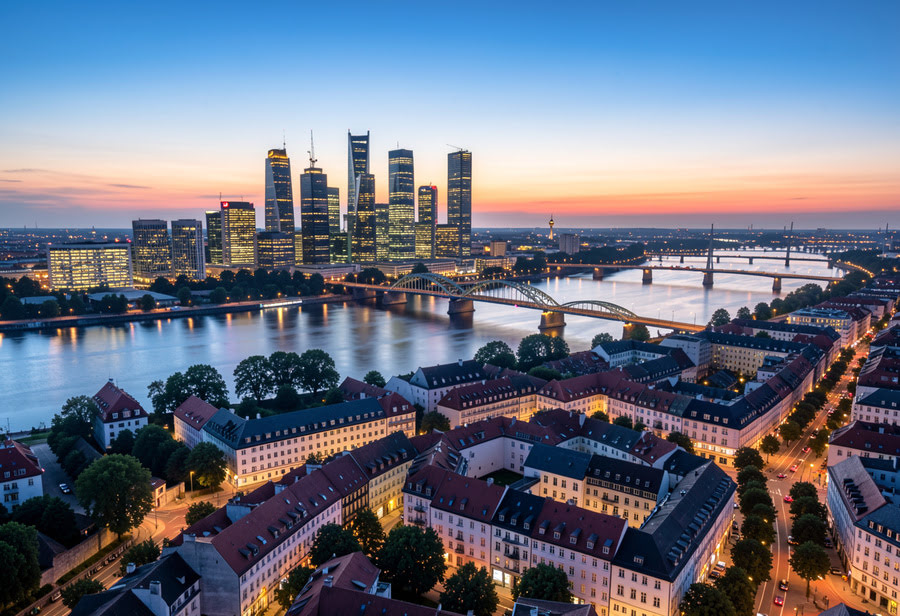
Image generated with Ai
Germany’s recent decision to reopen key travel corridors alongside Switzerland, France, Italy, Austria, Netherlands, and Belgium marks a pivotal step in reviving Europe’s economic and tourism sectors. This collaborative move aims to not only strengthen the region’s interconnected economy but also accelerate cross-border logistics, enhancing trade flow and boosting tourism. By reopening these travel routes, Germany and its European neighbors are signaling a shared commitment to economic recovery, addressing the disruption caused by pandemic-related restrictions, and fostering closer ties within the EU. The reopening is expected to create a robust environment for business growth, increase tourism revenue, and offer renewed access to vital markets, contributing to the seamless exchange of goods, services, and people throughout the continent.
Germany has lifted temporary border checks along its 362-kilometre border with Switzerland, re-establishing one of Europe’s most important travel corridors. These border inspections, which were introduced on September 16, 2025, under Article 25 of the Schengen Borders Code, have now ended, providing relief to commuters, freight carriers, and tourists who experienced delays. With the expiration of these controls, Switzerland joins neighbouring countries like France, Italy, Austria, the Netherlands, and Belgium, all of which are set to benefit from the resumed free flow of cross-border travel in Central Europe.
The temporary border checks were introduced by Germany as a response to rising irregular migration, increased activity by people-smuggling networks, and broader geopolitical security concerns. According to Schengen regulations, member states can implement temporary border controls when there are significant risks to public order or internal security. This legal measure was activated by Germany, which affected several internal Schengen borders, including the one with Switzerland.
Switzerland was one of the nine countries impacted by the checks, although they were targeted and limited. Still, these checks introduced additional complexities for daily cross-border travel, affecting both logistics companies and commuters. Trucks traveling between Zurich, Stuttgart, and the Rhine-Ruhr region of Germany faced delays ranging from 15 to 45 minutes during peak hours, causing disruptions to supply chains. Courier services also saw increased operational costs due to longer wait times and additional documentation requirements.
Advertisement
Advertisement
With the expiration of the temporary border checks and the expiration of their legal time limit, Germany has removed the inspections, and the border has returned to its normal open-border status under the Schengen Agreement. This restoration marks a return to smoother travel between the two countries and throughout the Schengen Area.
A Crucial Border for Local Economies
The border between Germany and Switzerland follows the High Rhine and Lake Constance, passing through cities like Basel, Konstanz, Schaffhausen, and Waldshut. These cities lie directly on the border, with some communities separated only by a bridge or a railway line. For years, the Schengen open-border system has allowed people to cross this boundary with no systematic passport checks.
Advertisement
Advertisement
However, the border’s importance extends beyond tourism. Over 400,000 cross-border workers commute daily from Germany to Switzerland, where they are employed in critical sectors like healthcare, engineering, logistics, hospitality, and finance. These workers’ predictable and timely crossings are essential for Swiss businesses, including hospitals and factories, that depend on their workforce. The return of smooth border crossings will help maintain the economic stability of both countries, ensuring that businesses can function efficiently without the uncertainty caused by border delays.
Freight and Logistics: Restoring Operational Efficiency
Advertisement
Advertisement
The Basel region, strategically located at the crossroads of Germany, Switzerland, and France, plays a critical role in freight transportation. The trucking corridors between Germany’s industrial heartland in the Rhine-Ruhr region and Switzerland’s pharmaceutical and engineering manufacturing centres pass through Basel. During the inspection period, logistical companies had to build additional time buffers into their schedules to account for delays at the border. Just-in-time delivery systems, in particular, were heavily affected by these added uncertainties.
With the removal of border controls, freight movement is expected to return to pre-September 2025 levels, restoring efficiency to supply chains and reducing operational costs. The smooth flow of goods between Germany and Switzerland, as well as to other European destinations, will ease logistical pressures and benefit industries across the region.
Tourism Recovery Across Central Europe
The end of border checks will provide immediate benefits to tourism across the region. Switzerland, in particular, will see a boost, as Germany is one of its largest sources of international visitors. With the return of seamless travel, German tourists can once again visit Swiss cities like Zurich and Lucerne, as well as the Alpine resorts, without delays. The removal of border checks is especially significant for short trips and weekend getaways, which were common before September 2025 and are now expected to rebound quickly.
In Germany, the end of border controls also paves the way for Swiss residents to resume travel to German destinations, especially in the border regions. Areas like the Black Forest, Lake Constance, and the historic city of Freiburg stand to benefit from the return of day-trip tourism from Switzerland. These border towns rely heavily on cross-border visitors, and the revival of tourism will support local retail businesses, restaurants, and cultural venues.
France is poised to benefit from its position along the Upper Rhine, where three countries converge. Cities like Strasbourg, Colmar, and Mulhouse, which form a cultural landscape shared by Germany, France, and Switzerland, will see an uptick in tourism as travelers can move between the countries more easily. Similarly, Italy stands to gain from smoother cross-border travel, especially for German tourists heading towards the Italian Alps, including destinations like Milan and the scenic lakes.
Austria’s Alpine regions, including Tyrol, Salzburg, and Vorarlberg, are frequently included in multi-country trips that combine visits to Germany and Switzerland. With border crossings simplified, these areas will benefit from increased tourism and more seamless travel. Additionally, travellers from the Netherlands and Belgium, who often pass through Germany on their way to Switzerland or the Mediterranean, will be encouraged to plan longer, multi-country journeys, boosting tourism in the entire region.
Key Facts at a Glance
- Border length: 362 km along the High Rhine and Lake Constance
- Border checks introduced: September 16, 2025, under Article 25 of the Schengen Borders Code
- Reason: Increased irregular migration, people-smuggling activity, and security concerns
- Cross-border workers: Over 400,000 commuting daily from Germany to Switzerland
- Freight delays: 15-45 minutes during peak hours
- Affected countries: Switzerland, Germany, France, Italy, Austria, Netherlands, Belgium
- Popular routes: Zurich → Strasbourg → Munich; Milan → Lucerne → Freiburg
Impact on Travelers
The removal of border controls provides immediate benefits to travelers. For those journeying between Germany and Switzerland, or crossing through Central Europe, travel times are now faster and more predictable. Tour operators can build more efficient itineraries, while business travelers and freight industries can expect a return to normal operations with reduced costs and delays.
Germany’s reopening of key travel corridors with Switzerland, France, Italy, Austria, Netherlands, and Belgium aims to spur economic growth by boosting tourism, enhancing cross-border logistics, and reinforcing Europe’s interconnected economy, facilitating smoother trade and stronger regional ties.
The Future of Schengen Travel
Despite the reopening of internal borders, Europe is continuing to enhance external border security. New digital biometric systems will track the entry and exit of non-European visitors, which will help maintain security while preserving the Schengen Area’s free movement. Germany’s decision to lift border checks with Switzerland has restored a vital link in Europe’s travel network, benefiting tourism, commerce, and freight movement across the continent.
