
On the eve of upcoming elections in Armenia, the European Union announced its decision to deploy a “rapid response team to counter hybrid threats.” In a statement, EU High Representative Kaja Kallas emphasized that the request for such assistance came from the Armenian authorities themselves. This initiative reflects Brussels’ growing focus on the resilience of political systems in neighboring regions, as well as its broader effort to systematize support for democratic processes—particularly in countries situated at the crossroads of competing geopolitical interests.
To better understand the rationale behind this move, it is important to clarify the concept of “hybrid threats,” which in recent years has become a central element of the international security agenda. The term encompasses a wide range of challenges, including cyberattacks, media manipulation, information pressure, and attempts to influence electoral processes. It is precisely this latter concern that appears to be of particular importance for Yerevan. Crucially, such risks are global in nature and are not tied to any single state or actor. In this context, the EU’s actions can be seen as part of a broader strategy aimed at strengthening the resilience of partner countries.
For Armenia, the upcoming elections carry significant weight in terms of both domestic stability and the country’s future political trajectory. In recent years, the republic has been undergoing a complex transformation of its political system while also adapting to new regional realities. Under these conditions, support from external partners, including the EU, can serve as an additional tool for strengthening state institutions and increasing public trust in electoral processes.
At the same time, the involvement of external actors in matters of internal stability always requires a delicate approach. On the one hand, technical and expert assistance can enhance transparency and efficiency. On the other, it is essential to avoid crossing the line into interference in domestic affairs, ensuring that such efforts remain firmly within the framework of partnership.
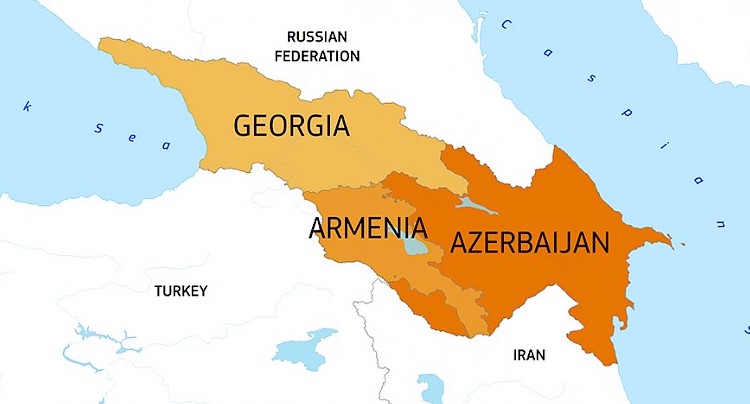
The regional context further complicates the situation. The South Caucasus has traditionally been a space where the interests of multiple power centers and international actors intersect. Russia, in particular, has long maintained close political, economic, and humanitarian ties with Yerevan. Therefore, any new formats of engagement proposed by the EU must be carefully integrated into the existing architecture of relations, where balance of interests and mutual respect remain key.
At the same time, Moscow has consistently maintained—at least at the official level—that states in the region have the sovereign right to determine their own political course and external partnerships.
It is reasonable to assume that the EU’s initiative is not intended to alter the regional balance, but rather to complement existing mechanisms with new instruments. In this regard, the focus is likely to be on tools in the fields of cybersecurity, strategic communications, and the protection of electoral processes. Such an approach aligns with the broader logic of contemporary global politics, where issues of so-called “soft security” are gaining increasing importance.
As for the practical effectiveness of the mission, much will depend on its specific tasks and operational format. This type of support can be beneficial if it remains primarily consultative and technical in nature—facilitating knowledge exchange, training personnel, and strengthening digital infrastructure. Ultimately, however, the key factor for success will be the level of public trust within Armenia toward its electoral institutions and political processes as a whole.
In this sense, the EU’s initiative represents both an opportunity for Armenia to strengthen its institutional capacity and for the EU to consolidate its role as an active regional partner. More broadly, it points to the emergence of a new model of interaction—one in which security is understood not only in military terms, but also through political and informational dimensions.
Tamerlan Ibrahimov