
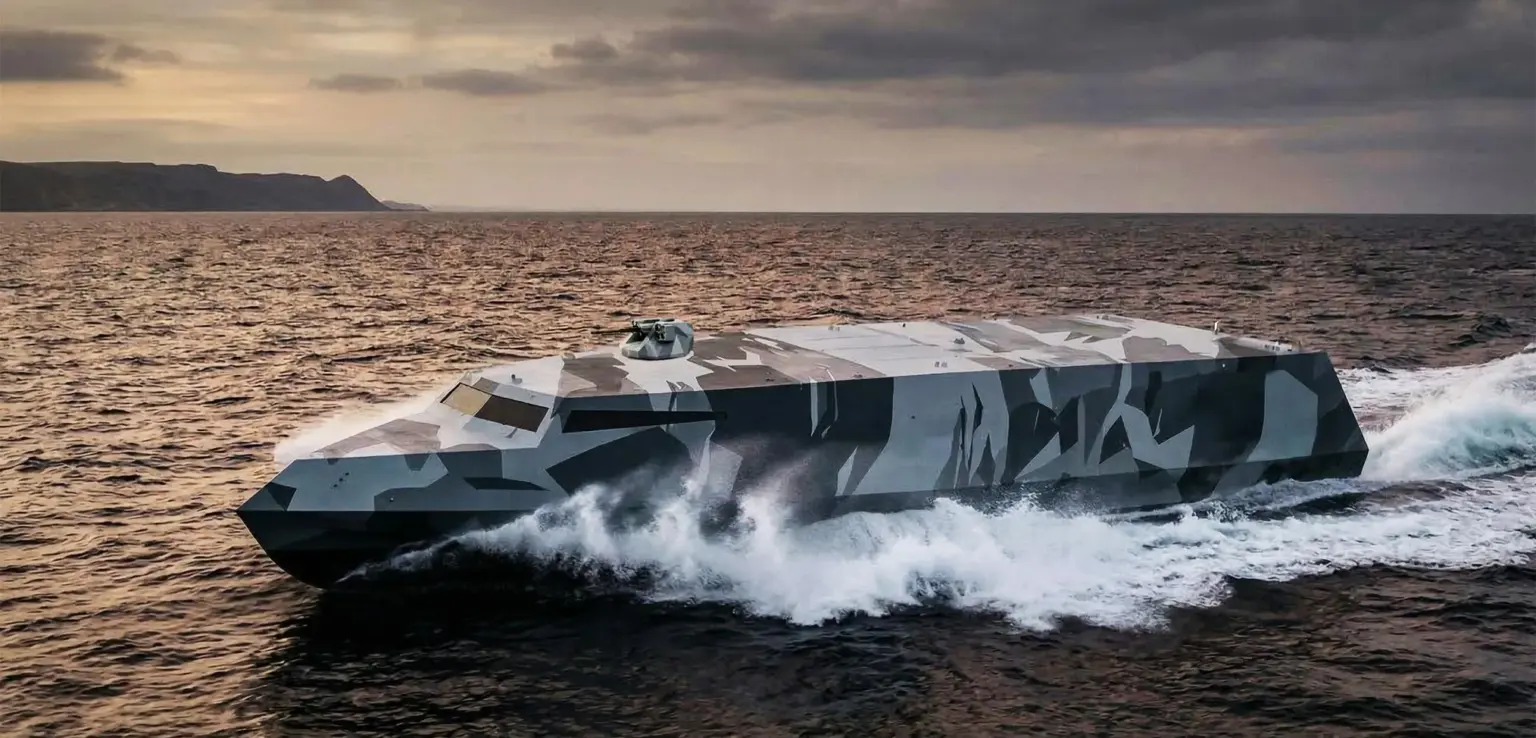
The UK and Norway have launched a joint effort to define a new generation of high-speed armed commando craft, intended to support littoral operations in contested environments. A Request for Information (RFI) form industry signals early market engagement for what could become a £237 million programme.
The Norwegian Defence Materiel Agency (NDMA), in cooperation with the RN’s Directorate of Navy Acquisition (DNA), says they plan to explore procuring a Joint Commando Craft (JCC) in partnership. The initiative aims to improve interoperability between the two nations while delivering efficiencies through a common platform. The requirement merges two existing programmes. Norway is seeking to enhance its Coastal Ranger Commando force with improved intelligence, surveillance and reconnaissance vessels, while the UK Commando Force is pursuing a new surface manoeuvre capability as part of its wider transformation. The Royal Marines are looking to replace the legacy LVCP from 2027 with what had initially been called the Commando Insertion Craft (CIC), now succeeded by the JCC.
Spec
The JCC is envisaged as a relatively small but capable vessel, with a maximum length of 24m, a beam of up to 7.5m and a displacement of around 60 tonnes fully laden. The ideal design would be closer to 20 metres and 40 tonnes, provided seakeeping and payload capacity can be maintained.
Despite its size, the craft must deliver high speed and endurance, operating both offshore and in confined coastal waters. It will be capable of launch and recovery by davit from amphibious shipping and able to land personnel and vehicles directly onto unprepared beaches or rocky shorelines. Crew endurance requirements are significant for a vessel of this size, with the ability to operate for up to seven days without resupply and transport embarked commandos in fighting condition for at least 24 hours.
The platform is expected to accommodate multiple mission systems. This includes at least two to four dedicated operator workstations for controlling sensors, uncrewed systems and weapons, alongside navigation and ship control positions. The vessel must also support a wide communications suite, including HF, VHF/UHF, satellite and tactical data links. 
Integration with uncrewed systems is central to the design. The craft will operate a Class 1B Small Tactical Uncrewed Aerial System (STUAS) of up to 150 kg, capable of deck launch and recovery, as well as tethered drones for persistent surveillance. Additional sensors are expected to include electro-optical/infrared (EO/IR), radar and radio-frequency detection systems. 
Survivability features include reduced radar, infrared and acoustic signatures, alongside provision for electronic warfare systems, decoys and counter-uncrewed aerial system defences. A Remote Weapon System (RWS) will provide self-defence against surface and aerial threats, with the ability to engage drones using onboard sensors or a distributed Recognised Air Picture. 
Beyond transport, the JCC is designed to act as an integral node within a wider strike network. The vessel will collect, process and transmit targeting data directly to effectors without intermediate handling, reducing latency and the risk of error.
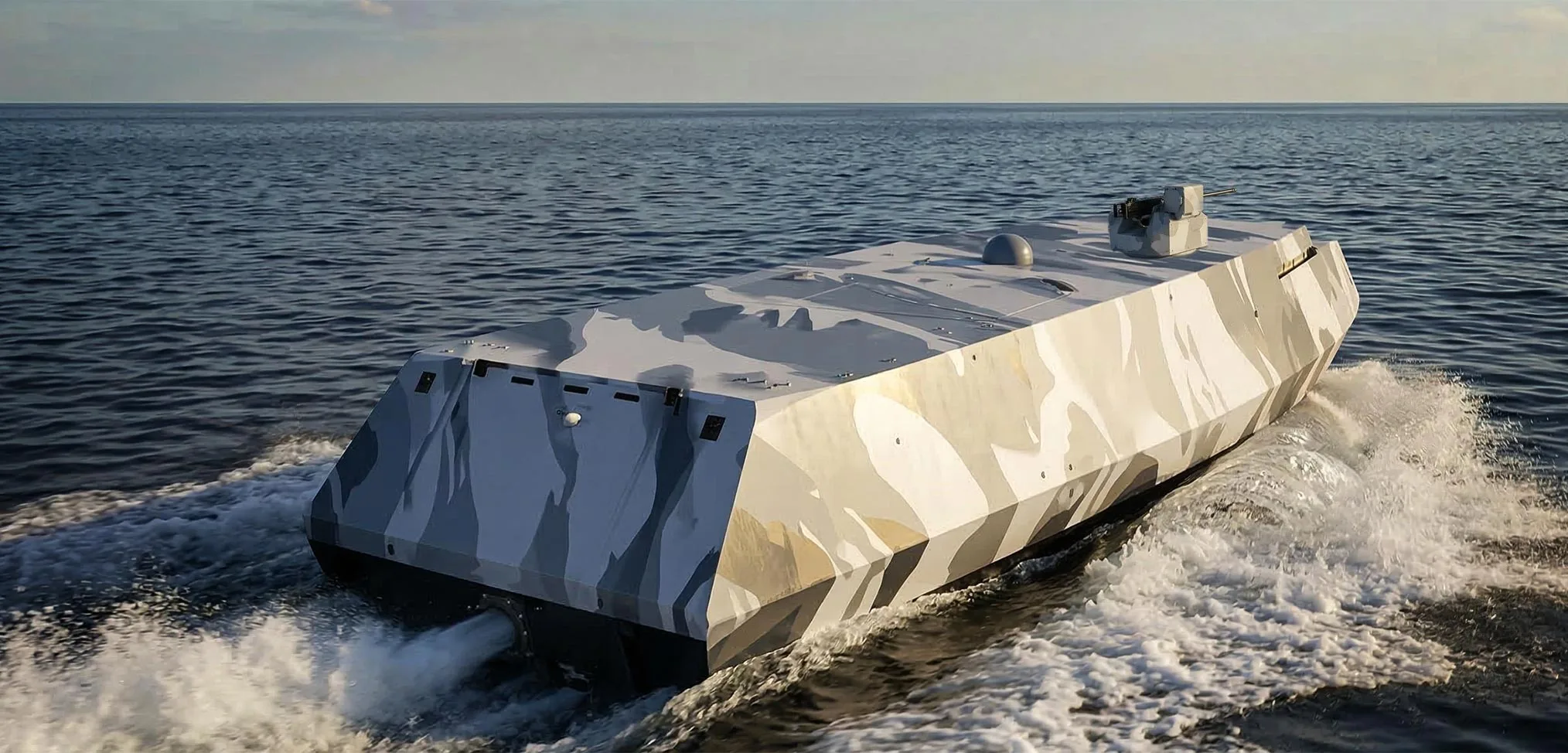 Concept image only – loosely based on the Leidos Sea Dagger, derived from the Steller Systems Offshore Insertion Craft concept, developed in response to the DASA Novel Amphibious Craft competition in 2023. The Sea Dagger is designed to reverse onto the beach and offload over a stern ramp.Action scenarios
One scenario imagines the vessel operating covertly in a coastal archipelago using elevated sensors and uncrewed systems to detect and classify a hostile vessel at long range. Targeting data is generated onboard and passed directly to a firing unit, such as a corvette equipped with the Naval Strike Missile (NSM), enabling rapid engagement.
Following the strike, the JCC uses its own uncrewed systems to conduct battle damage assessment and continues to provide updated targeting information. The platform is therefore not just a passive observer but an active contributor to long-range precision fires. The system architecture must also allow the craft to control network-enabled weapons if required, highlighting its role as part of an integrated kill chain rather than a standalone asset.
A second operational scenario focuses on multi-target littoral operations. Pairs of JCCs deploy from amphibious shipping and transit at speed, potentially sustaining 25 knots in Sea State 3 while fully loaded. 
Before inserting forces, the craft deploy uncrewed surface and aerial systems to survey landing sites, identify threats and map terrain. Reconnaissance teams are then inserted using smaller insertion craft, while the JCCs remain offshore to provide command and control, ISR relay and fire support coordination. Once conditions are set, the craft returns with strike teams, including personnel, vehicles or stores, and conducts rapid insertion onto austere shorelines. They then withdraw to provide ongoing support, including targeting data for artillery, missiles or naval gunfire. 
The ability to sustain and extract forces is also central, with the craft expected to shuttle between amphibious shipping and the shore while maintaining tempo and situational awareness across the battlespace.
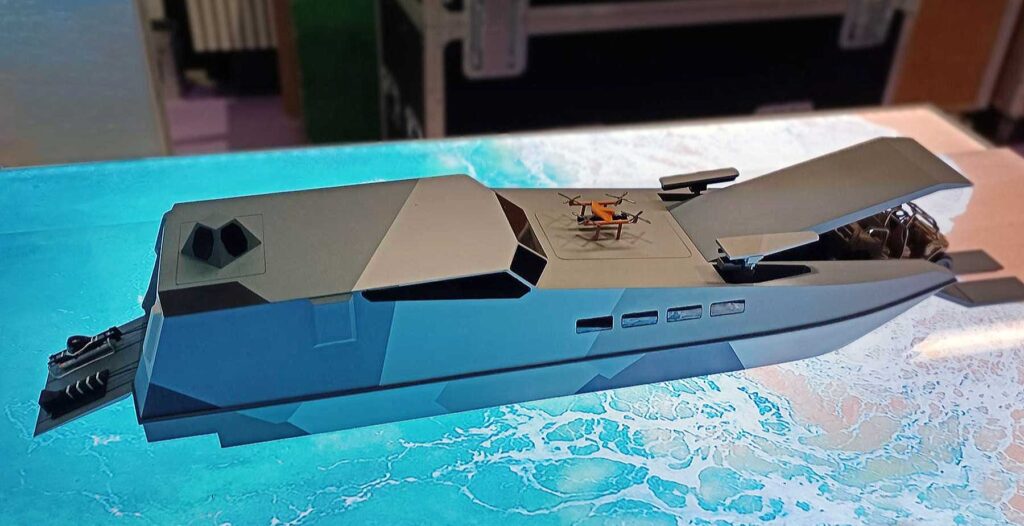 BAE Systems’ Littoral Strike Craft concept. Note stern ramp ready to launch UUVs, AESA radar on the upper deck, UAS on soft patch forward of wheelhouse, two removable weapon stations and vehicle ready to deploy off the forward ramp.3 variants
The programme proposes three variants built around a common hull. The A-variant is configured for ISR missions, with additional accommodation and up to four mission workstations to support persistent surveillance and targeting tasks. The B-variant is optimised for surface manoeuvre, prioritising payload capacity. It can carry combinations such as up to 24 fully equipped personnel, light vehicles or palletised loads of up to six tonnes. The C-variant is a baseline platform without mission systems, intended for training or secondary roles and potentially delivered early as trial vessels.
The RFI is intended to inform feasibility, refine requirements and shape the eventual procurement strategy. Up to 30 vessels are envisaged, with procurement planned between 2026 and 2032. Initial prototypes are expected by 2028, followed by trial units and then increasing production batches through a spiral acquisition model. The total programme budget is estimated at around £237 million over seven years.
Manufacturing will take place in Norway, with final outfitting potentially shared with the UK depending on national decisions. This is another opportunity to help balance industrial workshare following the contract to build 5 Type 26 frigates for Norway in the UK. The JCC reflects the Commando Force’s shift towards distributed, networked littoral operations, where small, survivable platforms enable precision strike, persistent ISR and rapid force insertion far forward of larger ships.