Ukraine-led team “sank” a NATO frigate with sea drones during exercises in Portugal and NATO forces didn’t even notice the attack
https://www.faz.net/aktuell/politik/ukraine/nato-manoever-vor-portugal-ukraine-versenkt-alliierte-fregatte-accg-200633625.html
Posted by ref_null

16 Comments
This article was translated using the DeepL translator.
Original article: [https://www.faz.net/aktuell/politik/ukraine/nato-manoever-vor-portugal-ukraine-versenkt-alliierte-fregatte-accg-200633625.html](https://www.faz.net/aktuell/politik/ukraine/nato-manoever-vor-portugal-ukraine-versenkt-alliierte-fregatte-accg-200633625.html)
Author: Konrad Schuller
# They didn’t see the drones coming
**A NATO exercise off the coast of Portugal has demonstrated the effectiveness of Ukrainian naval drones. The alliance hopes to learn from this.**
A multinational naval team under Ukrainian command, playing the role of the “enemy” during the NATO exercise “REPMUS/Dynamic Messenger 2025,” exposed the vulnerability of NATO naval forces and “sank” at least one allied frigate.
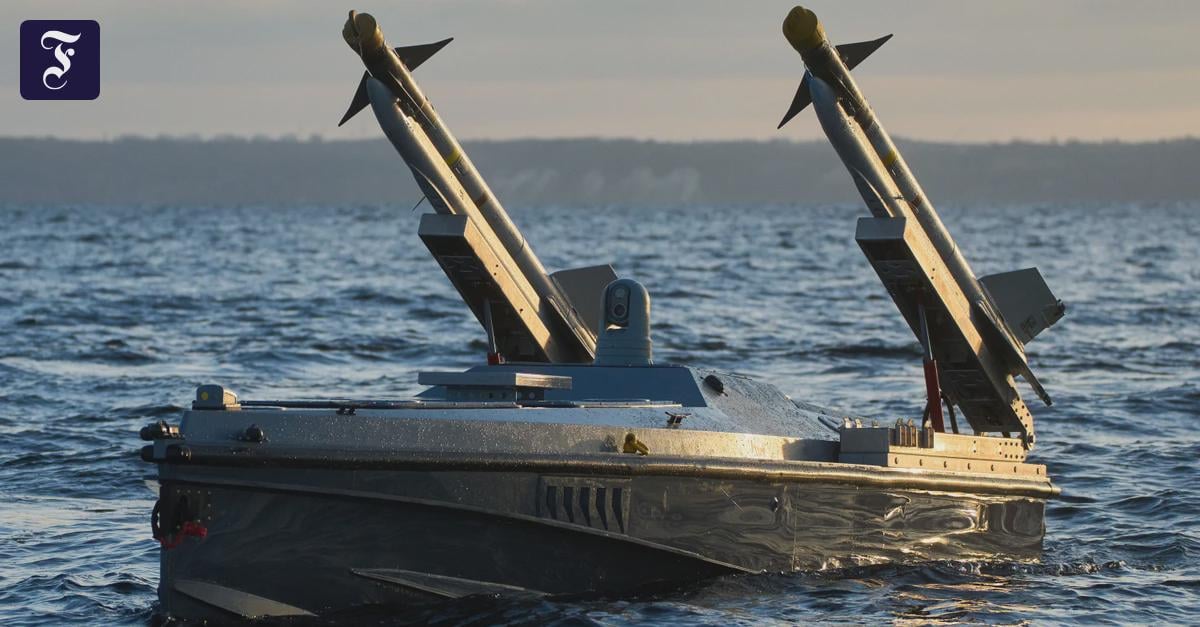
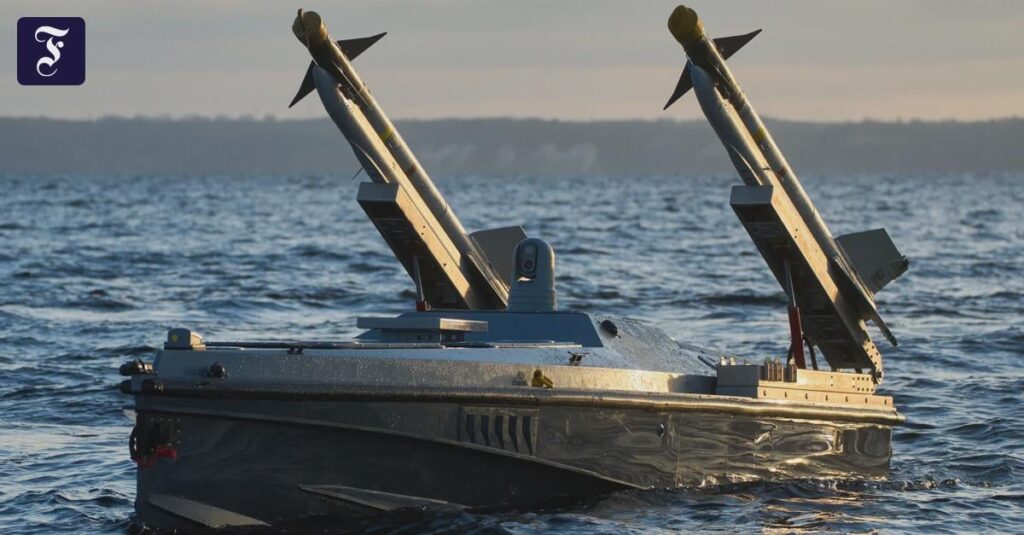
A Ukrainian source directly involved in the exercise told the F.A.Z. that five scenarios off the coast of Portugal involved practicing the protection of ports and convoys, as well as attacks on convoys. In all five scenarios, the “Reds” defeated the “Blue” NATO naval forces. In doing so, they also deployed Ukrainian Magura V7 naval drones—small unmanned speedboats designed to either ram enemy ships or attack them with mounted weapons.
Since the start of Russia’s full-scale invasion in 2022, the Ukrainian Navy has driven the occupiers out of the western Black Sea using such naval drones, as well as guided missiles and other weapons, even though it does not possess any large ships itself. Among other achievements, the missile cruiser “Moskva,” the flagship of the Russian Black Sea Fleet, was sunk in April 2022.
The fleet was subsequently forced to relocate its main base from Sevastopol in occupied Crimea to Novorossiysk, which lies further east. But even in this port, a Ukrainian underwater drone succeeded in attacking a Russian submarine as recently as last December.
**The Ukrainians brought their MV7 maritime drone with them**
According to a source from Ukraine, the “red” team at “REPMUS/Dynamic Messenger 2025” consisted of American, British, Spanish, and other units, with Ukraine serving as the overall commander. The goal was to test new technologies under realistic conditions—that is, in an environment where jammers, acoustic reconnaissance, and military resistance are simulated as realistically as possible.
The Ukrainians brought several versions of their Magura V7 maritime drone. One, for example, carried reconnaissance equipment and an explosive charge, while another had a machine gun on board. Other participating nations also deployed unmanned boats.
Under the rules of this exercise, “enemy” ships were not actually attacked. It was enough to achieve “victory” by being the first to get the opponent in one’s sights. This was then documented via video. For example, if a maritime drone attacked a ship to destroy its radar, it was considered the winner if it locked onto the radar before being detected itself. Conversely, it was considered intercepted if the ship’s crew was able to photograph it first.
**NATO spokesperson calls it a “milestone”**
Dozens of units took part in the exercise’s five scenarios. In addition to maritime drones, both sides also deployed aircraft and larger warships. According to reports from Kyiv, the “red” team emerged victorious at the end of the fourth week. The exercise clearly demonstrated that unmanned systems, combined with operational experience and proven planning, pose a “real threat” to NATO naval forces—especially since NATO is not yet sufficiently prepared for attacks by such weapons.
For example, during a simulated attack on a convoy, the “Reds” once scored so many “hits” against a frigate that it would have sunk in a real battle. Just five minutes later, the “Blues” had asked in the group chat, completely unaware: “So are you going to attack us now or not?” The Ukrainian source commented: “The problem wasn’t that they couldn’t stop us—they hadn’t even seen our weapons yet.”
A NATO spokesperson confirmed to the F.A.Z. that, for the first time in the alliance’s history, the Ukrainian Navy led and coordinated the “opposing” forces during this exercise—“a historic milestone that underscores Ukraine’s growing role in NATO exercises.” The training highlighted the latest trends in naval warfare. In doing so, “the Ukrainian leadership brought combat realism to the exercise, driving innovation and the development of new NATO tactics.” NATO drew “valuable lessons” from Ukraine’s frontline experience. This advances the development of new capabilities “to counter real-world threats.”
Last fall, NATO already had the opportunity to learn a similar lesson, albeit on land. During the “Hedgehog” exercise in Estonia, about ten Ukrainian drone specialists were able to put two NATO battalions out of action. Officials in Brussels say they were “shocked” at the time by how ill-prepared allied troops were for a drone war like the one currently being waged in Ukraine. Above all, the high “visibility” of NATO command posts came as a surprise.
Good, that is why you do exercises, so you can learn from them. It also shows why we need to keep supporting Ukraine and integrate them into our defensive alliance after the war is over (or during, but that won’t happen). Real combat experience trumps old doctrinal training a lot of the time, and even if it turns out the Ukrainian way of fighting can’t be integrated into European doctrine, along the way we will have learned the strengths and weaknesses of our closest enemy, Russia.
How would you improve defences against such drones?
My idea is to equip ships with tethered drones that have cameras and radars.
I wouldn’t be surprised if they sunk the whole US navy.
A total war advances the tech so much faster.
Ukraine is on the forefront.
The US way of waging a war is like doing cavalry charges against the panzers.
What frigate type was it ?
I mean I don’t discount their experience and what they offer, however victory was achieved by a smaller weapon easier to conceal spotting a larger vessel first.
Who’s to say given a few more minutes that the blue force wouldn’t have wiped out the red force units?
Anyway; for NATO better to learn now and finally find its identity post Cold War, too focused on interventions and low intensity operations.
This entire ”UA fucked us so hard“ is and was the point. We wanted them to fuck us so we can see our weaknesses.
Finding the problems to don’t have them in the future is the entire reason to do exercises.
Being able to see and discuss the own weaknesses is the only way to get stronger.
Look at russia and how an ”all powerfull never beaten“ army looks like.
Don’t forget that underwater drone that Ukraine managed to “park” a year ago under the Crimea Bridge against everything Russia had to offer ( from anti-torpedo nets to trained dolphins ). Packing much more explosive than a Magura drone. Or that version with anti-air missiles that managed to down a russian jet remotely 800 km from base. It gets scary seeing how US is flying refuelling tankers in arab countries or Mediterana today with the transponder on.
That’s what Iran currently does
Hope USA was not part of the exercise cause they gonna share everything with ruzzia.
Eleven years of war four of which are total war with all possible weaponry even chemical, yet NATO still learned nothing…
As if we needed more reasons to support Ukraine. Do we really want all of this capability and expertise on Russian hands?
This is why they do exercises. It’s also not the first time a warship has been sunk unexpectedly in an exercise. The US famously lost a carrier a few years back and didn’t even realise until after the exercise.
It’s great that Ukraine is participating in these exercises. They have so much experience with these new technologies, anyone can learn from them.
That said, as with the recent exercise in the Baltics, it’s probably not as dramatic as how the reporting runs with it. We don’t know what was and was not done, and as was noted by a Dutch military leader back then, it’s unlikely the full range of counter-measures would have been deployed as those would also be highly disruptive to civilian life.
Nevertheless, it’s good that this is done.
I wasn’t aware that Ukraine excels in naval warfare, especially when compared with NATO countries that have actual naval experience.
They, in fact, do have the cards.