

Investors’ attention remains squarely focused on Iran, as it should be. West Texas Intermediate (WTI) crude is trading near $100 per barrel, more than $40 above the recent mid-December low as tanker ships are still not sailing freely through the Strait of Hormuz. Iran is allowing its own tankers to get through, not surprisingly, sending important oil to China (China imports about 90% of Iranian oil exports). Reportedly Iran has allowed tankers bound for several other Asian countries including India and Pakistan to traverse the vital and dangerous waterway, easing some pressure on global oil prices as the week began.
As has been the case from day one when the first airstrikes began, the key factor in assessing economic and market impact is the duration of the effective Strait of Hormuz closure and resulting effects on prices of energy and other commodities. Prediction markets are split on whether the conflict ends by the end of May. While no one knows what the off ramp looks like, we do know that opening the Strait will be messy and is likely to take at least a few more weeks. Our allies have been reluctant to send naval escorts to the region to help, putting more pressure on President Trump to create the conditions for a cease fire and clear the Strait unilaterally. As we have written about several times in recent weeks, including in our Weekly Market Commentary on March 9.
Earnings Impact
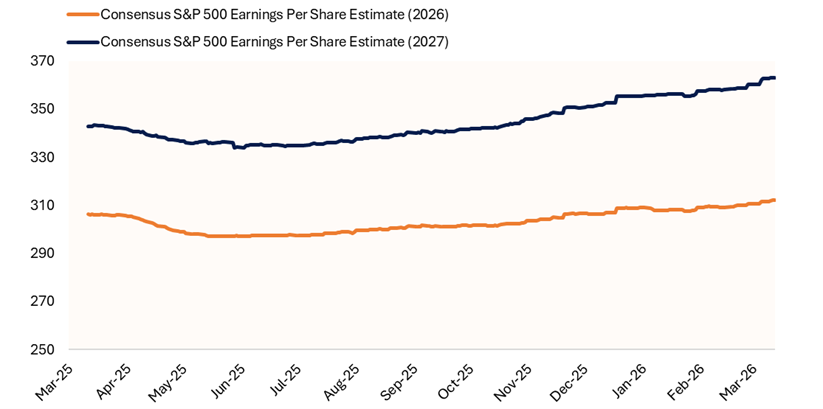
Amid all of the attention on the war in the Mideast, earnings expectations have held up remarkably well and remain supportive of stock prices. Massive capital investment in AI capabilities continues at a historic pace, with plans ratcheting higher each quarter and powering strong technology sector earnings. In fact, the technology sector contributed over half of overall earnings growth for the last quarter (8 out of 14 points) and will likely drive an even larger percent contribution in the first quarter. Fiscal stimulus from the One Big Beautiful Bill Act (OBBBA) is also providing support for earnings by driving capital investment and spending.
Remember the historical pattern is for earnings to fall 4% to 6% short of estimates at the beginning of the year. Last year was a different story, and we’re seeing the same unusual strength in earnings estimates for this year and 2027 so far this year.
S&P 500 Earnings Estimates Have Been Rising Steadily Despite AI, Mideast Concerns
 Source: LPL Research, FactSet 03/16/26
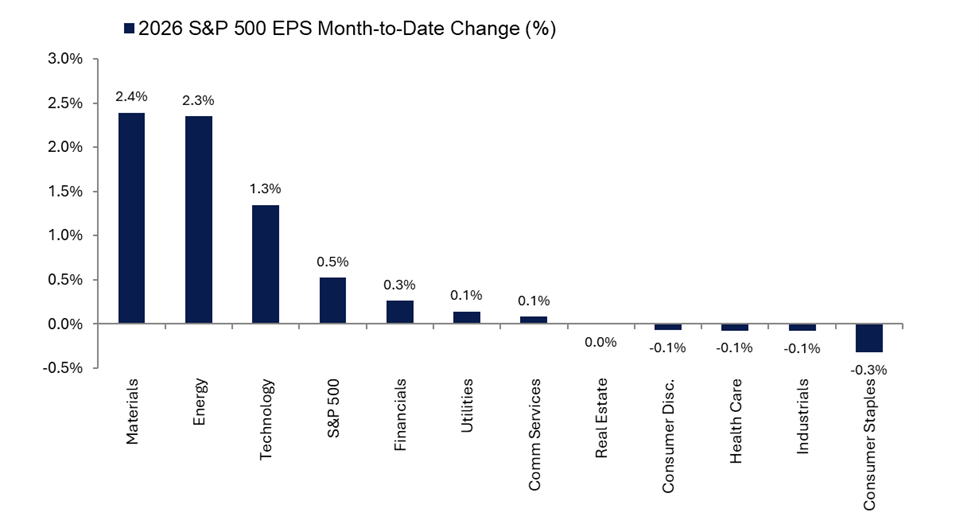
Rising estimates for the energy sector are helping push overall 2026 earnings estimates higher as shown in “It’s Not Just Energy Boosting Earnings Estimates.” But it’s not alone. The technology and materials sectors are contributing more than their fair share. This is just March to date – barely two weeks.
It’s Not Just Energy Helping Boost Earnings Estimates
 Source: LPL Research, FactSet 03/16/26
Bottom Line
Bottom line, earnings momentum is strong and is likely to remain so despite the war in Iran. Given the drivers of U.S. economic growth remain in place and the U.S. is energy independent, double-digit earnings growth in 2026 remains likely and will likely put a strong foundation underneath the stock market until the geopolitical threat eases, helping to mitigate downside risk. We continue to monitor the situation closely.
***
Important Disclosures
This material is for general information only and is not intended to provide specific advice or recommendations for any individual. There is no assurance that the views or strategies discussed are suitable for all investors. To determine which investment(s) may be appropriate for you, please consult your financial professional prior to investing.
Investing involves risks including possible loss of principal. No investment strategy or risk management technique can guarantee return or eliminate risk.