
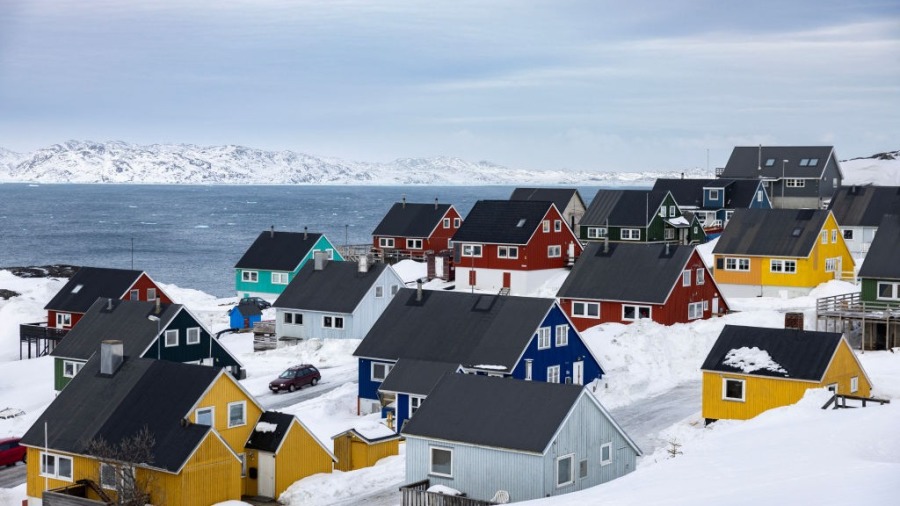
Canadian Prime Minister Mark Carney attended a summit in Oslo, Norway on March 15, where he met with the prime ministers of Norway, Denmark, Iceland, Sweden, and Finland. Facing escalating geopolitical turbulence caused by wars involving Russia and the United States, the six leaders plan to form a “middle power” bloc to have a voice within NATO, the EU, and other multilateral organizations in order to exert influence in international affairs. However, they provided little detail on how they intend to achieve this goal.
The six leaders issued a joint statement: “At a time of high geopolitical tension, frequent wars, and numerous crises, we unanimously agree that international cooperation based on international law, shared values, and interests remains the best path to strengthen our collective security and prosperity.”
Norwegian Prime Minister Jonas Gahr Store, speaking at a press conference in the ornately decorated government guesthouse at the Prime Minister’s residence, said, “We are stronger together.” “We believe none of these six countries are weak. They are strong in both values and determination.”
Danish Prime Minister Mette Frederiksen stated that the old world order no longer exists and is unlikely to return.
“Therefore, we must establish a new order, and it must be built on the values we represent,” Frederiksen said. “Countries like ours must unite. We must stand together and cooperate.”
You are now signed up for our newsletter
Check your email to complete sign up
Frederiksen referenced the wars in Ukraine and Iran, as well as the U.S. easing some sanctions on Russian oil sales, saying these developments highlight the need for a “Nordic + Canada” bloc.
In their joint statement, the six leaders claimed they are “democratic countries committed to the rule of law, human rights, and the integrity and sovereignty of nations.” However, how these countries will cooperate and what positions they will take on various issues remains unclear, with few concrete details.
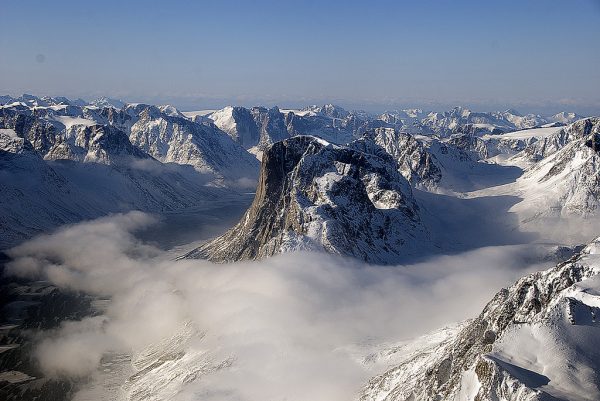 Southwest Greenland fjord and mountains. Although the southern part of the territory gets some green vegetation in the summer months, Greenland is, for the most part, a snowy and icy place. (Image: NASA Goddard Photo and Video via Flickr CC BY 2.0)
Greenland issue
At the press conference, all leaders criticized U.S. President Donald Trump’s proposals regarding Greenland. Mark Carney said Greenland’s future should be decided by Greenlanders and Denmark. The Danish prime minister welcomed support from Canada and other allies.
When asked whether Canada would send troops to defend Greenland in the event of a U.S. military threat, the leaders did not make a clear commitment.
Carney said, “We firmly support the principles of sovereignty and territorial integrity, and as partners, we will provide support as needed,” coordinating with other allies to take “necessary measures.”
Norwegian Prime Minister Jonas Gahr Store said, “I would answer this question this way: NATO allies will stand together.” “This is about fundamental principles of international law, national sovereignty, and territorial integrity, not just words in a textbook. This is the hard truth of defending freedom and democracy.”
Canadian defense procurement
At the press conference, Carney was asked about Canada’s plans to procure fighter jets and submarines. Sweden supports its domestic industrial giant Saab bidding for the fighter contract, while Norway backs Germany’s TKMS in supplying 12 submarines to Canada.
Carney said the submarine project bids (another bidder being South Korea’s Hanwha Group) are currently under review, emphasizing that it is an independent process in which he will not intervene. All bids, including those from Asian and U.S. companies, are still under consideration.
Store said he respects Canada’s procurement process but added that cooperation with allies is beneficial. He said, “This is not just about security and industry—it actually creates a common objective in terms of security, because in a sense, you are integrated together.”
Currently, 70 percent of Canada’s defense spending goes to the U.S., but Carney said he hopes to expand Canada’s defense industry by seeking new international partners, reducing dependence on the U.S.
Last week in Yellowknife, Carney announced the government will invest 35 billion CAD to improve military air bases and airports.
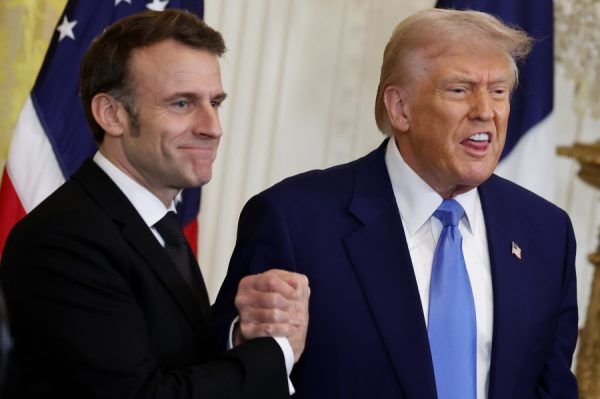 U.S. President Donald Trump and French President Emmanuel Macron shake hands at the conclusion of a joint news conference in the East Room of the White House on Feb. 24, 2025 in Washington, DC. (Image: Chip Somodevilla/Getty Images)
French nuclear arsenal
On whether to support French President Emmanuel Macron’s proposal to expand France’s nuclear arsenal to cover more European countries, positions among the leaders differed. France is the only EU member with nuclear weapons, and Macron proposed extending France’s nuclear umbrella across Europe, potentially including missile deployments in other countries.
So far, eight European countries (UK, Germany, Poland, Netherlands, Belgium, Greece, Sweden, and Denmark) have agreed to participate in a new “enhanced deterrence” strategy.
Finnish Prime Minister Petteri Orpo said, “We are interested in doing more because we need to strengthen Europe’s deterrence.”
Frederiksen said Denmark joining France’s plan is part of deepening its NATO commitments. “From both a European and Danish perspective, becoming stronger in this area is positive, but it often must advance alongside many other capacity-building efforts.”
Store ruled out the possibility of Norway deploying nuclear weapons, adding that NATO already has nuclear deterrence. Icelandic Prime Minister Frostadottir said Iceland also has no intention to change its nuclear-free policy.
Carney said Canada has no plans to develop nuclear weapons but praised Macron’s initiative.
Situation growing more urgent
In recent days, Trump eased sanctions on countries purchasing Russian oil, a move intended to stabilize oil prices amid U.S. strikes on Iran. However, this has given the Kremlin more funds to continue its war in Ukraine and potentially enhance its military capabilities in the Arctic.
The urgency of six-nation cooperation has grown. The leaders expressed support for NATO establishing a permanent military presence in the Arctic.
The five Nordic countries and Canada agreed that Russia is their greatest security threat. Orpo said, “We need to recognize that Russia is our biggest threat and will continue to threaten Nordic and Arctic countries. For this reason, we must work together to strengthen Arctic security.”
However, host Prime Minister Store pointed out that any threat to fundamental democratic principles, national sovereignty, and territorial integrity is even more unacceptable if it comes from an ally.
By Li Xin