
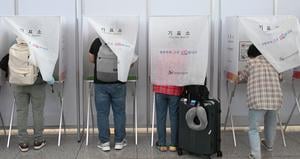
Thousands of foreign residents in South Korea will be eligible to vote in the June 3 local elections, a little-known right that comes with strict legal responsibilities.
Under the Public Official Election Act, foreign nationals aged 18 or older who have held permanent residency status, or an F-5 visa, for at least three years are granted voting rights in municipal elections.
As of January 2025, more than 140,000 foreign residents had qualified to vote for local government heads and council members, up from 48,400 in 2014. The number is expected to continue rising as South Korea seeks to strengthen local governance and accommodate a growing foreign population.
With voting rights come the same legal obligations that apply to citizens. Election laws in South Korea impose strict limits on campaigning, political donations and election-related activities, with violations subject to penalties.
Here are some key questions foreign voters may have, from which political activities are allowed to how election violations can be reported.
Q: Can I publicly show support for a candidate?
A: Yes. But with strict limits. The Public Official Election Act generally bars foreign nationals from intervening in elections in Korea, but allows those with voting rights to engage in election campaigning.
This means they may engage in actions aimed at supporting or opposing a candidate’s election, including posting online, sending text messages or taking part in volunteer campaign activities.
While election campaigning is generally prohibited starting one day before the election, the law allows limited forms of expression, including phone calls, text messages and online postings, under specific conditions.
The law prohibits spreading false information about candidates or their family members. It also imposes restrictions on certain statements even when they are true, particularly if they concern private matters or are deemed to unduly influence the election.
Voters may send text messages supporting a candidate, but they are not allowed to send them to 20 or more recipients at once. The creation, distribution or screening of any deepfake videos involving election candidates is prohibited from 90 days before the election, regardless of whether the content is real or fabricated.
Statements of fact intended to oppose a candidate are permitted only when they are true and serve the public interest.
In offline settings, voters may carry items expressing support as long as they are self-funded and do not exceed 25 centimeters in length, width and height. Violations can result in penalties of up to three years in prison or fines of up to 6 million won ($4,040).
Q: Can I donate to candidates I support?
A: No. Foreign nationals are not allowed to make political donations in South Korea, even if they are eligible to vote.
Under the Political Funds Act, financial contributions to candidates must be made through officially registered support organizations, and only South Korean nationals are permitted to donate or become members of those groups, according to the National Election Commission.
The restriction applies without exception to foreign voters.
Violations can result in penalties of up to five years in prison or fines of up to 10 million won ($6,700), with any illegal contributions subject to confiscation.
Q: What happens if I damage or destroy election-related placards or posters?
A: The damage or destruction of official election materials is among the most common offenses during election periods, but it is treated seriously under Korean law as it is seen to undermine voters’ right to information.
Regardless of intent, anyone who removes or damages election posters — including tearing, defacing or puncturing them — can face penalties of up to two years in prison or fines of up to 4 million won.
Q: Can I receive compensation for reporting election-related crimes?
A: Yes. Informants and witnesses who report election-related crimes may receive rewards of up to 500 million won for the upcoming local elections, according to the National Election Commission.
Eligible cases include offenses such as spreading false information, unlawful intervention by public officials and damage to election materials.
The largest reward granted in past local elections was 150 million won, awarded in 2014 for reporting illegal payments by a superintendent candidate’s campaign to mobilize voters.
https://www.koreaherald.com/article/10697247
Posted by coinfwip4