
We’re getting close to window lock for your 2026 bracket picks, which means it’s time for our last-minute March Madness tip sheet. You need some final swing thoughts on the NCAA men’s tournament before you click on your final answer. Seasoned players will recognize many of these timeless tips, but whether this is your first time filling out a bracket or if you predate the Internet era, it’s never a bad idea to run through this list one more time before you commit to those final selections.
Let us help you. Here’s what you need to know about strategy and game theory.
Advertisement
Yahoo Fantasy Bracket Mayhem: Make your picks for $50K in total prizes
Your late-round picks are usually most important
This is obvious to any experienced tournament player, but it’s still worth mentioning up front. Most contests stagger the scoring so that the points are heavily weighted to the end of the tournament. This means that if a non-Cinderella wins the whole thing, most likely, you will absolutely need to have that team as your champion, along with a few other shrewd picks. If a surprise team cuts down the nets, perhaps you can win your tournament without the title team properly selected. But more often than not, you’ll need the winner.
Most years, I put most of my energy into the later picks. That’s where the glory is. That’s where the cheddar is, too.
Advertisement
Last season, we saw all four No. 1 seeds advance to the Final Four, and once again, the No. 1 seeds are especially heavy favorites. In the NIL era, the gap is wider between the elite teams and the second-tier teams, and we need to mind that gap.
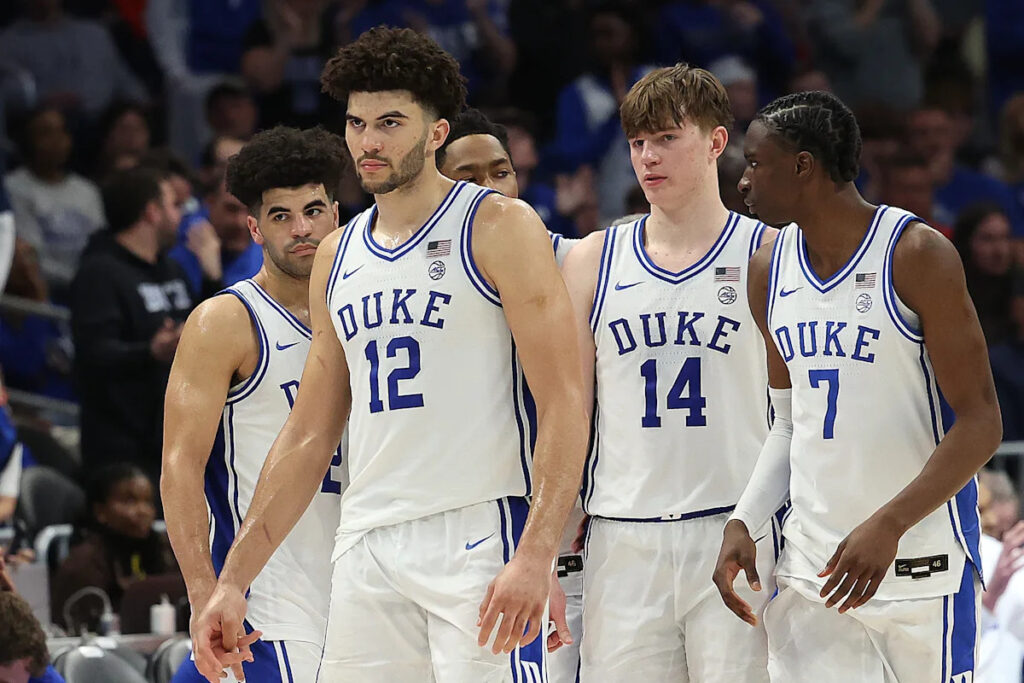
According to Bet MGM, the four championship favorites are, naturally, the four No. 1 seeds: Duke (+325), Arizona (+350), Michigan (+375) and Florida (+700). The fifth choice on the board is No. 2 seed Houston, sliding down significantly to +1100. Iowa State checks in at +1600, and every other option is +2000 or higher.
I get it, many NCAA tournament pools are dominated by chalk at the end. This year, be prepared for most of your opponents to settle on one of those top choices on the final line. Yahoo Fantasy Bracket Mayhem players illustrate the point — the four No. 1 seeds are the most common championship picks, collectively representing about 70% of the sheets entered as we go to press.
Advertisement
If a favored team wins and they’re heavily played in your group, that logically means the earlier-round games take on extra juice. Those pools are often won in the trenches.
Let the point spread be your guide
If you simply focus on the NCAA seeding of each matchup, you’ll miss the perceived difference between some teams. In past seasons, it wasn’t uncommon to see an 11 seed be favored in its first game or a 12 seed be a small underdog in the first round. We don’t have any of those spots this year. But we want to take note of matches where the true strength between opponents is less than the seeds would have you assume.
Here are some that apply this year:
Advertisement
— BYU -1.5 vs. Texas (a 6-11 matchup)
— UNC -2.5 vs. VCU (a 6-11 matchup)
— Louisville -4.5 vs. South Florida (a 6-11 matchup)
— Texas Tech -7.5 vs. Akron (a 5-12 matchup)
— Alabama -11.5 vs. Hofstra (a 4-13 matchup)
Bottom line, we generally trust Vegas more than we trust the seeding committee, although that gap is getting smaller. There’s a ton of interest in the NCAA tournament and the books have incentive to put out a solid line. Obviously, sports are unpredictable and these games are played by athletes in their teens and early 20s, so some results will fall nowhere close to the projected outcome. But if you want a good sense of team strength, Vegas is your friend.
Advertisement
We use this hack all the time in fantasy football, and it’s just as useful here.
I also like to peruse the KenPom analytics site and get a sense of what teams might be underseeded or overseeded. The KenPom stats have Vanderbilt ranked 12th overall, but they’re merely a No. 5 seed. You have my permission to pick this team 2-3 times. On the other side, North Carolina ranks 30th on KenPom but fetched a No. 6 seed. I suspect UNC is vulnerable from the opening tap, especially without freshman star Caleb Wilson.
Your contest might have discernible biases
In some bracket contests, you’ll know very little about your opposition and their likely picks and habits. That’s okay. But in an office or neighborhood contest, you might be able to sleuth out some of the expected selections. Use all the information you have available to you. Be mindful of who the hometown team is. Be a good listener at the water cooler.
Advertisement
And if your pool is based in an area tied to one of the favorites, be ready for an overwhelming pool bias. Why wouldn’t anyone in Ann Arbor want to pick the uber-talented Wolverines? West coast basketball fans are hoping Arizona can break a lengthy drought — the 1997 Wildcats were the last Western team to win this tournament. Pools based on that side of the country could reflect the hunger to end this slump.
In pools with expected biases, you have to make a choice — look for a seat on a crowded bandwagon, or perhaps accept some value if you’re willing to check your heart at the door. I’m not saying a contrarian approach is right for everybody, but there’s a value opportunity if you live in a region dominated by interest in one touted program.
Keep in mind, the goal in these things isn’t necessarily to pick winners. It’s to be a half-step ahead of your pool. If you are confident your opponents are in lock step on certain picks, you have to consider the potential payoff if those consensus picks turn out to be incorrect.
Remember, college basketball is a coach’s game
Peruse the list of modern NCAA champions, you’ll see plenty of blue-blood programs and plenty of big-name coaches, the names you know by heart. Roy Williams and Coach K; Jay Wright and Jim Calhoun; John Calipari and Billy Donovan. Dan Hurley’s star took off the last few years, while he was winning a couple of titles with UConn. Todd Golden, Jon Scheyer, Dusty May and Tommy Lloyd are in charge of this year’s No. 1 seeds, and all four of those coaches are considered rising stars.
Advertisement
If you want to feel good about your brackets, you better feel good about the people in charge of your key teams. And the best tournament coaches don’t merely excel with in-game strategy and pre-game motivation, they’re also masters at working the referees and cultivating a foul or free-throw advantage.
[Yahoo Fantasy Bracket Mayhem: Make your picks for $50K in total prizes]
You also might want to fade some programs because of who is in charge. I’ll generally believe in Rick Barnes when it comes to recruiting and handling the regular season. I’m never expecting him to show up at the Final Four (he’s made it only once), and he’s also proven to be a terrible ATS pick through the years in this event. Tread carefully. I don’t have Tennessee surviving long, largely because of Barnes.
Final Words
Of course, it’s more likely than not that my picks will be wrong. There are a bunch of teams that can take down the title. And while you’re welcome to consider any of my advice, at the end of the day, it’s your team, it’s your bracket, it’s your dance. Take your best shot. Embrace the madness. Have some fun.
Advertisement
And if you’re still on the fence with a few picks, there’s no shame — in fact, it’s encouraged — to fill out multiple brackets. If one busts early because of a huge upset, you still have plenty of hope remaining.