
Published on
March 19, 2026
Image generated with Ai
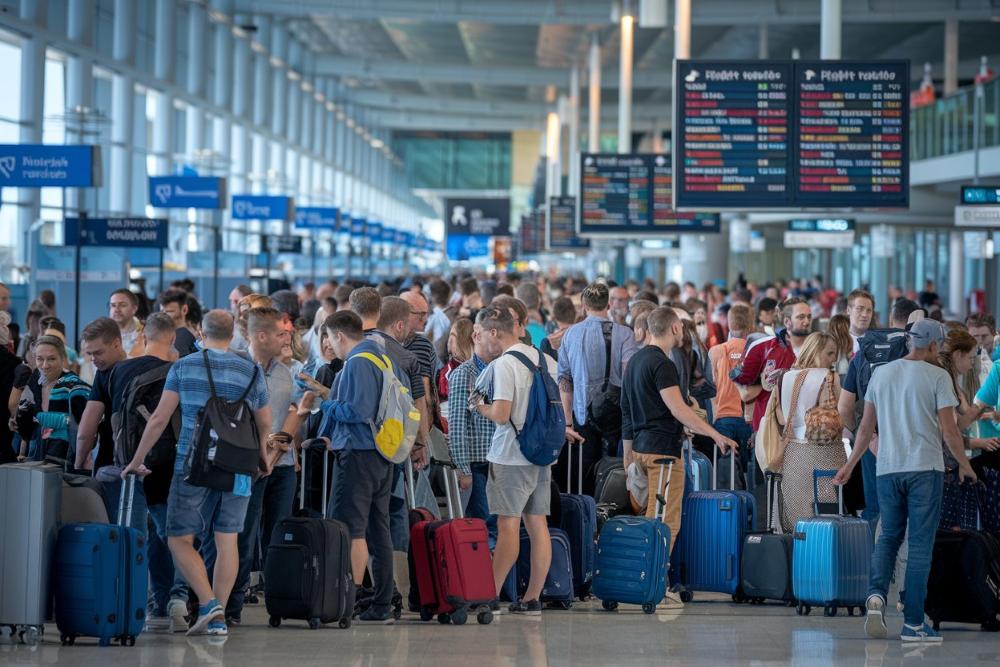
Thousands of travelers have been left stranded across Europe as significant travel disruptions continue to affect major airports in France, UK, Germany, the Netherlands, and Iceland. A total of 86 flights have been cancelled, while 624 flights have been delayed, causing chaos for passengers. Airlines like Air France, easyJet, KLM, Lufthansa, British Airways, and several others are grappling with these operational challenges. Key airports in Paris, London, Frankfurt, Amsterdam, and Reykjavik have been particularly affected, with flights in and out of these cities facing severe delays and cancellations.
Passengers are urged to stay informed about the status of their flights as they navigate the uncertainty. The ongoing disruptions are a result of a combination of operational hurdles, weather challenges, and logistical issues, leaving thousands of travelers isolated in some of Europe’s busiest transport hubs.
Major Airports Affected by Travel Disruptions
The travel disruptions have been most intense across key European airports, impacting numerous countries. These disruptions have affected not only long-haul international flights but also regional connections, adding to the complexity of travel logistics.
Charles de Gaulle Airport (CDG) in Paris has been a major hotspot for cancellations, with a total of 11 cancelled flights and 130 delays. This large volume of disruptions is a result of ongoing operational challenges and increased demand, especially on routes serving high-traffic destinations across Europe.
Advertisement
Advertisement
Other major hubs like London Heathrow (LHR) have also seen a considerable impact. Heathrow recorded 4 cancellations and 57 delays, with flights to destinations like Amsterdam, Paris, and Frankfurt being among the most affected.
Amsterdam Schiphol (AMS), another critical European hub, reported 5 cancellations and a staggering 145 delays, making it one of the busiest airports for disruptions during this period.
Advertisement
Advertisement
Frankfurt International (FRA) and Copenhagen (CPH) have also experienced significant issues, with 3 cancellations and 75 delays at Frankfurt, and 6 cancellations along with 27 delays in Copenhagen. These delays are expected to cause more ripple effects as passengers continue to face long waits for their flights.
Airlines Struggling to Manage the Disruptions
The disruption is not only affecting the airports but also the airlines operating out of these major European hubs. Air France, the flag carrier of France, has been heavily impacted, with 10 cancellations and 70 delays. These disruptions are not limited to international flights; domestic routes have also experienced significant delays.
easyJet (UK), one of Europe’s largest low-cost carriers, has faced an extraordinary number of delays, with 196 delays reported. Despite only one cancellation, the airline’s passengers have been facing long waits and rescheduled flights, particularly on routes to and from major European cities like Paris, Amsterdam, and London.
Other airlines such as SAS, KLM, Lufthansa, and British Airways have also been impacted, each reporting several cancellations and delays. For instance, KLM recorded 4 cancellations and 63 delays, while British Airways saw 2 cancellations and 36 delays, making it harder for passengers to maintain their planned schedules.
Analysis of the Affected Airports, Cities, and Countries
The ongoing disruptions are primarily affecting travelers in France, Germany, The United Kingdom, Iceland, and the Netherlands. The airports and cities hit the hardest include Paris, London, Amsterdam, Frankfurt, and Reykjavik, with major airlines such as Air France, easyJet, and KLM bearing the brunt of the cancellations and delays.
Iceland’s Keflavik International (KEF) and Reykjavik (RKV) have seen 13 cancellations and 4 delays combined. These disruptions are particularly affecting passengers flying to and from Iceland, causing issues for travelers on both short and long-haul routes. Similarly, airports in Portugal and Ireland, such as Sata Air Açores and Cityjet, reported a total of 5 cancellations and 15 delays across their networks.
What Affected Passengers Can Do Now
For those caught up in these travel disruptions, there are several steps that passengers can take to minimize the impact of the delays and cancellations. First and foremost, passengers are encouraged to check their flight status regularly. Airlines are updating information through their websites, mobile apps, and social media platforms, providing real-time updates about cancellations, delays, and potential rebooking options.
If your flight is cancelled, most airlines offer the option to rebook on the next available flight or issue a full refund. Passengers should contact the airline’s customer service desk or use online self-service tools to reschedule flights if possible. Many airlines, including Air France, easyJet, and KLM, are offering free rebooking on affected routes.
In some cases, airlines are also offering vouchers or meal allowances for passengers stuck at the airport for extended periods. For long delays, passengers should also consider looking into accommodation options provided by the airline or consider booking their own accommodation if the delay extends overnight.
Conclusion
The travel disruptions affecting Europe’s airports and airlines are a significant concern for both business and leisure travelers. With over 86 cancellations and 624 delays, travelers must stay informed and proactive to minimize inconvenience. As the situation develops, it’s crucial for passengers to regularly monitor flight statuses and understand their rebooking or compensation rights.
Source: FlightAware
