
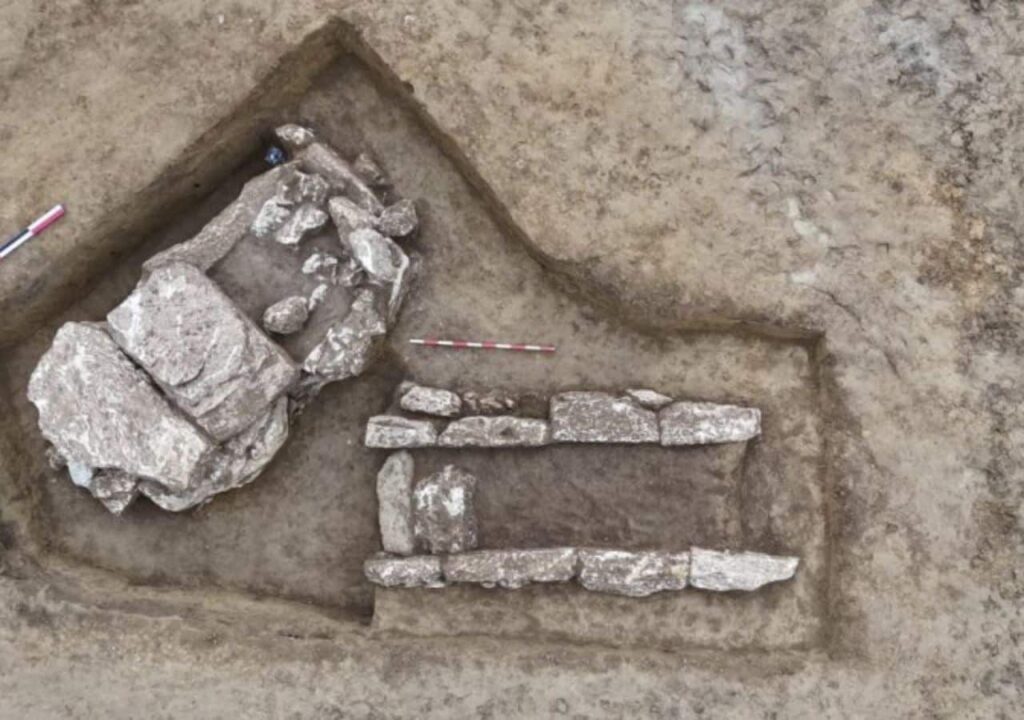
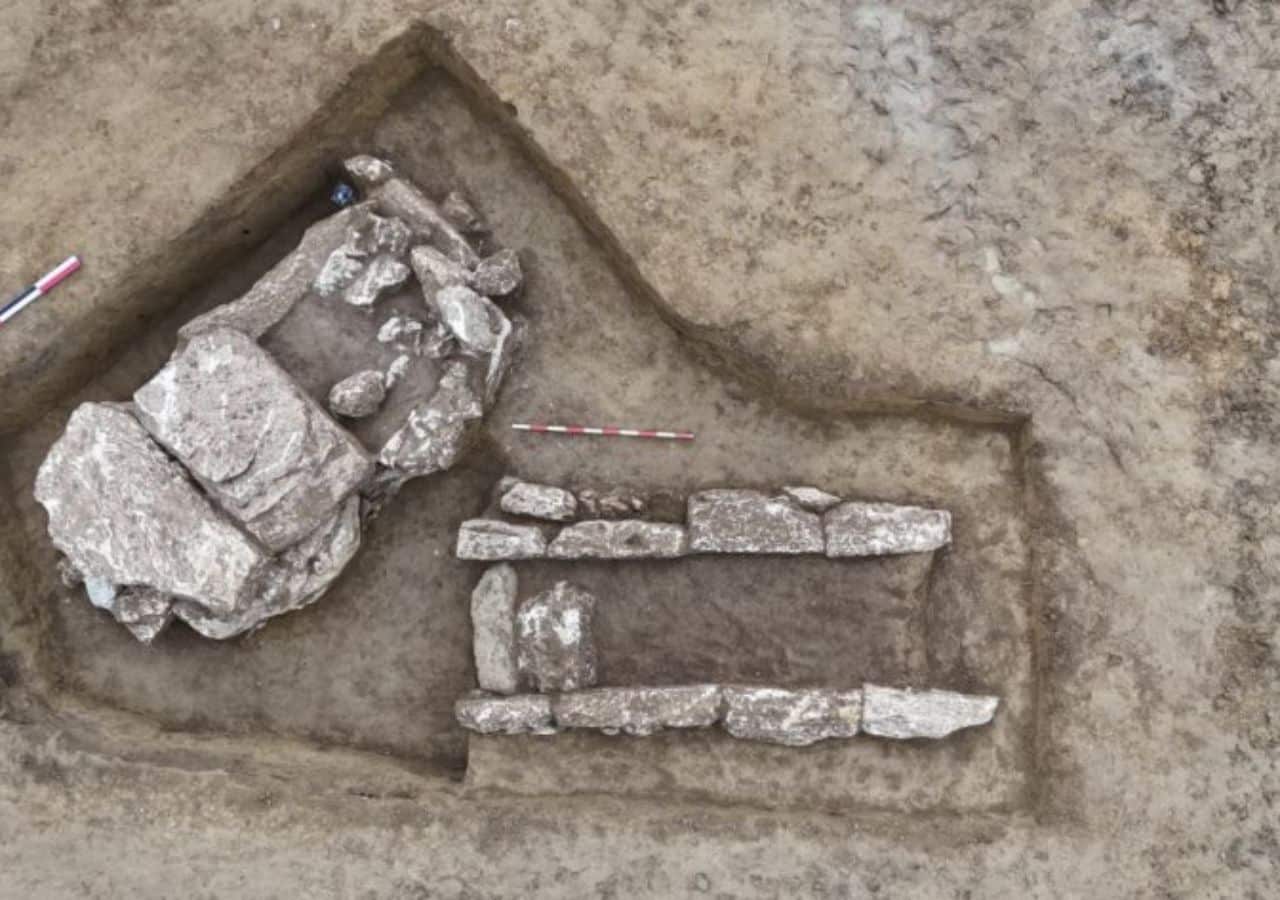
A stepped burial pit uncovered in Nessebar. Credit: Nessebar Municipality
Construction work on a new school building in Nessebar, Bulgaria, has led to the discovery of stunning treasures from the Hellenistic period, dating to the 3rd and 2nd centuries BC.
The finds came from excavations at the courtyard of Lyuben Karavelov Secondary School, carried out by a team from the Old Nessebar Museum. The municipal press office announced the discovery on March 18.
Diggers found a stepped pit at the site, which is an unusual type of feature within the necropolis of ancient Mesambria. Enclosed within were several artifacts, including a gilded bronze wreath, a small silver coin placed as a symbolic payment for the dead, a jug, a scraping tool used for bathing, and a set of small animal bones used as game pieces.
Stunning Hellenistic treasures found at Nessebar Necropolis
The same excavation also turned up coins in silver and bronze, decorated drinking cups, small containers possibly used for oils and perfumes and popularly referred to as tear-collecting vessels, more scraping tools, glass beads, and a range of ceramic pieces. The team also looked at four structures from the medieval period, believed to be from the 13th and 14th centuries.
Three pits were examined as well, each from a different time, one tracing back to the Hellenistic era and two from the medieval period. A number of the objects recovered were broken and will be repaired before being put on display.
All the artifacts will be housed at the Old Nessebar Museum. The museum plans to put them on display during a short-term exhibition at the city’s Archaeological Museum and will also hold a public talk about the ongoing excavations at the necropolis site.