
There was a time — not so long ago — when cars dominated Canadian cities and the only things on two wheels were motorcycles. No longer. That image might dominate the landscape in much of the country, but new research suggests the story is changing, especially in large urban centres where cycling, walking, and transit are increasingly part of everyday life.
A newly released national survey on car ownership shows the differences in how Canadians access mobility.
In Toronto, just 72 per cent of residents own a car — far below the national average of 85 per cent — and many report that owning a vehicle forces them to dial back other spending priorities. By contrast, Calgary remains highly car‑dependent, with over 90 per cent of residents saying they own or lease a vehicle and more than half commuting by car most days of the week. In Montreal and Vancouver, meanwhile, car ownership is declining or plateauing as people rethink how they get around amid rising costs and shifting priorities.
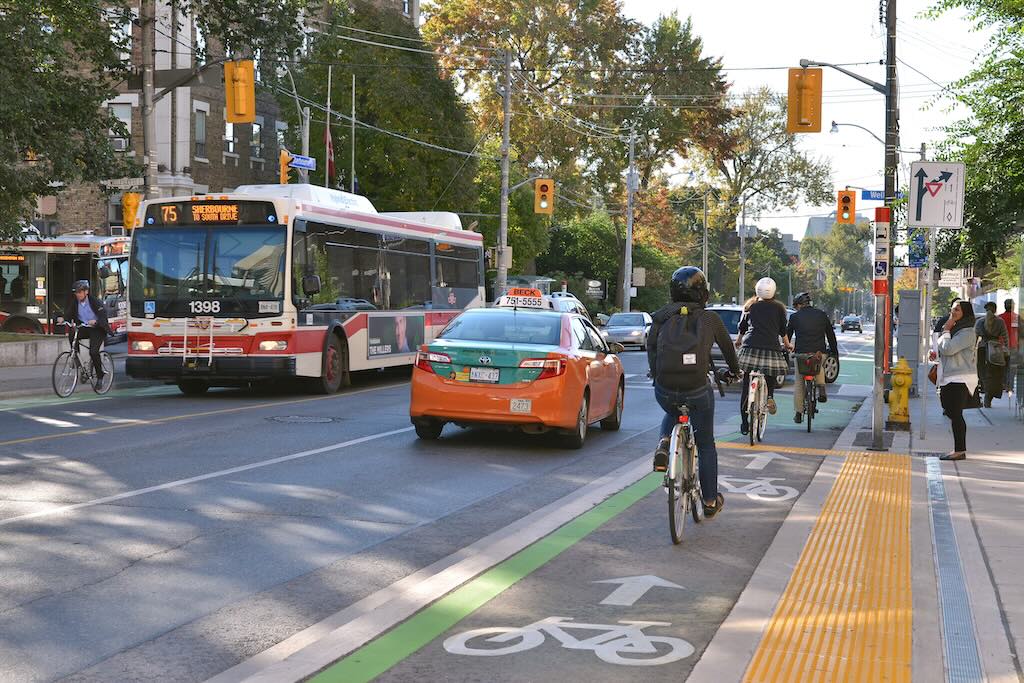
Toronto bike lane
Guess which cities invest in bike infrastructure, bike share systems, and public transit?
For cyclists and advocates of active transportation, these shifts are more than economic footnotes — they reflect deeper changes in how Canadians move through cities.
Cycling is growing in relevance as an affordable, healthy, and sustainable option. National Statistics Canada data shows that active transportation — walking or biking — accounted for about six per cent of commutes in 2024, and while newer figures show a slight dip from pre‑pandemic levels, the share of Canadians choosing these modes is rising again as cities invest in infrastructure and riders demand safer streets.
Toronto, long defined by its transit system, now has one of the lowest car ownership rates among major metropolitan areas. That isn’t because Torontonians don’t value mobility — it’s because alternatives such as subways, streetcars, bike lanes, and shared mobility options are often more convenient than sitting in traffic and paying for parking. Statistics Canada found that in large urban cores, cyclists and transit riders make up a larger share of daily commuters than in smaller regions, and Toronto’s combination of transit and cycling options helps reduce reliance on personal vehicles.
In Vancouver, active transportation has deep roots and visible infrastructure. Greenways, separated bike paths, and neighbourhood prioritization of pedestrians and cyclists have helped make the city one of the most bike‑friendly in Canada, and cycling mode share is notably higher than in many other regions. Cities with robust cycling networks not only support more regular riding but also forge cultural norms where bikes become a natural choice for short trips and daily errands.

Granville Connector in Vancouver
Montreal, too, has long been a beacon for cycling in Canada. Detailed cycling and bikeway proximity analysis shows that when safe infrastructure is accessible close to where people live, rates of cycling to work and for errands tend to be higher.
Why does this matter? Because the economics of car ownership are shifting faster than ever. And it is being exposed even more now with skyrocketing gas prices.
Ontario drivers, for example, face some of the highest annual vehicle costs in the country — more than 25 per cent higher than in many other provinces. As Canadians confront rising insurance payments, maintenance, and fuel costs, the financial calculus of owning a car looks less appealing.
For many city residents, especially younger generations, ditching a car isn’t just about saving money — it’s about lifestyle. Anecdotes from Canadians highlight how the flexibility of public transit, cycling, and occasional car rentals or rideshares can replace the need for year‑round ownership, especially when combined with a dense urban environment that supports active travel.
Despite the progress, cycling still faces hurdles. National data indicates that only a small percentage of Canadians commute by bike to work, and much of that growth has occurred in cities where distances are manageable and infrastructure is safe. But even incremental increases in cycling share can ripple outward, reducing congestion, improving public health, and lowering emissions — benefits that extend beyond just the people on saddles.
As car ownership trends diverge across Canada’s urban landscape, the role of cycling is becoming more pronounced. In dense, transit‑rich cities, fewer people feel they need a car, and more are embracing the bike as an everyday tool — not just a weekend recreational vehicle. In car‑dependent regions, driving remains central to daily life, but pockets of cycling culture and infrastructure growth suggest change is on the horizon.
For people who care about sustainable mobility, healthier lifestyles, and livable cities, these trends offer reason to be optimistic. Cycling isn’t just a counterpoint to car culture; it’s part of a broader reimagining of how we move, live, work, and connect with our urban environments.