
Dispatches from Ukraine. Day 1,486
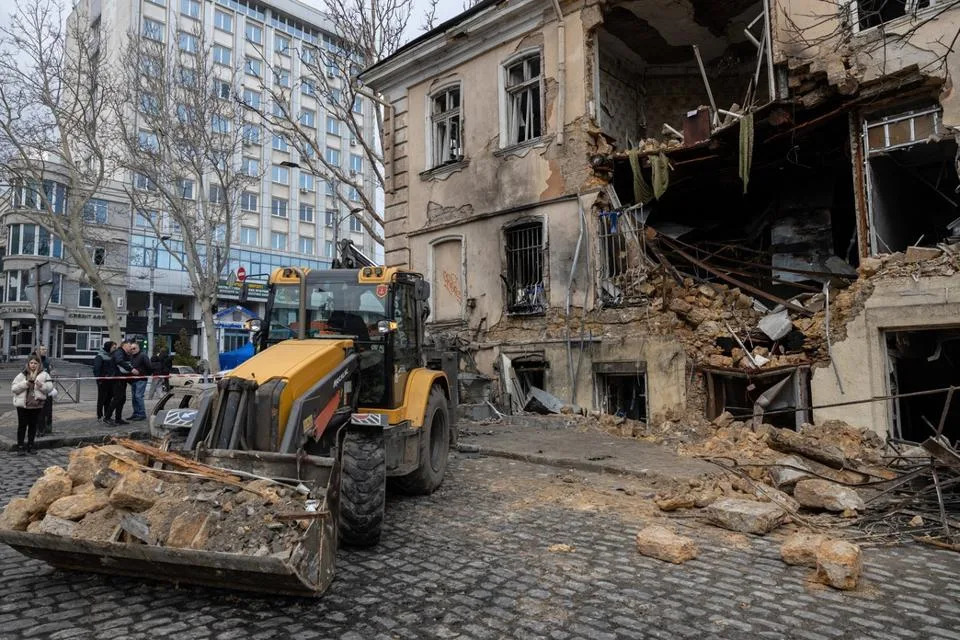
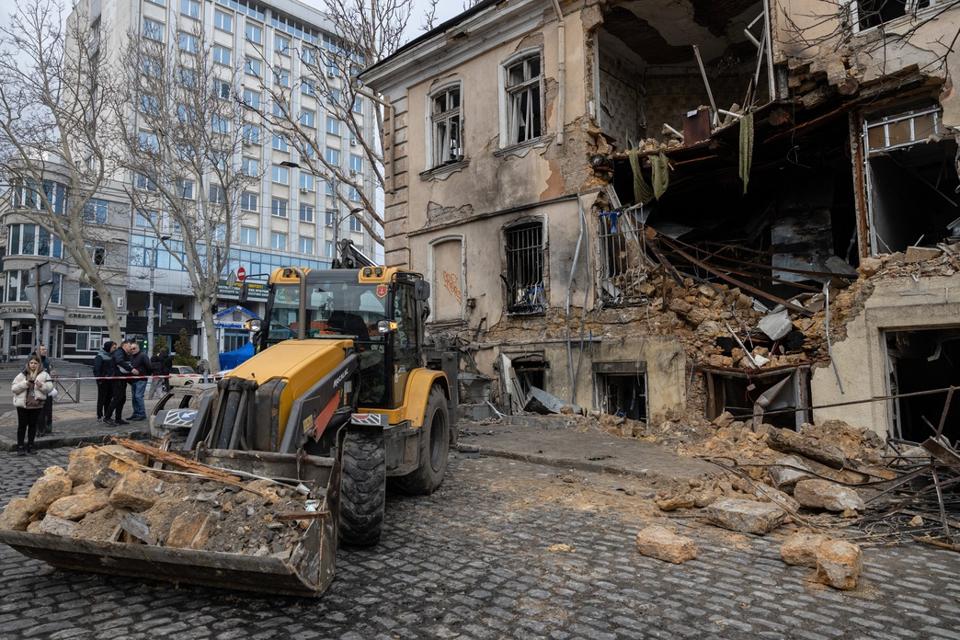
ODESA, UKRAINE – MARCH 19: Municipal workers clear the aftermath of a Russian airstrike on a multi-story building on March 19, 2026 in Odesa, Ukraine. Russian forces launched a mass drone attack on the city overnight on March 19. (Photo by Andrew Shugsun/Global Images Ukraine via Getty Images)
Global Images Ukraine via Getty Images
EU Pushes Ukraine To Resume Russian Oil Flow
Under pressure from the EU and its member states, Ukraine has agreed to repair the Druzhba (“Friendship”) pipeline. This concession clears one of the main obstacles to approval of a $100 billion loan from the EU for Ukraine, which could offer Kyiv financial stability as a budget gap looms.
The Druzhba pipeline, which runs more than 2,500 miles from European Russia through Ukraine, Belarus, Poland, Hungary, Slovakia, the Czech Republic and Germany, has remained closed since January after a Russian strike reportedly damaged pumping infrastructure in western Ukraine. The halt of oil transit quickly became yet another obstacle in Ukrainian-Hungarian relations, which already were shaky.
Despite persistent requests, Ukraine for two months denied its European allies permission to inspect the pipeline. Then, on March 17, Ukrainian President Volodymyr Zelenskyy unexpectedly announced that Ukraine would accept assistance and financial support from Brussels to repair severely damaged sections and restore oil transit within six weeks. Earlier this week, Zelenskyy urged the EU to obtain non-Russian oil supplies as “a decisive step towards strengthening the European Union’s energy independence.”
The repairs are expected to begin this week with a fact-finding mission intended to reassure some skeptical EU member states that Kyiv is acting in good faith. Ukrainian state energy company Naftogaz has already presented alleged evidence of damage to representatives of European embassies in Kyiv to refute accusations of sabotage.
The reversal of the Ukrainian position follows criticism from Slovakia and Hungary. Both countries argued that Ukraine had delayed repairs for political reasons while continuing to press for European financial support. With the outbreak of the American-Israeli war in Iran and a surge in oil prices, however, the transit issue has reached a pan-European scale.
In a joint communication on March 17, European Commission President Ursula von der Leyen and European Council President António Costa stated that “the EU has offered Ukraine technical support and funding…. In the current context of high volatility of energy markets, the resumption of the transit of the oil through the territory of Ukraine becomes of greater importance to preserve market stability.”
Especially sharp criticism of Ukraine came from the Hungarian government, which described the suspension of oil deliveries as an “oil blockade,” and from Prime Minister Viktor Orban, who has made his feud with Kyiv a central plank of his political campaign ahead of the crucial mid-April parliamentary elections.
Relations between Ukraine and Hungary recently have undergone a string of setbacks, culminating on March 5 in the controversial detention by Hungarian authorities of an armored cash-transit vehicle owned by a Ukrainian state bank while transporting nearly $80 million. Calling the detention “an act of political terrorism,” Ukraine has not yet received the funds as Hungary begins an investigation into alleged money laundering.
Ukrainian Finances Under Scrutiny
Nor are high oil prices a headache just for Hungary. They are rapidly becoming a domestic problem in Ukraine itself. To battle rising petroleum prices, the Ukrainian government has floated a fuel cashback scheme funded from the state budget, under which drivers would receive partial reimbursements for gasoline purchases.
The proposal has drawn criticism from the overwhelming majority of Ukrainian economists, who argue that it would in effect require all taxpayers to help fund household fuel costs for private vehicle owners at a time when Ukraine stands on the brink of a fiscal hole, which makes a $100 billion loan critically important for the country.
Ukraine is also counting on additional IMF financing, but that money comes with strings attached. The IMF has been pressing Kyiv to push through a package of tax measures meant to raise more revenue at home. The most contentious proposals include imposing duties on parcels worth less than approximately $160, taxing users of digital platforms and expanding value-added tax obligations for Ukraine’s sole proprietors enjoying lower taxes under Ukraine’s simplified tax regime.
In the eyes of Ukraine’s international creditors, these steps would reduce tax avoidance and force more of the economy out of the shadows. In Ukrainian society, as well as higher echelons of the government, these initiatives have gained little support, as they would increase tax payments and paperwork.
Ukraine, however, has since managed to win some breathing room. According to Forbes Ukraine’s recent reporting, the government persuaded the IMF to soften or even postpone the measures, discussing a much later implementation date, potentially only after the war’s end or Ukraine’s accession to the EU.
Ukrainian Forces Strike Deep Inside Russia
Long-range Ukrainian attacks recently have struck important military targets deep inside Russian territory. Over the course of two days, Ukrainian drones struck two Russian factories that produce and repair military transport and cargo planes in the Ulyanovsk and Novgorod regions. Russia now acknowledges that no part of the country is safe from Ukrainian drones, whose attacks on Russian infrastructure up to 930 miles from the border have nearly quadrupled. Ukrainian drones also have been striking in and around Belgorod.
By Danylo Nosov, Alan Sacks