
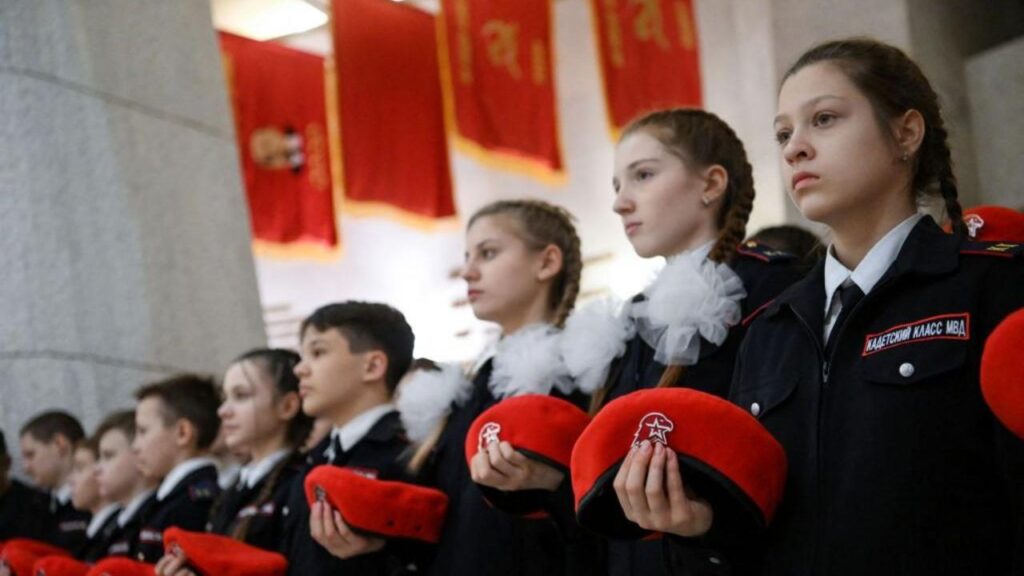
An Oscar-winning documentary has put a spotlight on something millions of Russian parents quietly navigate every school day: a state-backed system of patriotic education that has intensified sharply since Russia’s full-scale invasion of Ukraine. The film, Mr Nobody Against Putin, brought that reality to a global audience — and raised a question that researchers and families alike are wrestling with: does any of it actually work?
The BBC documentary is built around footage captured by Pavel Talankin, a primary school events co-ordinator and videographer from Karabash, a small provincial town in the Ural mountains. His recordings document how he was drawn, reluctantly, into the machinery of Putin’s propaganda effort — one classroom event, one patriotic ceremony at a time.
For parents inside Russia who oppose the war, the situation creates an almost impossible bind. Resist the system, and you risk isolating your own child. Stay silent, and you watch state messaging take root in someone you love.
What the Oscar-Winning Film Actually Shows
Talankin’s documentary captures what life looks like on the ground in a Russian school that is far from Moscow — not an elite urban institution, but an ordinary provincial school where teachers, administrators, and parents are all caught up in the same system.
The film shows how patriotic programming has become woven into the fabric of school life: events, ceremonies, lessons, and performances that frame Russia’s military as glorious and its cause as righteous. Talankin himself was not a political activist. He was a school videographer. That is part of what makes his account so striking — the machinery of propaganda runs through ordinary people doing ordinary jobs.
The documentary won an Oscar, bringing international attention to what had largely been an invisible domestic process: the systematic shaping of how Russian children understand the war their country is fighting.
The Patriotic Education Programme in Russian Schools
The pressure on Russian schoolchildren has grown significantly since the invasion of Ukraine began. Parents who oppose the war describe an escalating series of activities designed to build loyalty to the state and support for its military.
A Moscow mother identified only as Nina — her name changed for her safety — described one specific moment that crystallised the problem for her. Her seven-year-old daughter was told to learn a poem about Russia’s “glorious army” for a school event.
“She likes her teacher, she likes her classmates — she likes being a part of it.”
That quote from Nina captures the central difficulty. The propaganda is not experienced by children as propaganda. It is experienced as belonging — as friendship, community, and the approval of trusted adults.
Nina has struggled to shield her daughter from an increasing number of patriotic activities and lessons. When she once kept her daughter home to avoid a school event, her daughter was upset. As Nina put it: “I don’t want her to feel like she doesn’t belong.”
Why This Is Harder Than It Looks to Resist
The dilemma Nina faces is not unique to her, and it is not simple. Openly opposing school activities carries real social risk — for the child, not just the parent. A seven-year-old does not understand geopolitics. She understands whether she gets to be with her friends or not.
This is, of course, how effective indoctrination works. It does not typically arrive as something children are forced to accept against their will. It arrives wrapped in belonging, fun, and the warmth of community. The poem about the glorious army is learned because a teacher the child loves asked her to learn it.
For anti-war parents in Russia, the challenge is not simply ideological. It is deeply personal and socially loaded. Keeping a child home isolates her. Letting her participate means watching state narratives become part of how she sees the world.
Detail from Source
Does School Propaganda Actually Work?
This is the harder question the film raises without fully answering — and honestly, nobody has a clean answer. What Whether that messaging successfully shapes long-term beliefs is a separate and genuinely contested question.
What Nina’s account does suggest is that the immediate social effect is real. Her daughter is not resisting the programme — she enjoys it. She feels included. The social bonds formed around patriotic activities are genuine bonds, even if the content carrying them is state propaganda.
Critics of such programmes argue that childhood exposure to ideologically loaded content does shape foundational attitudes — particularly when that content is delivered by trusted figures like teachers, in settings associated with safety and belonging like classrooms. Supporters of the programme, within Russia, frame it as straightforward civic education and national pride.
What Happens to Families Who Push Back
For families like Nina’s, the options are narrow and none of them are easy. Keeping a child home from patriotic events works in the short term but causes social friction — the child misses out, feels different, and may resent the parent for it. Complaining openly carries risks in a country where public dissent about the war is a criminal matter. And allowing full participation means accepting that the state’s narrative will have uncontested access to a child’s developing worldview.
The fact that names in the BBC report had to be changed for safety underlines just how constrained these families are. Nina is not speaking publicly under her real name. She is navigating this alone, quietly, in a city of millions where many parents are likely doing exactly the same thing.
Talankin’s film matters precisely because it makes this visible. The propaganda machine in Russia’s schools is not a secret — but the human texture of it, the way it plays out between a mother and a seven-year-old girl who just wants to be with her friends, is something a documentary can show in a way that statistics cannot.
Frequently Asked Questions
What is the documentary Mr Nobody Against Putin about?
It is a BBC documentary built around footage captured by Pavel Talankin, a primary school events co-ordinator and videographer from Karabash in the Ural mountains, documenting how he was drawn into Russia’s school propaganda machine.
Who is Pavel Talankin?
Pavel Talankin is a primary school events co-ordinator and videographer from the small provincial town of Karabash in the Ural mountains, whose footage formed the basis of the Oscar-winning BBC documentary.
What kind of propaganda are Russian schoolchildren being exposed to?
According to
Why don’t anti-war parents simply refuse to let their children participate?
Parents like Nina describe a painful dilemma: keeping children away from patriotic school activities risks isolating them socially from teachers and classmates they care about, and children themselves may resist being excluded.
Did the documentary win an Oscar?
Yes. Mr Nobody Against Putin is described in
Are the parents quoted in the BBC report named publicly?
No. The BBC changed the names of parents like Nina for their safety, reflecting the risks faced by those who speak critically about state programmes in Russia.