
Our column Inside Denmark takes a closer look at the stories we’ve been talking about over the last seven days. This week, the policies for which the 2026 election might be remembered.
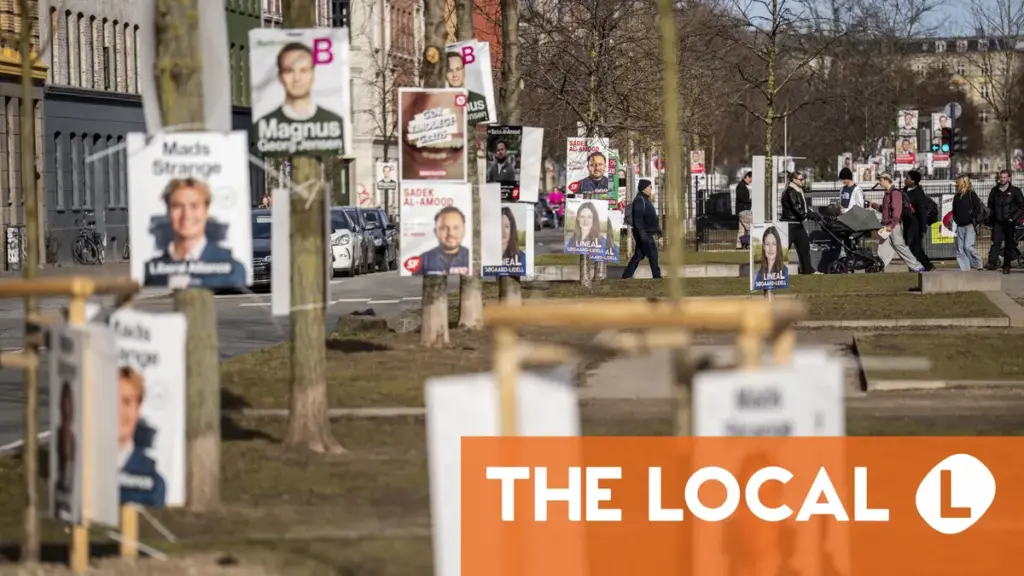
The buildup to the general election is in its final lap, with millions of Danish nationals poised to go to the polls this coming Tuesday.
The latest opinion polls ahead of the weekend suggested, as they have since Prime Minister Mette Frederiksen called the election at the end of January, that there will be no clear winner.
With the centrist coalition that has ruled since 2022 seemingly on the scrapheap, questions have turned as to which parties could govern together after the election.
This week saw Liberal (Venstre) leader Troels Lund Poulsen rule out a government agreement with the economically centrist, but socially progressive Social Liberals (Radikale Venstre), apparently closing off one potential avenue for a new coalition across the centre.
Far-right parties have made demands that make governing with the centre look difficult, not least the Danish People’s Party’s searing attack on permanent residency and demand for ‘net emigration’ of Muslims.
While there are perhaps fewer potential obstacles to left-wing parties working with Frederiksen’s Social Democrats, there are also significant political and ideological gaps between these parties – and polls show they are not on course to get an overall majority.
This means a so-called ‘red bloc’ or left-leaning government could rely on the confidence of former Prime Minister Lars Løkke Rasmussen’s centrist Moderates, a prospect which could leave future talks hamstrung, notwithstanding the fact that Løkke on Friday told broadcaster DR he could “see more of my own politics in what Troels [Lund Poulsen] is saying.”
With the outcome so uncertain, it’s safe to conclude that every last vote must be fought for and the parties have been doing that this week with several remarkable policy announcements.
Advertisement
Let’s start with the aforementioned Danish People’s Party (DF), which wants to “challenge the concept” of living permanently in Denmark as a foreign national.
The vehemently anti-immigration party said on Thursday that it should be impossible to achieve permanent residency rights in Denmark for any foreign national not closely related to a Danish citizen.
DF wants its proposal to be enacted retroactively so that permanent residency can be revoked from persons who already have it. It is unclear whether this is possible under Danish law.
DF’s proposal would also exclude foreign nationals in Denmark from receiving social welfare benefits such as disability pensions, and expel people who are not in employment.
“If you can’t find a job, you do not have a legal right of residence. And then the police would be able to start legal proceedings if you don’t leave the country voluntarily,” party leader Morten Messerschmidt said.
It is unclear how such rules would be applied to, for example, the spouses of foreign nationals recruited by Danish companies, or children who turn 18 after moving to Denmark with their parents, who themselves are legal foreign residents of the country.
Advertisement
In the same proposal, DF confirmed a policy in which it said it will make its support for any future government contingent on the demand that a net emigration of Muslims from Denmark is enforced.
Liberal leader Poulsen refrained from calling the policy Islamophobic, or any other words to that effect, but has already rejected the demand, saying “It is not the case that religion will dictate how Danish immigration policy is shaped.”
Liberal Alliance, a libertarian party that looked on course to become the largest party on the conservative side, attempted to bounce back from leader Alex Vanopslagh’s admission he took cocaine while party leader by announcing a divisive new plan which could leave a large proportion of Copenhagen’s rental tenants seriously out of pocket.
The party wants to revoke rules which limit the rent in around 400,000 rental homes built before a certain date.
Finance spokesperson Ole Birk Olesen said that although this could raise rents in affected rental homes, “people will be able to find the homes they need instead of staying in certain homes where the rent is artificially low.”
That met with condemnation from the far-left party Red-Green Alliance, whose lead political spokesperson Pelle Dragsted called it “the most vicious attack on tenants’ personal finances in modern times” in a social media post.
“That will create huge uncertainty for the 2.5 million Danish tenants,” he said.
These were far from the only headline-making policies.
The Conservatives want to slash corporation tax and allow higher employment-based tax deductions for individuals.
The reduced taxes would cost the state 34 billion kroner, which the party says can be financed by drawing from an existing budgetary surplus (råderummet) and improving efficiency.
Advertisement
“We need a new direction for the Danish economy. We need to get back on the path of reform and away from coupons and cash handouts from the government,” Conservative leader Mona Juul said in an interview with newspaper Berlingske.
Under the policy, corporation tax (selskabsskat) would be cut from 22 percent to 17 percent at a cost of 13.4 billion kroner, while a limit that currently applies to the tax deduction for employment, beskæftigelsesfradraget, would be scrapped and the deduction itself raised. This would cost around 14 billion kroner.
And as the price of diesel hit an all-time record, the Liberals said they will cut taxes on fuel in government, while Frederiksen has pledged to consider a range of measures if she remains in post.
Meanwhile, the Social Liberals said they want the UN Convention on the Rights of the Child to be written into Danish law. Denmark has ratified the convention but is yet to code it into law.
“That would mean children have the right to a good childhood regardless of what politicians think,” leader Martin Lidegaard said.
All of these policy announcements have been memorable in the context of the week just gone. Whether they’ll be remembered after March 24th remains to be seen.